Benefits of QR-based payment flows for businesses
TL;DR:
- QR-based payment flows allow customers to complete transactions by scanning codes with their smartphones, enabling faster checkouts and lower hardware costs. They support service scalability through dynamic codes, improve security via device authentication, and turn transactions into marketing opportunities with linked landing pages. While hardware savings are substantial, the key benefit lies in operational clarity and data-driven decision-making for growing businesses.
QR-based payment flows are defined as transaction methods that let customers complete purchases by scanning a QR code with their smartphone, bypassing card terminals entirely. The benefits of QR-based payment flows are immediate and measurable: faster checkouts, lower hardware costs, and the ability to serve more customers without adding staff. Global retail QR code payments are projected to reach 741 billion transactions by 2030, up from 454 billion in 2025. That growth signals a fundamental shift in how businesses collect money, and the businesses that adopt early will hold a clear operational advantage.
1. How do QR-based payment flows speed up the checkout process?
QR payments reduce checkout time from minutes to seconds by removing manual card entry, PIN interactions, and receipt printing from the process. The customer opens their banking or payment app, scans the code, authenticates with a fingerprint or face scan, and the transaction confirms instantly. No card reader is required on your side.
The practical impact during peak trading hours is significant. A queue that previously moved at one customer per two minutes can process multiple customers simultaneously when each person pays on their own device. You are no longer limited by the number of card terminals you own.
- Payment confirmation arrives in real time, so staff do not need to wait for terminal approval screens.
- Receipt printing becomes optional, reducing consumable costs and counter clutter.
- Customers with mobile wallets such as Apple Pay or Google Pay can scan and pay in a single tap.
- Error rates from manual entry drop to near zero because the payment amount is embedded in the code.
Pro Tip: Display your QR code at multiple points in your venue during peak hours, not just at the till. A table tent, a poster near the queue, or a code on a digital screen all let customers initiate payment before they reach the counter.
2. What are the cost advantages of implementing QR payment flows?

Businesses save thousands in hardware expenses by switching to QR payments, avoiding the purchase, rental, and maintenance costs tied to physical card terminals. A single countertop card reader can cost between £150 and £400 to buy outright, with monthly rental fees on top. For a business with multiple service points, those costs compound quickly.
The table below shows where the savings appear most clearly.
| Cost category | Traditional card terminal | QR payment setup |
|---|---|---|
| Hardware purchase | £150–£400 per unit | None required |
| Monthly rental | £15–£30 per terminal | None required |
| Maintenance and repairs | Ongoing | None |
| Receipt paper | Regular restocking | Optional |
| Staff training time | Moderate | Minimal |
Seasonal businesses and market traders benefit most from this model. You can generate a QR code, print it once, and accept payments anywhere with no hardware to transport or insure.
One important clarification: QR codes do not eliminate payment gateway fees. Transaction fees are set by your payment processor, not by the QR code itself. Factor those gateway fee structures into your cost planning separately.
Pro Tip: If you run a pop-up stall, festival stand, or seasonal shop, a printed QR code on laminated card costs pennies and replaces a terminal that would otherwise sit unused for months.
3. What operational efficiencies does QR payment flow offer?
QR payments allow businesses to serve unlimited customers without a traditional cashier setup, because each transaction happens on the customer’s own device. You can run a market stall, a pop-up event, or a busy café with one member of staff managing fulfilment rather than payments. That frees your team to focus on service quality rather than transaction processing.
Dynamic QR codes take this further by linking each payment to a specific invoice or order reference. This matters enormously as transaction volumes rise. Static codes send every payment to the same destination with no order data attached, which creates reconciliation headaches at the end of the day. Dynamic codes carry order-specific information, so your accounting software can match each payment to the correct sale automatically.
- Dynamic codes enable granular transaction reporting and reduce manual reconciliation errors as volumes increase.
- Integration with accounting platforms such as Xero or QuickBooks becomes straightforward when each code carries structured payment data.
- Staff training time drops because employees do not need to operate terminal hardware or troubleshoot connectivity issues.
- You can update the destination URL of a dynamic code without reprinting, which is useful when payment details change.
Transitioning from static to dynamic QR codes as your transaction volume grows is the single most effective step for maintaining operational clarity at scale.
4. How do QR payments enhance security and customer trust?
QR payment security relies on smartphone biometrics and PIN protection, which reduces the physical tampering risks associated with card terminals. Skimming devices cannot be attached to a QR code printed on paper or displayed on a screen. The authentication step happens inside the customer’s own device, which is protected by their fingerprint, face ID, or personal PIN.
Real-time transaction notifications add a second layer of protection. Both the customer and the merchant receive instant confirmation, which means fraudulent or duplicate charges are visible immediately rather than appearing on a monthly statement.
- Display QR codes in clearly visible, well-lit locations so customers can verify the code before scanning.
- Check your printed QR codes regularly for sticker tampering. A malicious actor can place a fraudulent code over a legitimate one.
- Use dynamic QR codes from a managed platform so you can deactivate and replace a compromised code instantly.
- Communicate your payment security process to customers at the point of sale. Clear signage reduces hesitation and increases conversion.
Pro Tip: Conduct a quick physical audit of every QR code display at the start of each trading day. Run your finger across the surface to check for sticker overlays. This takes 30 seconds and prevents the most common form of QR payment fraud.
Communicating QR payment security clearly to customers reduces hesitation and increases adoption. Customers who understand that their bank’s biometric authentication protects the transaction are far more willing to use the method.
5. What are the marketing and sales benefits of QR payment flows?
Reduced checkout friction leads to fewer abandoned purchases and higher sales conversion rates. Every additional step between a customer’s decision to buy and the completed transaction is an opportunity for them to change their mind. QR payments compress that gap to a single scan.
The marketing potential extends well beyond the payment itself. A QR code can route customers to a landing page that confirms their purchase and immediately presents a related offer, a loyalty programme sign-up, or a discount on their next visit. This turns a payment confirmation into a sales touchpoint.
- Embed promotional codes or upsell offers into the post-payment landing page linked by your QR code.
- Collect opt-in marketing consent at the point of payment by directing customers to a branded confirmation page.
- Use QR code tracking to measure which payment locations, events, or campaigns generate the highest transaction volumes.
- Deploy QR codes across multiple channels: printed menus, packaging, event signage, and digital screens all become active payment and engagement points.
Businesses that integrate QR payments with marketing and accounting platforms gain a clearer picture of customer behaviour and campaign performance. Scan analytics show you which codes are used most, at what times, and from which locations. That data directly informs stock decisions, staffing levels, and promotional timing.
Personalised QR journeys take this further by routing different customer segments to tailored post-payment experiences. A first-time buyer sees a welcome offer. A returning customer sees a loyalty reward. The QR code does the segmentation work automatically.
Retail technology specialists note that QR codes are among the most accessible new retail tools available to businesses of any size, requiring no specialist installation or ongoing technical support.
Key takeaways
The most effective approach to QR-based payment flows combines dynamic codes, regular security audits, and integration with your existing marketing and accounting systems.
| Point | Details |
|---|---|
| Speed at checkout | QR payments cut transaction time to seconds by removing card entry and terminal delays. |
| Hardware cost savings | Businesses avoid terminal purchase, rental, and maintenance costs entirely with QR setups. |
| Scalability without extra staff | Dynamic QR codes let you serve more customers without adding cashiers or hardware. |
| Security through device authentication | Biometric and PIN protection on the customer’s device reduces tampering and fraud risk. |
| Marketing integration | Post-payment QR landing pages turn every transaction into a customer engagement opportunity. |
Why I think most businesses underestimate QR payments
The conversation around QR payments tends to focus on cost savings, and the hardware savings are real. But the bigger opportunity is operational clarity, and most business owners I speak with have not thought about it in those terms.
When you move from a static QR code to a dynamic one, you stop treating payment as a one-way event. Each scan carries data: which location, which product, which time of day. That information feeds directly into your stock management and marketing decisions without any manual data entry. For a business running multiple service points or events simultaneously, that is the difference between guessing and knowing.
My honest recommendation is to start with a free QR code to test customer adoption at one location. Once you see the scan rate and conversion data, the case for upgrading to dynamic codes with full analytics becomes self-evident. The businesses that struggle with QR payments are almost always the ones that deployed a static code, never checked the data, and concluded that QR payments “did not work.”
Staff training is the other underestimated factor. Your team does not need to understand the technology. They need to know two things: how to show a customer where the code is, and how to handle the rare case where a customer’s phone cannot scan it. That is a five-minute briefing, not a training day.
— The
Qrlytics makes QR payment setup straightforward
Setting up a QR payment flow does not require technical expertise or expensive software. Qrlytics gives you a free QR code generator that lets you create a payment-ready code in under a minute, with no credit card required to get started.
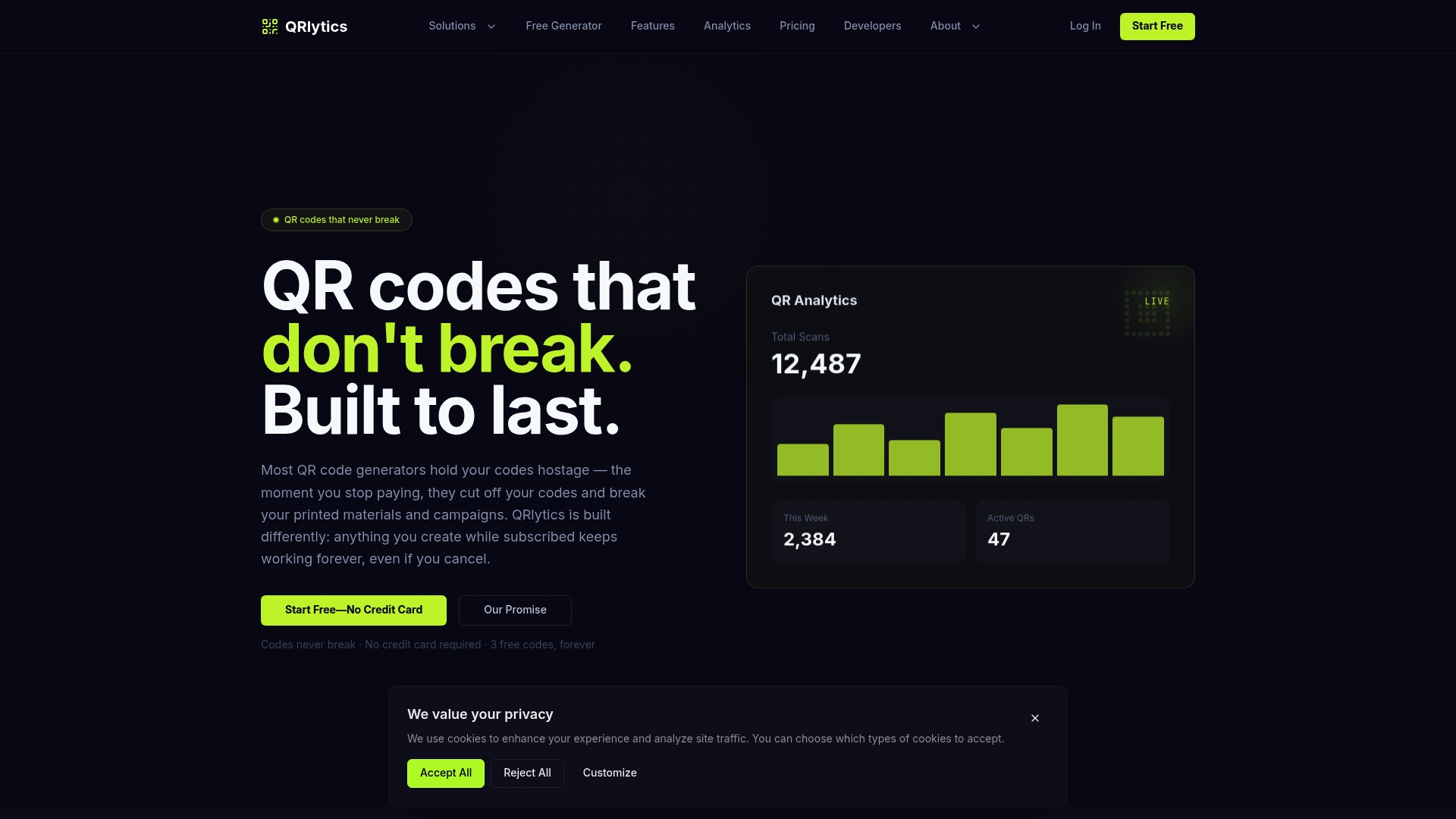
For businesses ready to track performance and scale, Qrlytics offers QR codes with full scan analytics, including real-time data, location tracking, and GDPR-compliant reporting. Dynamic codes let you update your payment destination without reprinting, and every code created during an active subscription remains functional permanently. Whether you run a single shop or manage multiple venues, Qrlytics gives you the tools to generate, manage, and measure your QR payment flows with confidence.
FAQ
What are the main benefits of QR-based payment flows?
QR-based payment flows speed up checkout, eliminate card terminal hardware costs, and allow businesses to serve more customers simultaneously. They also generate scan data that supports marketing and operational decisions.
Are QR payments secure for businesses and customers?
QR payments rely on the customer’s smartphone biometric or PIN authentication, which removes the risk of terminal skimming. Businesses should audit their QR code displays regularly to prevent sticker tampering.
Do QR payments remove transaction fees?
QR codes remove hardware costs but do not affect payment gateway fees. Transaction fees are set by your payment processor and apply regardless of whether payment is made via a card terminal or a QR code.
What is the difference between static and dynamic QR codes for payments?
Static QR codes send every payment to the same destination with no order data. Dynamic QR codes link each transaction to a specific invoice or order, which makes reconciliation accurate and supports detailed reporting as volumes grow.
How quickly can a business start accepting QR payments?
A business can generate a QR code and begin accepting payments within minutes using a platform such as Qrlytics. No hardware installation or technical setup is required.