Why personalised QR journeys drive real conversions
TL;DR:
- Personalised QR journeys link each code to a tailored digital experience based on CRM data, enhancing engagement. They outperform static and dynamic codes by enabling individual-level attribution, real-time updates, and personalized content. Successful implementation requires scalable QR generators, CRM integration, consent management, and analytics infrastructure to measure true campaign impact.
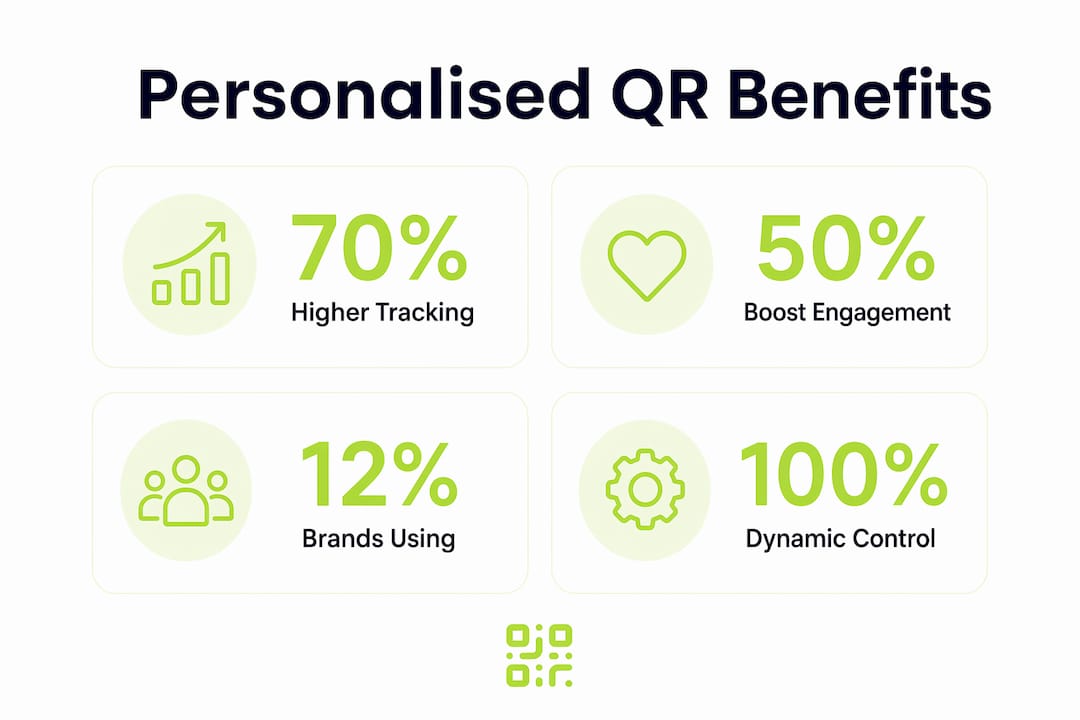
Personalised QR journeys are defined as campaigns where each QR code links to a unique, dynamically generated digital experience tailored to the individual recipient, typically powered by CRM data and real-time routing logic. This approach goes well beyond standard dynamic QR codes, which simply allow you to edit a destination URL. With personalised QR journeys, the destination itself adapts to who is scanning, when they scan, and what they have done before. 50% of businesses report increased customer engagement through personalised QR content, and sources including Print Lord and Mobilo Card confirm this uplift is tied directly to CRM-integrated data pipelines. For marketing professionals and business owners, this is the most precise tool available for connecting print and physical media to measurable digital outcomes.
Why personalised QR journeys outperform static and dynamic codes
Understanding why personalised QR journeys deliver superior results starts with knowing exactly how the three code types differ from one another.

Static QR codes encode a fixed URL directly into the code’s pattern. Once printed, the destination cannot be changed. They carry no tracking capability and offer no way to update content after distribution. They work for simple, permanent use cases such as linking to a Wi-Fi password or a fixed product page, but they are a dead end for campaign optimisation.
Dynamic QR codes separate the printed code from the destination URL by routing scans through a redirect server. 70% of QR codes scanned in 2025 were dynamic, reflecting how widely marketers have adopted this flexibility. You can update the destination, run A/B tests, and collect aggregate scan data without reprinting a single code. That is a significant operational advantage over static codes.
Personalised QR codes take dynamic routing one step further. Each recipient receives a unique code that maps to their individual profile in your CRM. When they scan, the redirect server reads their data and serves a bespoke experience: a landing page with their name, a loyalty offer based on their purchase history, or a product recommendation drawn from their browsing behaviour. This enables individual-level engagement tracking that aggregate dynamic codes simply cannot provide.
| Code type | Destination | Tracking | Personalisation | Best use case |
|---|---|---|---|---|
| Static | Fixed, unchangeable | None | None | Permanent links, Wi-Fi, menus |
| Dynamic | Editable redirect | Aggregate scans | None | Campaign landing pages, A/B testing |
| Personalised | Unique per recipient | Individual-level | Full CRM-driven | Direct mail, loyalty, re-engagement |
Pro Tip: Pre-generate unique QR codes per recipient and link each one to an editable dynamic URL. This gives you the personalisation of a unique code with the operational flexibility to update the destination after print, which is critical if campaign details change post-production.
What are the real benefits of personalised QR journeys?
The commercial case for personalised QR code strategies is grounded in measurable outcomes, not theory.
83% of consumers are willing to share personal data in exchange for tangible, ongoing value triggered by QR scans. That willingness is the foundation of every effective personalised campaign. When you deliver genuinely relevant content at the moment of scan, you are fulfilling the implicit contract consumers have already agreed to.
The attribution data from personalised campaigns is equally compelling. Print Lord documented a direct mail campaign of 1,000 pieces that generated 245 scans and 38 conversions, with granular tracking from campaign level down to individual recipient behaviour. That level of attribution is impossible with a standard dynamic code pointing all recipients to the same URL.
“Personalised QR codes create a genuine omnichannel journey, connecting print and digital with measurable, optimisable engagement at every stage.” — Print Lord
The core benefits for your campaigns include:
- Higher scan rates. Personalised calls to action on printed materials consistently outperform generic ones because recipients recognise the offer is meant for them specifically.
- Tailored offers. CRM-driven routing means each scan can surface a different product, discount, or message based on purchase history or segment.
- Improved ROI. Individual attribution lets you calculate the exact revenue contribution of each printed piece, making budget decisions far more precise.
- Customer lifetime value. Personalised follow-up sequences triggered by scan behaviour, such as loyalty rewards or re-engagement offers, extend the relationship beyond the initial conversion.
- Granular campaign intelligence. You gain real-time reporting of individual engagement, scan location, and behaviour patterns that feed directly back into your CRM for future segmentation.
For lead generation with QR codes, this level of data is transformative. You are no longer guessing which printed touchpoint drove a conversion.
What do you need to implement personalised QR journeys?
Deploying personalised QR code strategies at scale requires more than a QR generator. There are four operational prerequisites you need to have in place before your first campaign goes to print.
- A scalable QR code generator. You need a platform capable of producing thousands of unique QR images in a single batch, each linked to a distinct redirect URL. Most free tools cannot do this. Look for a platform that supports bulk generation with per-code URL mapping.
- CRM integration and a clean data pipeline. Each unique code must be mapped to a recipient record in your CRM. This means your contact data needs to be accurate, segmented, and accessible via API or export. Dirty data at this stage produces broken or irrelevant experiences at the point of scan.
- Consent management. Personalised QR campaigns require robust consent management and GDPR-compliant data handling to safely deliver tailored experiences. You must have a lawful basis for processing the personal data that drives your routing logic, and that basis must be documented before codes are distributed.
- Real-time analytics infrastructure. Dynamic QR codes enable content updates and detailed campaign analytics without reprinting codes. Your platform must support live destination updates so you can correct errors, swap expired offers, or redirect traffic after print runs have been completed.
The cost and resource investment is higher than for static or generic dynamic campaigns. You are paying for data infrastructure, consent tooling, and a more capable QR platform. The return, however, scales with your campaign volume and the quality of your CRM data.
Pro Tip: Choose a QR platform that guarantees your codes remain active regardless of billing status. Codes printed on physical materials cannot be reprinted cheaply if they break. Platforms that deactivate codes on subscription lapse are a serious operational risk for any campaign with a long shelf life.
For a detailed breakdown of QR code tracking for marketers, the Qrlytics blog covers attribution methods and platform selection in depth.
Best practices for creating effective personalised QR journeys
Designing a personalised QR journey means thinking in stages, not single interactions. The most effective campaigns treat the first scan as the beginning of a sequence, not the end goal.
Design for delayed value. Marketers must move beyond instant conversion focus and build QR experiences for delayed value and repeated engagement. Not every recipient will convert on the first scan. Your journey architecture should account for return visits, with content that evolves based on where the user is in the buying cycle.
Test across devices and contexts. A landing page that renders perfectly on a desktop browser may break on an older Android handset with a slow mobile connection. Test every journey stage on iOS and Android, across multiple browsers, and under real-world network conditions before your print run goes out.
The following practices consistently separate high-performing campaigns from average ones:
- Use dynamic routing via QR redirects to adapt content based on scan history, so a second scan surfaces different content than the first.
- Customise the call to action on the landing page to match the printed material. A flyer for a loyalty programme should not land on a generic homepage.
- Build follow-up sequences triggered by scan behaviour: a loyalty trigger for a first scan, a retargeting sequence for a scan without conversion, a reward for a third visit.
- Measure success beyond scan counts. 54.4% of brands say growth is their top QR goal, yet only 12% measure revenue generated from campaigns. Connect your QR analytics directly to your CRM revenue data to close this gap.
- Align your journey stages with your sales cycle. B2B campaigns with longer decision timelines need different return-visit architecture than retail promotions with a 48-hour offer window.
For context on how geo-targeted local campaigns can be layered on top of personalised QR journeys, location-based routing adds another dimension to relevance at the point of scan.
How do you overcome common challenges in personalised QR campaigns?
Personalised QR campaigns introduce failure points that generic campaigns do not face. Knowing where they occur, and how to prevent them, protects both your budget and your brand credibility.
36% of consumers report issues with QR codes that do not scan properly or lead to broken destinations. In a personalised campaign, a broken link does not just frustrate one user. It signals to that specific individual that your brand cannot deliver on its promises, which is a far more damaging impression than a generic 404 error.
The most common failure points and their solutions are:
- Broken links after content changes. Use a platform with real-time URL editing so you can update destinations without touching the printed code.
- Expired offers or outdated landing pages. Set calendar reminders tied to your campaign end dates and redirect expired URLs to a relevant evergreen page rather than a dead end.
- Poor return-visit experience. 31% of consumers want easier ways to save and revisit scanned information. Build save-and-return functionality into your journey from the start.
- Lack of iterative improvement. Use CRM-driven insights from scan behaviour to refine your routing logic and content after each campaign wave.
Pro Tip: Add a “save to wallet” trigger and an “email this link to myself” option on every personalised landing page. These two features directly address the consumer expectation for multi-use access and significantly increase the likelihood of a return conversion.
Key takeaways
Personalised QR journeys outperform static and dynamic codes because they combine individual-level attribution, CRM-driven content routing, and real-time analytics into a single measurable touchpoint.
| Point | Details |
|---|---|
| Personalisation drives engagement | 50% of businesses report higher engagement when QR content is tied to CRM data. |
| Attribution is campaign-defining | Individual-level tracking connects each printed piece to a specific conversion, not just an aggregate scan count. |
| Consent and data quality are prerequisites | GDPR-compliant consent management and clean CRM data must be in place before codes are distributed. |
| Measure revenue, not just scans | Only 12% of brands measure revenue from QR campaigns; connecting analytics to CRM revenue data is the differentiator. |
| Return-visit architecture matters | Design journey stages for delayed value and repeated engagement, not single-interaction conversion. |
My view on where personalised QR journeys are heading
I have watched QR codes go from novelty to ignored to genuinely useful over the past decade, and the shift to personalisation is the most significant change in how they are actually deployed. The early adopters I have seen get this right share one characteristic: they stopped treating the scan as the destination and started treating it as the beginning of a conversation.
What strikes me most is how effectively personalised QR codes solve the oldest problem in print marketing, which is attribution. You could always measure a print run’s reach by circulation, but you could never know which specific piece drove which specific sale. Personalised codes close that loop entirely. When a campaign of 1,000 mailers produces 38 trackable conversions mapped to individual recipients, you have the kind of data that justifies the next print budget without needing to argue from assumption.
The marketers who will fall behind are those still measuring success by scan volume. Scans are a proxy metric. Revenue, repeat visits, and customer lifetime value are the numbers that matter. The infrastructure to connect QR analytics to those outcomes exists today. The only barrier is the willingness to build the journey properly from the start, with real consent management, a capable platform, and a clear return-visit architecture. Brands that invest in this now will have a significant data advantage over those who treat QR codes as a shortcut rather than a channel.
— The
Start building smarter QR campaigns with Qrlytics
Qrlytics gives you everything you need to create, manage, and measure personalised QR journeys at scale. The platform supports dynamic QR code generation with real-time URL editing, individual-level scan analytics, and GDPR-compliant tracking built in. You can update destinations after print, monitor engagement by recipient, and connect scan data directly to your campaign reporting. Codes created during an active subscription remain functional permanently, so your printed materials are never at risk. If you are new to QR-based campaigns, the free QR code generator lets you test the platform without a credit card. For campaigns where performance marketing results need to be tied to measurable ROI, Qrlytics provides the attribution infrastructure to make that connection.
FAQ
What is a personalised QR journey?
A personalised QR journey is a campaign where each QR code links to a unique digital experience tailored to the individual recipient, driven by CRM data and dynamic routing logic. It differs from standard dynamic QR codes by adapting content based on who is scanning, not just where they are sent.
How do personalised QR codes improve engagement?
50% of businesses report increased customer engagement when QR content is tied to CRM-integrated data pipelines. Personalised content is more relevant to each recipient, which drives higher scan rates, longer session times, and more conversions than generic landing pages.
What do I need to create personalised QR journeys?
You need a scalable QR generator that supports bulk unique code creation, a CRM with clean and segmented contact data, GDPR-compliant consent management, and a platform that supports real-time URL editing and individual-level analytics.
How should I measure the success of a personalised QR campaign?
Measure revenue generated and conversion rate per recipient, not just total scan counts. Only 12% of brands currently connect QR analytics to revenue data, which means most campaigns are under-evaluated and under-optimised.
Can personalised QR codes work for print campaigns?
Yes. Personalised QR codes are particularly effective in direct mail, where each printed piece carries a unique code mapped to the recipient’s CRM profile. Print Lord documented 38 conversions from a 1,000-piece mailing with full individual attribution, demonstrating the precision print-plus-personalisation can deliver.