Why QR integration matters for your business
TL;DR:
- Seamless QR integration connects physical marketing with digital data collection, enabling real-time updates and measurable engagement. The strategy reduces friction, captures first-party data, and provides insights through detailed analytics, enhancing campaign effectiveness. Proper implementation with branded, secure codes and tracking tools turns QR codes into a powerful infrastructure for long-term customer relationships.
QR integration is the process of embedding Quick Response codes into marketing materials and business operations to create direct, measurable connections between physical and digital channels. Understanding why seamless QR integration matters is no longer optional for marketers and business owners. Dynamic QR codes use a redirect system that lets you update destination content anytime, even after printing. That single capability turns a printed poster or product label into a live marketing channel. GS1, the global supply chain standards body, has built an entire framework around QR codes precisely because they carry structured, trustworthy data at scale. The importance of QR integration lies in what happens after the scan: real data, real engagement, and real business outcomes.
Why seamless QR integration matters for customer engagement
The core benefit of well-integrated QR codes is reduced friction. When a customer scans a code and lands instantly on a relevant, mobile-friendly page, the interaction feels natural. When they hit a broken link or a desktop-formatted page, they leave and rarely return.

QR codes on physical media drive measurable engagement rather than passive impressions. Scanned data feeds directly into CRM systems and marketing automation platforms, giving you a clear picture of who engaged, when, and where. That data loop is what separates a QR code campaign from a traditional print campaign.
The operational gains are equally significant. QR code payments eliminate expensive point-of-sale terminals, support biometric authentication, and reduce checkout times to seconds. For merchants, that means lower hardware costs and faster throughput at busy periods.
Key benefits of connected QR integration include:
- Personalised content delivery: Dynamic codes let you serve different landing pages based on location, time of day, or campaign segment.
- Self-service functionality: Customers access product manuals, warranty registration, or loyalty programmes without staff involvement.
- Campaign responsiveness: You can update a destination URL mid-campaign without reprinting a single leaflet.
- CRM enrichment: Every scan adds a data point, building richer customer profiles over time.
- Contactless convenience: From restaurant menus to event check-ins, QR codes remove physical touchpoints entirely.
Pro Tip: Set up UTM parameters on every QR code destination URL before launch. This ties scan data directly to your Google Analytics campaigns and makes attribution clear from day one.
What role does data and analytics play in QR integration?
Data is the primary reason why QR codes are essential to modern marketing. A scan is not just a visit. It is a timestamped, geolocated, device-specific signal that tells you exactly how a customer interacted with your physical media.
Integrating scan data with Google Analytics or CRMs lets you track engagement metrics including device types, locations, and peak scan times. That granularity allows you to refine campaign placement and content with real evidence rather than guesswork.
QR-based product registration allows brands to bypass third-party data reliance entirely and capture direct customer information for personalised marketing. That is first-party data collected at the moment of highest intent, right after a purchase.
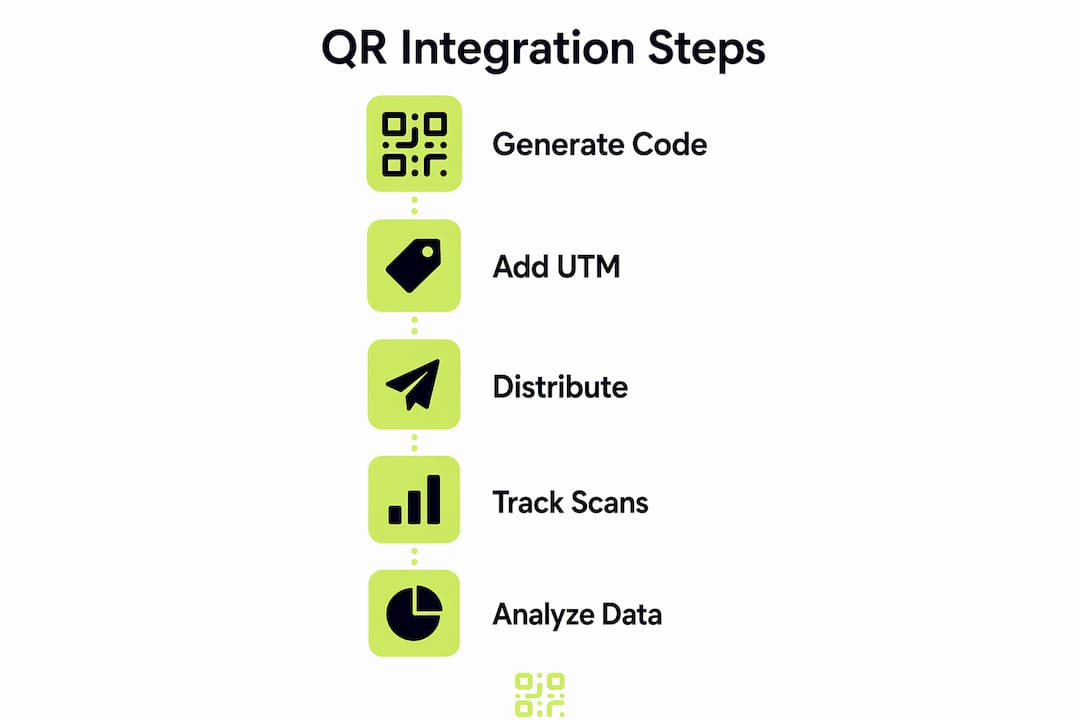
A structured analytics approach for QR campaigns follows four clear steps:
- Define your tracking goals before generating any code. Decide whether you are measuring conversions, dwell time, or repeat scans.
- Connect scan data to your CRM so every scan enriches an existing customer record or creates a new one automatically.
- Segment by location and device to identify which placements and formats perform best across different audiences.
- Review and update destination content based on performance data, using dynamic codes to make changes without reprinting.
The table below shows how different data points from QR scans translate into marketing decisions.
| Scan data point | What it tells you | Marketing action |
|---|---|---|
| Geolocation | Which regions respond best | Adjust regional spend |
| Device type | Mobile vs tablet usage | Optimise landing page layout |
| Time of scan | Peak engagement hours | Schedule paid media accordingly |
| Scan frequency | Repeat vs first-time scanners | Trigger loyalty or re-engagement flows |
Privacy matters here. Any QR-driven data collection must comply with GDPR if you operate in the UK or EU. That means clear consent mechanisms on landing pages and transparent data use policies. Qrlytics builds GDPR-compliant tracking into its platform by default, so you collect meaningful data without legal exposure.
Pro Tip: Use QR code tracking to measure not just total scans but unique scans. Repeat scans from the same device often signal high-intent behaviour worth targeting with a follow-up campaign.
Which security and user experience factors are critical?
A QR code is only as trustworthy as the experience it delivers. Branded and customised QR codes increase trust and scan rates because users recognise a credible, brand-aligned design. A generic black-and-white matrix with no context gives users no reason to scan.
Mobile-friendly landing pages are non-negotiable. If the destination page is not optimised for mobile and fast-loading, users drop off immediately. That drop-off destroys the conversion value of the scan entirely.
Security risks are real and growing. Malicious actors replace legitimate QR codes in public spaces with codes that redirect to phishing sites. Protecting your audience means using codes that display a recognisable brand URL in the preview before the user commits to opening it.
Best practices for secure, user-friendly QR integration:
- Use branded QR codes that include your logo or brand colours to signal authenticity.
- Always preview the destination URL on the code itself where the platform allows.
- Test every code on multiple devices and operating systems before deployment.
- Keep landing pages under three seconds load time. Anything slower loses a significant share of mobile users.
- Follow QR code consistency principles across all campaign materials to build recognition and trust.
GS1-powered QR codes support inventory management and enable flexible content updates without repackaging, making them the standard for product packaging in regulated industries. Aligning with GS1 standards gives your QR codes credibility in retail and supply chain contexts.
Pro Tip: Never deploy a QR code on printed materials without running a full scan test across iOS and Android. Font rendering and contrast ratios affect scannability more than most marketers expect.
How can marketers implement QR integrations effectively?
Effective implementation starts with choosing the right code type. Static QR codes encode a fixed URL and cannot be changed after printing. Dynamic QR codes use a redirect URL, so the destination can be updated at any time. For any campaign with a lifespan longer than a few days, dynamic codes are the correct choice.
Dynamic QR codes allow ongoing campaign optimisation without reprinting materials. That makes them significantly more cost-effective for print-heavy campaigns such as packaging, signage, and direct mail.
The table below compares static and dynamic codes across the factors that matter most to marketers.
| Factor | Static QR code | Dynamic QR code |
|---|---|---|
| Destination URL | Fixed at creation | Editable at any time |
| Analytics | None | Full scan tracking |
| Campaign flexibility | Low | High |
| Best use case | One-off events, Wi-Fi sharing | Marketing campaigns, packaging |
| Cost | Free or low cost | Subscription-based |
A practical implementation plan for marketers runs as follows:
- Map your touchpoints. Identify where QR codes will appear: product packaging, in-store signage, print adverts, event materials, or direct mail.
- Generate dynamic codes using a platform that supports real-time editing and scan analytics. Qrlytics provides both, with GDPR-compliant tracking built in.
- Integrate with your analytics stack. Connect scan data to Google Analytics, your CRM, or your marketing automation platform. Guidance on boosting scan rates can help you maximise the volume of data you collect.
- Test placement and design. Run A/B tests on code size, position, and surrounding call-to-action copy to find what drives the highest scan rate.
- Monitor and update. Review scan data weekly during active campaigns. Update destination URLs to reflect new offers, stock levels, or seasonal content.
Successful use cases span industries. Product registration via QR code gives brands direct customer data at the point of unboxing. Contactless restaurant menus cut printing costs and allow daily menu updates. Event check-in codes reduce queue times and feed attendance data directly into post-event CRM workflows. Understanding how to measure marketing ROI from these touchpoints is what separates campaigns that grow from campaigns that simply run.
Key takeaways
QR integration delivers the most value when dynamic codes, analytics, and mobile-optimised destinations work together as a single connected system.
| Point | Details |
|---|---|
| Dynamic codes over static | Dynamic QR codes let you update destinations after printing, making them essential for any ongoing campaign. |
| Data feeds decisions | Scan analytics including location, device, and timing data allow you to refine campaigns with real evidence. |
| First-party data advantage | QR-based product registration captures direct customer data, removing reliance on third-party sources. |
| Security and trust | Branded, customised QR codes increase scan rates and protect users from phishing risks. |
| Integration is the multiplier | Connecting scan data to your CRM and analytics stack turns individual scans into measurable business outcomes. |
QR integration is not a trend. It is infrastructure.
I have watched QR codes dismissed as a gimmick, then quietly become the backbone of contactless commerce during the pandemic, and now settle into something more permanent: core marketing infrastructure. The businesses that treated QR codes as a temporary fix are now scrambling to retrofit analytics and data capture. The ones that built proper integration from the start have a compounding advantage.
The mistake I see most often is treating the QR code as the end point. It is not. The code is the entry point. What matters is what happens after the scan: the landing page experience, the data captured, the CRM record updated, the follow-up triggered. A QR code with no analytics is a missed opportunity. A QR code with a broken or outdated destination is actively damaging to your brand.
The future of QR integration sits in personalisation and product lifecycle management. Brands that embed QR codes into packaging and connect scan data to post-purchase journeys will build customer relationships that outlast any single campaign. That is not a prediction. It is already happening in FMCG, healthcare, and retail. The question is whether your business is set up to participate. Adopting a practical tracking approach now puts you ahead of the majority who are still treating QR codes as decoration.
— The
Qrlytics makes connected QR integration straightforward
Qrlytics is built for marketers and business owners who need QR codes that work reliably, track accurately, and never expire. The platform’s dynamic QR code generator lets you edit destination URLs in real time, so your printed materials stay current without a reprint.
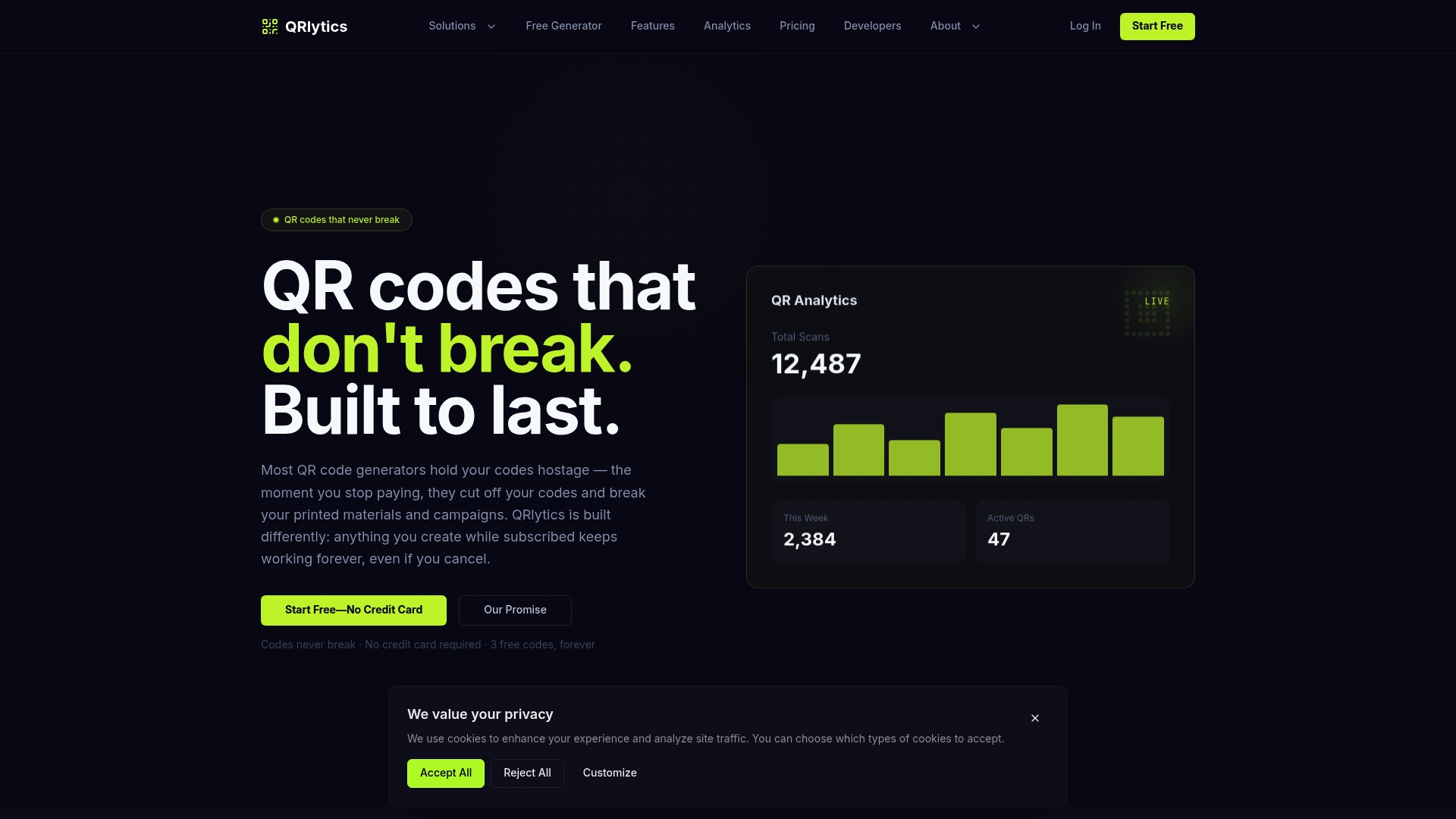
Every code comes with GDPR-compliant scan analytics covering device type, location, and scan timing, all feeding into a dashboard you can connect to your existing marketing tools. Codes created during an active subscription remain functional permanently, regardless of billing changes. No credit card is required to get started. If you are ready to turn your physical marketing materials into a measurable channel, Qrlytics gives you the tools to do it properly.
FAQ
What is seamless QR integration?
Seamless QR integration is the process of embedding QR codes into business operations and marketing materials so that scans trigger immediate, trackable digital interactions. The term covers both the technical connection between code and destination and the data flow into CRM and analytics systems.
What is the difference between static and dynamic QR codes?
Static QR codes encode a fixed URL that cannot be changed after creation. Dynamic QR codes use a redirect URL, meaning the destination can be updated at any time without reprinting the code, and they support full scan analytics.
How do QR codes help with first-party data collection?
QR-based product registration and campaign codes capture customer data directly at the point of interaction, removing reliance on third-party data sources. That data feeds CRM systems and enables personalised follow-up marketing.
Are QR codes safe for customers to use?
QR codes are safe when deployed by verified brands using branded, recognisable designs and secure redirect URLs. Risks arise from malicious codes placed in public spaces, which is why branded QR codes with visible destination previews are the recommended standard.
How do I measure the ROI of a QR code campaign?
Connect dynamic QR scan data to Google Analytics or your CRM using UTM parameters, then track conversions, repeat scans, and customer actions taken after the scan. Platforms like Qrlytics provide built-in analytics that make this attribution straightforward.