Why QR code consistency matters for marketers
TL;DR:
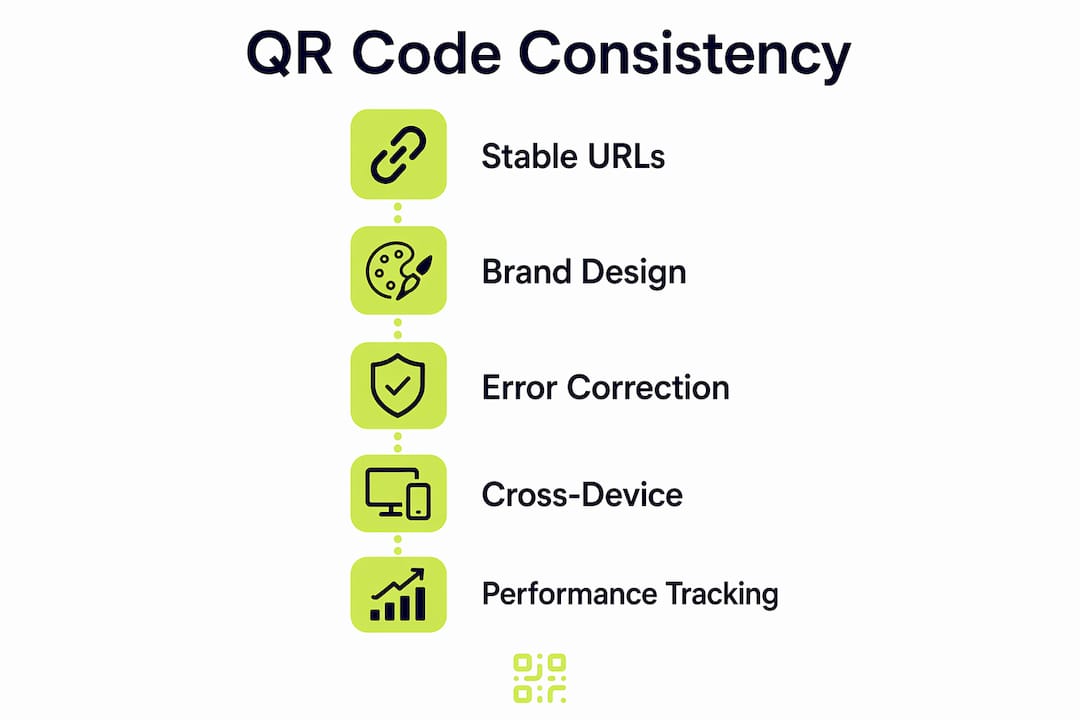
- QR code consistency ensures reliable performance across devices, environments, and over time, safeguarding brand integrity.
- Maintaining operational foundations like stable redirects and cross-device testing is vital to prevent failures, especially in printed materials.
- Managing QR codes as a system with ownership, ongoing monitoring, and lifecycle planning enhances long-term reliability and brand trust.
QR code consistency is defined as the reliable, stable performance of a QR code across different devices, environments, and time periods, ensuring every scan delivers the intended experience without failure. It operates on two levels: operational reliability, meaning the code scans correctly and the destination loads, and brand consistency, meaning the code looks and feels like part of your visual identity. Tools like Bitly for link management and Adobe for QR generation each address parts of this challenge, but neither covers the full picture. For marketers and business owners, understanding why QR code consistency matters is the difference between a campaign asset and a liability printed on ten thousand leaflets.
Why QR code consistency depends on operational foundations
The most common cause of a broken QR code is not a design flaw. It is an unstable destination URL. The U.S. Department of Energy recommends using short, managed campaign links with redirect capability so that if a destination changes, the code itself never needs to be reprinted. This single practice prevents the most expensive form of QR failure: discovering a broken link after a print run has shipped.
Redirect infrastructure matters because QR codes are static by default. Once printed, the pattern cannot change. A dynamic short link sitting between the code and the destination gives you the ability to update the endpoint without touching the physical material. This is the operational backbone of what is QR code continuity in practice.
Testing is the second non-negotiable. Adobe recommends cross-environment testing across phone cameras, screenshots, and webcams before any QR code goes to print or publication. A code that scans perfectly on an iPhone may fail on an older Android camera app, or on a webcam used in a presentation context. Testing across anticipated contexts catches these failures before they reach your audience.
The key operational factors to manage are:
- Stable destination URLs with redirect capability, so the code remains valid if content moves
- Cross-device testing on iOS, Android, and desktop webcam environments before deployment
- Human-readable short URLs printed adjacent to the QR code as a fallback for users who cannot scan
- Print quality checks covering contrast, quiet zone margins, and minimum size requirements
- Expiry monitoring for any time-limited links embedded in QR destinations
Pro Tip: Always place a human-readable short URL directly beneath your QR code on printed materials. The Department of Energy’s best practices confirm this fallback approach reduces campaign failure rates when scanning is not possible.
How does visual design affect QR code brand consistency?
QR code brand consistency is defined as the deliberate alignment of a QR code’s visual appearance with an organisation’s established brand guidelines, including colour, logo placement, and style. Brands that align QR code style consistently with their visual identity increase scan trust and customer recognition significantly. A generic black-and-white code on a premium product package communicates a disconnect. A branded code, using your brand colours and logo, signals that the experience on the other side will be equally considered.
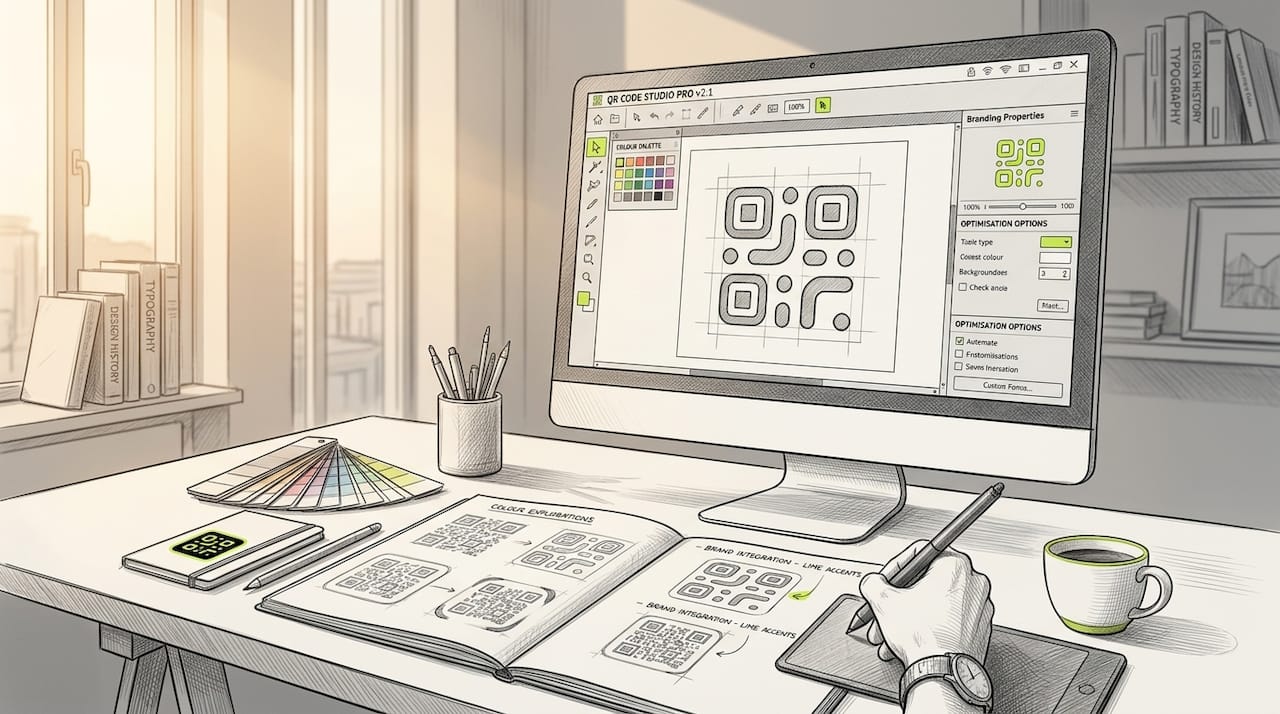
The technical decision that makes branded QR codes possible is error correction level selection. When you overlay a logo on a QR code, you are obscuring part of the data pattern. Error correction level H allows up to 30% of the code’s data to be recovered, which is what makes logo overlays scannable. Using a lower level with a logo overlay is a common mistake that produces codes which look correct but fail to scan in real conditions.
The table below summarises which error correction level suits each use case:
| Use case | Recommended level | Reason |
|---|---|---|
| Plain print, no logo | Level M | Sufficient damage resistance for standard print |
| Logo overlay | Level H | Supports 30% data recovery over obscured areas |
| Outdoor signage | Level Q or H | Accounts for physical wear and environmental damage |
| Digital display only | Level L or M | Lower density, faster scan in clean digital environments |
Beyond error correction, contrast and quiet zones are the two most overlooked design factors. A quiet zone is the blank border surrounding the QR pattern. Removing or reducing it to fit a design layout is one of the leading causes of scan failure in printed materials. Maintaining a minimum four-module quiet zone on all sides is not optional. It is a functional requirement.
Pro Tip: When using brand colours in a QR code, keep the foreground (the dark modules) significantly darker than the background. Reversed colour schemes, where a light pattern sits on a dark background, frequently fail on lower-quality phone cameras.
Why QR code continuity matters beyond the first scan
QR code continuity refers to the sustained relevance and functionality of a QR code throughout the full lifecycle of a campaign or product, not just at launch. Persistent QR codes designed for multiple scans achieve higher trust and effectiveness than codes built for a single interaction. This matters because consumers do not always act on a scan immediately. They save screenshots, share codes with colleagues, or return to packaging weeks after purchase.
Industries where QR code continuity is critical include:
- Product manuals and warranties, where a customer may scan a code months or years after purchase expecting current support content
- Travel and hospitality, where itinerary QR codes must remain functional from booking through to the return journey
- Retail packaging, where a product on a shelf may carry a QR code for twelve months or longer before reaching a consumer
- Event marketing, where attendees scan codes during and after an event to access recordings, resources, or follow-up offers
The practical solution is dynamic QR codes with managed redirects. A dynamic code points to a short link that you control. When the destination content changes, you update the redirect, and every existing code automatically points to the new destination. This is the mechanism that makes QR code journeys for delayed value possible. Designing for the user who scans three months after first seeing your code is a discipline that most marketing teams have not yet built into their QR deployment process.
Consumer expectations have shifted. 42% of consumers want QR codes to load faster and work more reliably, which means inconsistent performance is now a measurable trust signal. A code that worked last quarter but fails today does not just frustrate a user. It damages the credibility of the brand behind it.
How to measure and optimise QR code performance
Measurement turns QR code consistency from an intention into a managed outcome. Without data, you cannot know whether a code is failing in a specific geography, on a particular device type, or at a certain point in the campaign lifecycle. Analytic platforms that track scans across devices and locations enable proactive management rather than reactive damage control.
A practical optimisation process follows these steps:
- Establish a baseline. Record scan volume, device split, and location data in the first two weeks of a campaign to understand normal performance.
- Monitor for drop-offs. A sudden decline in scans from a specific region or device type signals a potential consistency issue, such as a redirect failure or a print quality problem in a particular batch.
- Identify common failure patterns. Reviewing critical QR code errors alongside your analytics data reveals whether failures are technical, design-related, or contextual.
- Test and update. Use dynamic redirect capability to update destinations without reprinting, then monitor whether scan rates recover.
- Link performance to campaign KPIs. Map scan-to-conversion rates against consistency metrics to demonstrate the direct relationship between reliable QR codes and marketing ROI.
Qrlytics provides real-time scan analytics including device type, location heat maps, and timing data, giving marketing teams the visibility they need to act on inconsistencies before they compound. Consistent branding also plays a role in boosting scan engagement, as recognisable, well-designed codes generate higher click-through rates than generic alternatives.
Key takeaways
QR code consistency requires stable redirect infrastructure, cross-device testing, brand-aligned design, and continuous analytics monitoring to sustain reliable performance throughout a campaign’s full lifecycle.
| Point | Details |
|---|---|
| Stable redirect links | Use dynamic short links so destination URLs can be updated without reprinting codes. |
| Cross-device testing | Test on iOS, Android, and webcam environments before any deployment to catch failures early. |
| Error correction level H | Always use level H when overlaying a logo to maintain scanability with up to 30% data recovery. |
| Lifecycle planning | Design QR codes for repeat scans across months or years, not just the launch moment. |
| Analytics monitoring | Track scan rates by device and location to identify and resolve inconsistencies proactively. |
QR code consistency is a system, not a one-time task
Most marketing teams treat QR code deployment as a creative production task. Design the code, add it to the artwork, send it to print. That framing is where the problems begin. What I have observed consistently is that the codes which fail are not the ones with poor design. They are the ones with no owner after launch.
The real discipline here is treating your QR code portfolio the same way you treat your domain portfolio or your email list. It requires governance. Someone needs to own the redirect infrastructure, monitor the analytics, and flag when a destination has gone stale. Without that ownership, even a perfectly designed, correctly tested code becomes a liability the moment its destination URL changes or its hosting lapses.
The role of QR codes in brand consistency is also underestimated. A broken or poorly performing code does not just frustrate one user. It signals to every user who encounters it that the brand behind it does not maintain its own materials. That is a brand trust issue, not just a technical one.
My advice to marketing professionals is to build QR code management into your campaign governance framework from the outset. Define who owns the redirect, set a review cadence, and connect your QR analytics to your broader campaign reporting. The teams that do this consistently are the ones whose QR codes still work two years after a campaign ends.
— The
How Qrlytics helps you maintain reliable, branded QR codes
If you are managing QR codes across multiple campaigns or product lines, the operational overhead of maintaining consistency adds up quickly. Qrlytics is built specifically to address this.
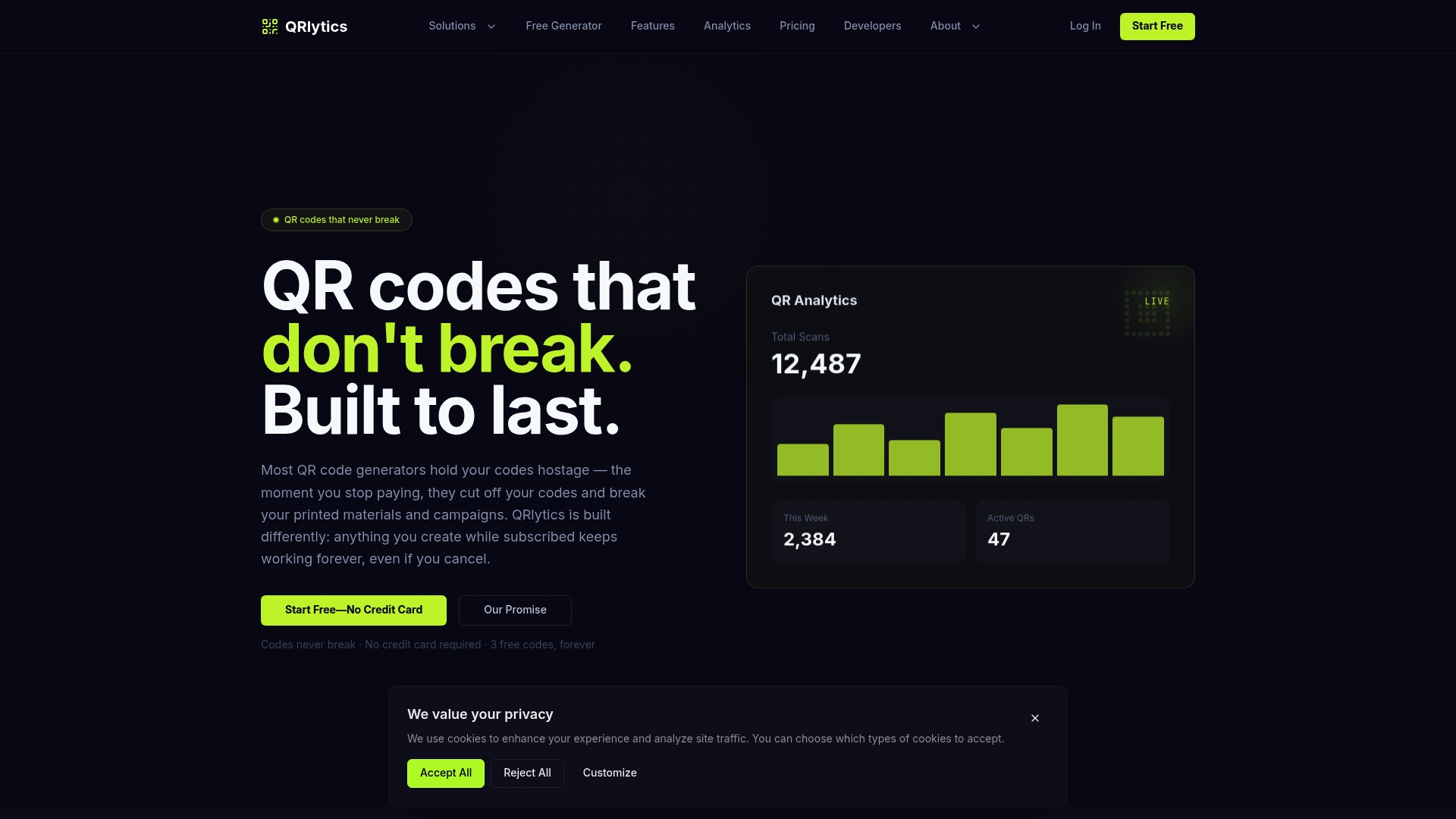
With Qrlytics, you can generate branded QR codes with your logo and colours, manage dynamic redirects from a single dashboard, and monitor scan performance in real time. Codes created during an active subscription remain functional permanently, which directly addresses the lifecycle continuity problem that ruins printed materials. The dynamic QR code generator lets you update destinations without reprinting, and GDPR-compliant analytics give you the scan data you need to optimise performance. No credit card is required to start.
FAQ
What is QR code consistency?
QR code consistency is the reliable, stable performance of a QR code across different devices, environments, and time periods. It covers both technical reliability, such as stable redirect links, and visual consistency aligned with brand guidelines.
Why does QR code continuity matter for printed materials?
Printed materials cannot be updated once distributed, so a QR code with a broken or expired destination permanently damages the campaign. Using dynamic short links with redirect capability means the destination can be updated without reprinting the code.
What error correction level should I use for a branded QR code?
Use error correction level H when adding a logo overlay to a QR code. Level H supports up to 30% data recovery, which compensates for the portion of the pattern obscured by the logo.
How do I know if my QR code is performing consistently?
Track scan rates by device type, location, and time using a QR analytics platform. A sudden drop in scans from a specific device or region indicates a consistency issue that requires investigation.
Why do QR codes stop working after a subscription ends?
Many free QR code services deactivate codes when a subscription lapses, because the redirect infrastructure is tied to the billing account. Qrlytics guarantees that codes created during an active subscription remain functional permanently, regardless of future billing status.