Top industries using QR codes in 2026
TL;DR:
- QR codes are widely adopted across industries like hospitality, retail, packaging, logistics, and healthcare to reduce friction and improve efficiency. Managing QR codes throughout their lifecycle and prioritizing privacy enhances their effectiveness and user trust. Dynamic codes enable flexible, long-term campaigns by updating destinations without reprints or new codes.
QR codes are the standard tool for bridging physical and digital experiences across retail, hospitality, logistics, healthcare, and product packaging. The top industries using QR codes have moved well beyond novelty adoption. Restaurants and hospitality lead with a 75% adoption rate, while retail, eCommerce, and product packaging each sit at 46%. Brands including Starbucks, Tesco, and the VA Medical Center have built QR codes into core customer and operational workflows. This article maps the sectors driving adoption, explains what they are actually doing with the technology, and gives you the practical context to apply it in your own organisation.
1. Restaurants and hospitality: the highest adoption of any sector
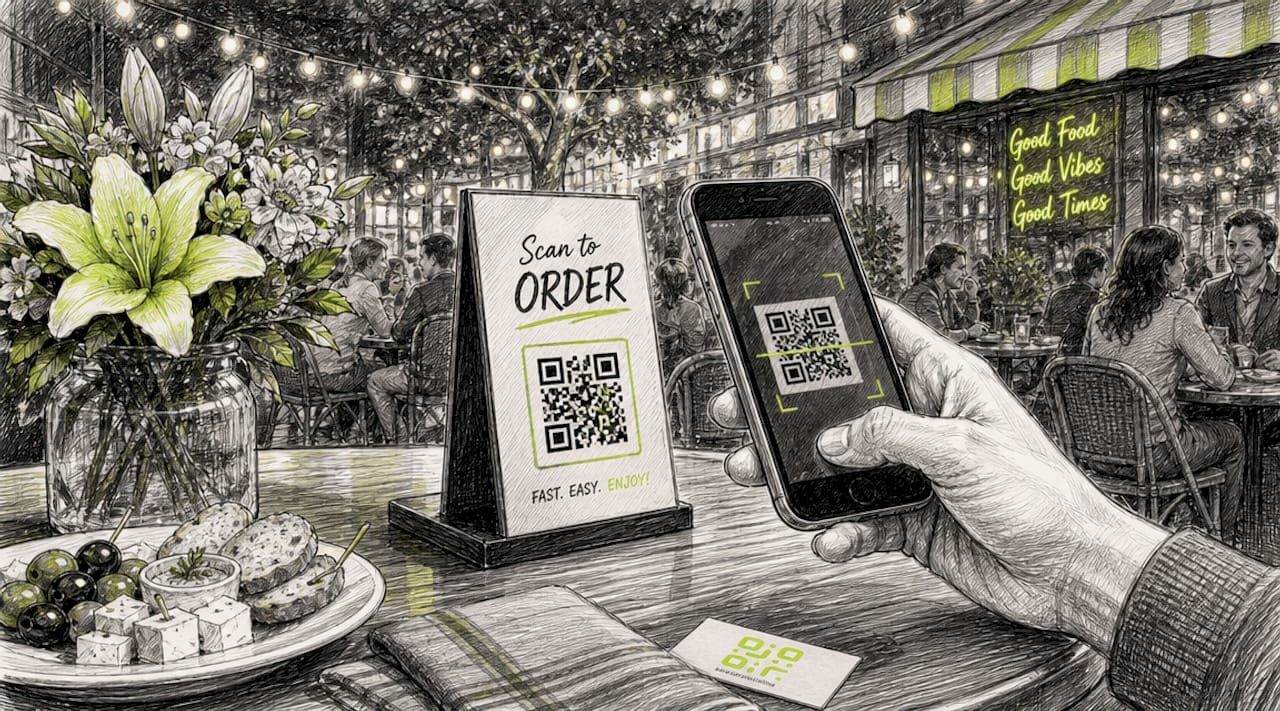
Restaurants and hospitality hold a 75% QR code adoption rate, the highest of any industry. That figure reflects a structural shift, not a pandemic-era workaround. Digital menus, contactless ordering, and mobile payment flows are now permanent fixtures in venues from independent cafés to global chains.
The use cases extend well beyond the menu. Hospitality businesses deploy QR codes for:
- Digital menus that update in real time without reprinting costs
- Contactless payments linked directly to table-side ordering systems
- Loyalty programme enrolment via a single scan at point of sale
- Promotional campaigns tied to seasonal offers or new product launches
- Guest feedback forms replacing paper comment cards
Starbucks uses QR codes within its Rewards app to connect in-store purchases to digital loyalty points, creating a closed loop between physical visits and digital engagement. That model, scan to earn, scan to redeem, is now replicated across hotel chains, quick-service restaurants, and casual dining groups.
Pro Tip: Place your QR code at eye level on table tents rather than flat on the table surface. Scan rates increase significantly when the code is vertical and within arm’s reach.
2. Retail and eCommerce: marketing and customer engagement at scale
Retail and eCommerce have a 46% QR code adoption rate, with applications spanning in-store promotions, product detail pages, and event-based lead capture. For marketers, the channel is particularly attractive because it converts physical touchpoints into measurable digital interactions.
The most common retail QR code applications follow a clear hierarchy:
- Product packaging links directing shoppers to ingredient lists, sourcing information, or how-to videos
- In-store promotional codes unlocking discounts or loyalty points at the point of decision
- Digital business cards at trade shows and retail events for instant contact and lead capture
- Window displays and posters driving foot traffic to online catalogues or booking pages
- Post-purchase inserts in eCommerce parcels linking to review pages or upsell offers
Tesco uses shelf-edge QR codes to connect shoppers with nutritional detail and provenance information that would not fit on a standard label. This approach reduces label clutter while giving the engaged shopper exactly what they want. Digital business cards at trade shows and events have become a standard lead capture method, replacing paper card exchanges with an instant scan-to-CRM workflow.
Analytics matter here. Nearly 45% of marketers rank scan analytics as the most important QR code feature, yet only 12% successfully link scans to revenue. That gap represents a significant missed opportunity for retail marketers who deploy codes without a measurement framework behind them. Learn how to close that gap with a structured approach to QR campaign tracking.
3. Product packaging and consumer goods: the 92% standard
Product packaging is one of the top sectors for QR codes, with 92% of CPG brands placing codes on their packaging. The 46% sector adoption rate masks just how embedded QR codes have become in consumer goods specifically. For brands in food, beverage, beauty, and household products, the code on the pack is now expected rather than exceptional.
Consumer behaviour supports this. Fifty-seven per cent of shoppers scan packaging QR codes to access nutrition information, ingredient sourcing, or allergen data. That is a direct signal that the code must deliver substantive content, not a promotional landing page dressed up as information.
| Use case | Primary benefit |
|---|---|
| Nutrition and ingredient detail | Meets regulatory expectations and consumer demand for transparency |
| Sustainability credentials | Communicates recycling guidance and carbon data without label space constraints |
| Interactive product demos | Video tutorials and usage guides reduce returns and support calls |
| Loyalty and rewards enrolment | Converts a one-time buyer into a repeat customer at the moment of purchase |
Dynamic QR codes are particularly valuable on packaging because they allow brands to update destination URLs after print runs are complete. A code printed in January can point to a summer campaign in June without any physical reprint. This is where reducing print waste becomes a measurable sustainability outcome, not just a marketing claim.
Pro Tip: Test your packaging QR code at the smallest printed size before committing to a full print run. Codes below 2cm square frequently fail to scan under poor retail lighting conditions.
4. Logistics and supply chain: operational efficiency at volume
Logistics has a 43% adoption rate for QR codes, with inventory management close behind at 39%. In these sectors, QR codes are not a marketing tool. They are an operational standard for tracking, verification, and error reduction across high-volume supply chains.
The core applications in logistics include:
- Package tracking at each handoff point from warehouse to last-mile delivery
- Shipment verification replacing manual data entry with a single scan
- Returns processing where a QR code on the returns label auto-populates the refund system
- Inventory audits using mobile scanning to update stock counts in real time
- Supplier documentation linking physical goods to digital certificates of conformity
The efficiency gain is material. A warehouse operative scanning a QR code to log a pallet movement completes the task in under two seconds. The same task via manual entry takes fifteen to thirty seconds and introduces transcription error. At volume, that difference compounds into hours of recovered productivity per shift. QR codes in logistics also integrate cleanly with existing barcode infrastructure, meaning adoption does not require a full system replacement.
5. Healthcare and pharmaceuticals: privacy-first QR deployment
Healthcare QR code adoption is growing rapidly, with the VA Medical Center’s 2026 rollout serving as the clearest example of best practice in the sector. The VA Minneapolis system replaced printed medication information sheets with QR codes on prescription bottles that link directly to drug information pages. No personal data is embedded in the code. No login is required to access the content.
That design choice is deliberate and instructive. Healthcare QR deployments that avoid embedding personal data and require no authentication remove the two biggest barriers to patient adoption: privacy concern and friction. The VA’s phased rollout, targeting full implementation by May 2026, is expected to reduce paper costs significantly while improving patient access to medication guidance in multiple languages and accessible formats.
Beyond prescriptions, healthcare organisations use QR codes for:
- Telemedicine portal access from appointment reminder letters
- Instructional videos for post-operative care linked from discharge paperwork
- Equipment maintenance logs in clinical environments
- Patient consent forms replacing paper-based processes
The principle that applies across all these cases is frictionless access. If a patient or clinician must navigate more than one step after scanning, adoption drops. Privacy-conscious QR design is not a compliance checkbox. It is the foundation of a code that people will actually use.
6. Marketing and advertising: cross-channel deployment at scale
Marketers deploy QR codes across social media (64%), digital advertising (60%), and printed materials (50%). That distribution shows QR codes functioning as connective tissue between channels rather than a standalone tactic. A printed direct mail piece with a QR code becomes a tracked digital touchpoint. A social media post with an embedded code drives offline action.
The marketing sector’s challenge is measurement. Most teams can report scan volume. Far fewer can attribute those scans to pipeline or revenue. The gap exists because QR codes are often deployed as one-off campaign assets rather than managed across their full lifecycle. When a code is static and its destination URL cannot be changed, the campaign ends when the print run ends. Dynamic codes, where the destination can be updated without reprinting, allow a single physical asset to serve multiple campaign phases. That is the difference between a disposable tactic and a durable marketing channel. For a practical walkthrough of generating codes that support this approach, the QR code generation guide from Qrlytics covers the key decisions.
7. Events and print marketing: instant engagement from physical materials
Events represent one of the highest-intent environments for QR code deployment. Attendees at trade shows, conferences, and product launches are actively seeking information, making a well-placed code far more likely to be scanned than the same code on ambient advertising. Print marketing at events that incorporates QR codes converts static collateral into a two-way engagement channel.
The most effective event QR applications connect the physical moment to a digital follow-up. A brochure QR code that opens a video demo, a badge QR code that triggers a LinkedIn connection request, or a poster code that adds a calendar event all extend the value of the physical interaction beyond the event itself. Sustainable print marketing combined with dynamic QR codes reduces the need for reprints when event details change, making the format both cost-effective and environmentally responsible.
Key takeaways
The industries with the highest QR code adoption, restaurants, retail, packaging, logistics, and healthcare, share one common factor: they use codes to replace friction, not just to add a digital layer.
| Point | Details |
|---|---|
| Hospitality leads adoption | Restaurants and hospitality hold a 75% adoption rate, the highest of any sector. |
| Retail needs measurement | 45% of marketers prioritise analytics, but only 12% connect scans to revenue outcomes. |
| Packaging is near-universal | 92% of CPG brands use QR codes on packaging, making them a consumer expectation. |
| Healthcare requires privacy-first design | The VA’s rollout proves that no embedded personal data and no login requirement drives adoption. |
| Dynamic codes extend campaign life | Updating destination URLs without reprinting turns a one-off asset into a long-term channel. |
What I have learnt from watching QR codes mature across industries
The most common mistake I see marketers make with QR codes is treating them as a delivery mechanism rather than a managed asset. A code printed on ten thousand brochures is a ten-thousand-point commitment. If the destination URL goes down, the subscription lapses, or the campaign ends and the code deactivates, every one of those printed pieces becomes a dead end. That is not a theoretical risk. It is a routine failure mode with free and low-cost QR generators.
The industries that get the most from QR codes, logistics, healthcare, and the more sophisticated retail operators, treat codes the way they treat any operational infrastructure. They manage them across their full lifecycle, monitor performance, and update destinations when strategy changes. The Uniqode State of QR Codes 2026 report makes this point directly: lifecycle management is the variable that separates high-ROI deployments from wasted print budgets.
The other thing worth saying plainly is that privacy design is not optional in 2026. The VA Medical Center’s approach, no personal data in the code, no login to access content, is the model every sector should follow. Users who trust a QR code scan it. Users who do not, skip it. That trust is built before the scan, through design choices that are invisible to the user but fundamental to adoption.
— The Qrlytics Team
How Qrlytics helps you manage QR codes across every industry
If you are deploying QR codes for marketing, operations, or customer engagement, the platform you use to generate and manage them matters as much as the strategy behind them.
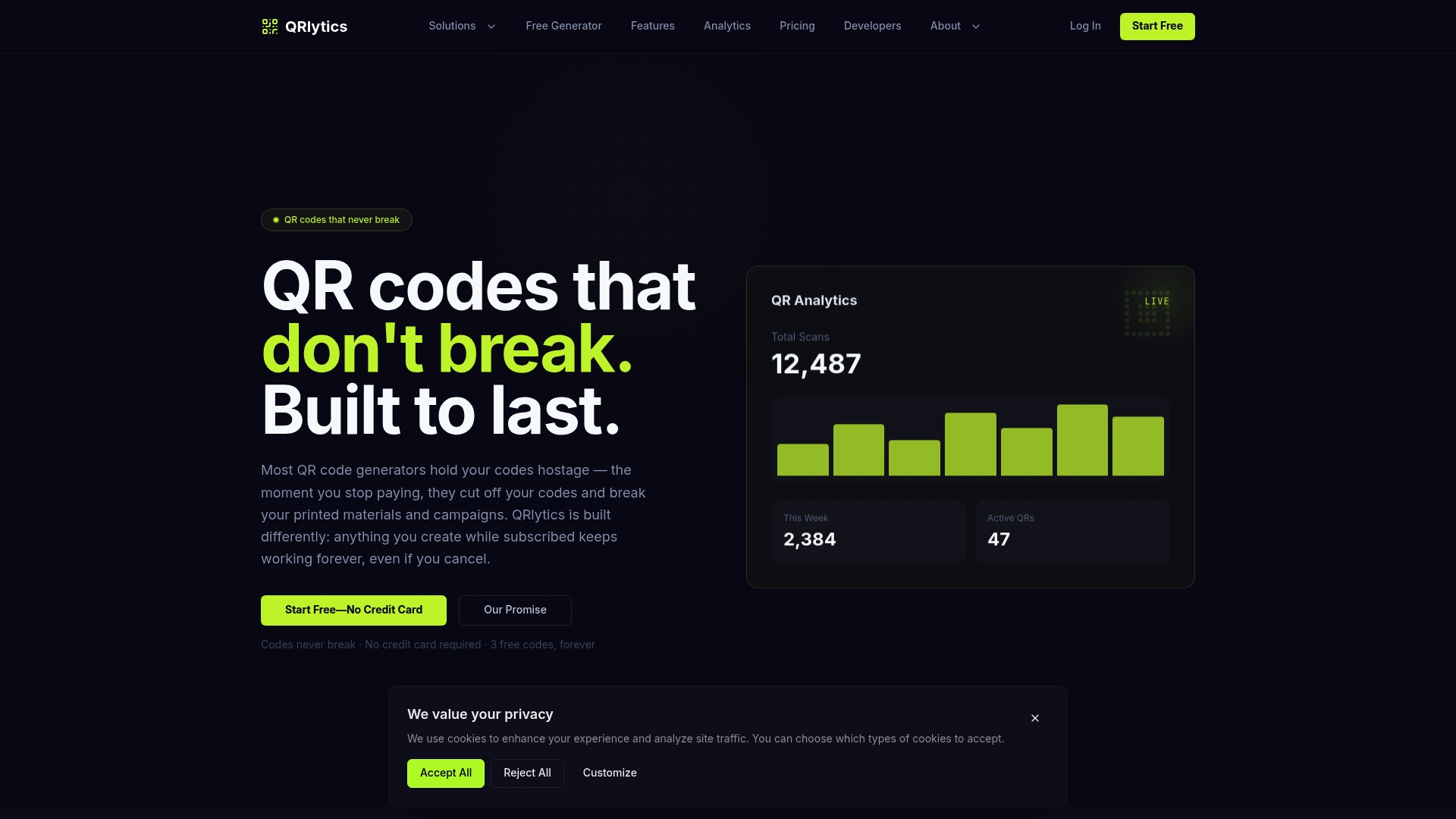
Qrlytics offers both a free QR code generator for quick campaign starts and a dynamic QR code generator for codes that need to be updated, tracked, and managed over time. Codes created during an active Qrlytics subscription remain functional permanently, regardless of future billing status. That guarantee matters when your codes are printed on packaging, signage, or event materials that outlast any single campaign. Real-time scan analytics, GDPR-compliant tracking, and global heat maps give you the measurement layer that most QR deployments are missing. No credit card is required to start.
FAQ
Which industry uses QR codes the most?
Restaurants and hospitality have the highest QR code adoption rate at 75%, driven by digital menus, contactless ordering, and loyalty programme integration.
What are the main benefits of QR codes in retail?
Retail QR codes connect physical products to digital content, including promotions, product information, and loyalty enrolment, while providing marketers with scan data to measure campaign performance.
How do QR codes work in logistics?
Logistics teams use QR codes to track packages, verify shipments, and update inventory counts via mobile scanning, replacing manual data entry and reducing transcription errors at volume.
Are QR codes safe to use in healthcare?
Yes, when designed correctly. The VA Medical Center’s prescription QR codes embed no personal data and require no login, demonstrating that healthcare QR deployments can be both private and frictionless.
What is a dynamic QR code and why does it matter?
A dynamic QR code allows you to update the destination URL after the code has been printed. This means a single physical asset can serve multiple campaign phases without reprinting, making it the preferred format for any long-term deployment.