Reduce print waste with QR codes: the marketer’s guide
TL;DR:
- Using QR codes reduces print waste by enabling digital content updates without reprinting. Dynamic QR codes are essential for sustainability because they allow real-time changes, decreasing the need for material disposal. Connecting consumers to verified data via QR codes also combats greenwashing and builds trust in sustainability claims.
Print materials cost more than the paper they’re printed on. When a price changes, a regulation shifts, or a campaign ends, businesses discard thousands of leaflets, menus, and inserts without a second thought. Finding practical ways to reduce print waste with QR codes is one of the most direct moves marketing professionals and business owners can make right now, both for cost control and genuine sustainability. This guide covers what actually works, from design fundamentals through to dynamic content strategies, with clear comparisons to help you choose the right approach.
Table of Contents
- Key criteria for reducing print waste with QR codes
- Using dynamic QR codes to update content and reduce reprints
- Enhancing transparency and combating greenwashing through QR codes
- Practical applications: replace printed materials with QR-driven digital experiences
- Comparing QR code strategies for print waste reduction: static vs dynamic vs branded codes
- Why adopting QR codes for sustainability is a strategic business advantage
- Explore QRlytics solutions for effective print waste reduction with QR codes
- Frequently asked questions
Key Takeaways
| Point | Details |
|---|---|
| Dynamic QR codes reduce waste | Using QR codes that can update content digitally removes the need for constant reprinting and redesign. |
| Transparency builds trust | QR codes provide consumers with verified sustainability data, helping brands avoid greenwashing. |
| Placement is crucial | Well-designed and strategically placed QR codes ensure high scan rates, maximising waste reduction benefits. |
| Digital replacement cuts print | QR codes enable digitising menus, manuals, and receipts, significantly lowering paper consumption. |
| Data drives improvement | Scan analytics allow marketers to refine campaigns and further minimise print resource use. |
Key criteria for reducing print waste with QR codes
Before you print a single QR code, there are fundamentals worth getting right. A poorly placed or badly designed code does not just fail to scan; it defeats the purpose of printing it in the first place, generating waste without delivering value.
Here are the design essentials every marketer should confirm before going to print:
- Size and quiet zone: A QR code needs a minimum size of about 2 cm x 2 cm for reliable scanning, plus a clear white border (the “quiet zone”) around it. Cutting into that border is one of the most common causes of scan failure.
- Contrast: Black on white remains the most reliable combination. Coloured codes can work, but the foreground must always be darker than the background.
- Dynamic over static: Use dynamic QR codes wherever possible. These codes allow you to update the destination URL without changing the printed code itself, which is the single most important factor for reducing reprints.
- Clear call to action: Tell users what happens when they scan. “Scan for today’s menu” or “Scan for your digital receipt” removes hesitation and improves scan rates.
- Placement: Position codes on flat, well-lit surfaces at eye level. Curved surfaces, direct sunlight, and busy backgrounds all reduce reliability.
- Fallback option: Include a short URL beneath the code for users who prefer to type rather than scan.
As QR code best practices confirm, a QR code should always balance visual branding with technical reliability for best performance. You can browse additional QR code guides and tips to deepen your understanding of what drives scan success before committing materials to print.
It is also worth reviewing your QR data privacy approach early on. GDPR-compliant tracking matters, particularly when your codes collect location or device data from consumers.
Step-by-step checklist before printing any QR code material:
- Confirm the code is dynamic, not static.
- Test scannability on multiple devices (iOS and Android).
- Verify the destination URL loads correctly on mobile.
- Check contrast and quiet zone against print proofs, not just screen previews.
- Add a concise call to action directly beside the code.
- Include a short fallback URL beneath the code.
Using dynamic QR codes to update content and reduce reprints
Dynamic QR codes are the practical backbone of any serious print waste reduction strategy. Unlike static codes, which encode the destination directly into the pattern, dynamic codes store a short redirect URL that points to your chosen destination. Change the destination in your dashboard and every existing printed code updates instantly.

This matters most in high-churn print environments. Consider packaging: if an ingredient changes or a compliance requirement is updated, a static code means scrapping and reprinting existing stock. With a dynamic code, you update the linked page and the printed materials remain valid. Smart and connected packaging is already reshaping how brands handle this, with 91% of companies believing that real-time label data helps reduce waste and errors while improving efficiency.
Here is where dynamic codes specifically cut print waste:
- Compliance corrections: Update safety data, allergen information, or legal notices without discarding existing printed stock.
- Seasonal promotions: Swap campaign content for new offers without printing new materials.
- Multilingual content: Serve language-specific pages based on device or region settings, removing the need for multiple printed versions.
- Multimedia additions: Add video tutorials, repair guides, or sustainability reports to existing packaging or leaflets without a reprint.
- Real-time sourcing data: Update ingredient origins, carbon footprint figures, or supplier certifications as they change.
“The carbon footprint of a single print run goes beyond the paper itself. It includes ink, transport, disposal, and the energy used in production. Avoiding even one unnecessary reprint has a measurable environmental impact.”
Pro Tip: When setting up dynamic codes for packaging, always name your codes by product line and batch in your QR management dashboard. This makes it far easier to update specific codes without accidentally changing the wrong destination. You can explore printed material tracking with QR codes to see how campaign-level organisation reduces confusion at scale.
A dynamic QR code generator with reliable redirect infrastructure is essential here. If the platform deactivates codes when a billing issue arises, every piece of printed material bearing that code becomes instantly useless. That is the opposite of waste reduction.
Enhancing transparency and combating greenwashing through QR codes
Greenwashing is a genuine risk for brands making sustainability claims. Vague language like “eco-friendly” or “sustainably sourced” printed on packaging carries no verifiable weight. QR codes change that equation by connecting consumers directly to evidence.
QR codes link to verified data such as carbon footprint reports and sourcing certifications, empowering consumers and defending against greenwashing. Rather than printing pages of certificates or inserts, a single code on the packaging serves as a live reference to everything a consumer needs to assess your claims. This approach also eliminates extra printed inserts that would otherwise end up in landfill.
| Greenwashing tactic | QR code countermeasure |
|---|---|
| Vague “eco-friendly” label | Links to third-party life cycle assessment report |
| Unverified “sustainably sourced” claim | Links to live supplier audit and certification page |
| Outdated carbon data printed on packaging | Dynamic link always shows current emissions data |
| No evidence of recycling programme | QR links to verified take-back or recycling scheme |
| Generic “we care about the planet” messaging | Code links to measurable sustainability targets and progress |
The benefits extend beyond consumer trust:
- Regulatory readiness: Brands can meet incoming EU Digital Product Passport requirements without additional print runs.
- Certification updates: When you earn a new accreditation, update the linked page rather than reprinting labels.
- Consumer education: Detailed sourcing pages build literacy and engagement, turning sceptics into advocates.
- Audit transparency: Third-party reports hosted behind a QR code are harder to dispute than claims printed directly on packaging.
Pairing this with safer marketing practices ensures your data collection behind those scans also holds up to scrutiny. If you want to understand how advanced QR code tracking supports ongoing sustainability reporting, the analytics layer is where real insight lives.
Practical applications: replace printed materials with QR-driven digital experiences
The principle is straightforward. Every document a customer currently receives as print is a candidate for QR-driven digital delivery. The environmental and cost case is clear: QR codes help retailers and restaurants replace physical menus, manuals, flyers, and receipts, keeping significant volumes of unnecessary materials out of the waste stream.
Here is a step-by-step approach to replacing your most common printed materials:
- Menus: Replace printed menus with a QR code at each table or counter. Update items, prices, and allergen information in real time without touching the physical card.
- Product manuals: A QR code on the product itself links to a digital manual. Update instructions, add video guides, or localise for new markets without reprinting anything.
- Receipts: Offer digital receipts via QR code at point of sale. Customers scan to access their purchase record instead of receiving thermal paper.
- Promotional flyers: Replace one-time event flyers with a durable card or poster bearing a dynamic QR code. Update the destination for each new campaign.
- Warranties and registrations: Link to digital warranty registration and claim forms. No paper forms, no posted documents.
- Refill and loyalty programmes: QR codes on packaging link to refill incentives, reducing the need for separate loyalty cards or printed vouchers.
The additional benefits are worth noting:
- Real-time corrections: A typo in a menu or manual is fixed in minutes, not weeks.
- Measurable engagement: You know exactly how many people accessed the digital content and when.
- Brand consistency: Digital pages can be updated to reflect current branding without reprinting existing stock.
- Cost savings: Fewer print runs mean lower agency, print, and logistics costs over time.
See mastering QR code campaigns for practical campaign structures that translate these principles into day-to-day operations.
Comparing QR code strategies for print waste reduction: static vs dynamic vs branded codes
Not all QR codes are equal in their ability to minimise print materials. Understanding the differences helps you choose the right tool for each use case.
| Feature | Static QR code | Dynamic QR code | Branded QR code |
|---|---|---|---|
| Content updateable? | No | Yes | Yes (if dynamic) |
| Reprinting needed for changes? | Yes | No | No |
| Scan analytics available? | No | Yes | Yes |
| Design customisation? | Basic | Basic to moderate | High |
| Sustainability impact | Low | High | High |
| Cost over time | Higher (reprints) | Lower | Moderate to lower |
| Best use case | One-time events | Ongoing campaigns, packaging | Brand-forward materials |
Dynamic QR codes enable scan tracking, location analytics, and content updates without reprinting, unlike static codes. For any material with a lifespan beyond a single event, dynamic codes are the clear choice from both a cost and sustainability perspective.
Branded codes, where your logo or colour palette is incorporated into the code design, serve an additional purpose. They increase scan rates because consumers recognise and trust the source. However, heavy customisation can reduce scannability if not tested carefully.
Pro Tip: If you add a brand logo to the centre of a QR code, keep it within 30% of the total code area. Beyond that threshold, error correction capacity is typically exceeded and scan reliability drops. Always test on the final printed material, not just on screen.
Analytics from a QR codes with analytics platform allow you to track which materials are driving scans and which are not. This data directly informs decisions about where to continue printing and where to reduce or eliminate physical collateral entirely.
Why adopting QR codes for sustainability is a strategic business advantage
Most sustainability conversations focus on the environmental case. That is valid, but the business case for QR-driven print waste reduction is arguably more persuasive for decision-makers who need to justify the investment internally.
Consumers are increasingly scrutinising brand sustainability claims. Younger demographics, in particular, are willing to switch brands over perceived greenwashing. QR codes that link to verified, current data are not just a transparency tool. They are a differentiation tool. Brands that can prove their claims with a single scan build trust faster than those relying on packaging copy alone.
There is also the circular economy angle. Scan data from QR codes on packaging can reveal whether customers are engaging with repair guides, refill schemes, or recycling instructions. That engagement data helps you understand which sustainability initiatives are actually working and which are being ignored. You can then reduce print collateral around programmes that generate no scans and invest more in those that do. This closes the loop between print decisions and customer behaviour in a way that traditional print never could.
Brands investing in connected packaging and QR technologies today are better positioned to engage future consumers, reduce waste, and operate confidently in a data-driven world. This is not a distant prediction. It is a description of competitive positioning that is already separating forward-thinking brands from those still running fixed print cycles.
The operational agility argument matters too. When a supply chain disruption changes your sourcing, or a regulatory change affects your labelling, dynamic QR codes mean you respond in hours rather than weeks. That speed protects both your brand and your budget. Explore the QRlytics blog for ongoing guidance on building QR code strategies that stay current with market demands.
Explore QRlytics solutions for effective print waste reduction with QR codes
Putting these strategies into action requires a QR platform you can rely on for the long term. QRlytics is built specifically for marketers and business owners who need dynamic, branded QR codes that stay active, stay trackable, and never become a liability on printed materials.
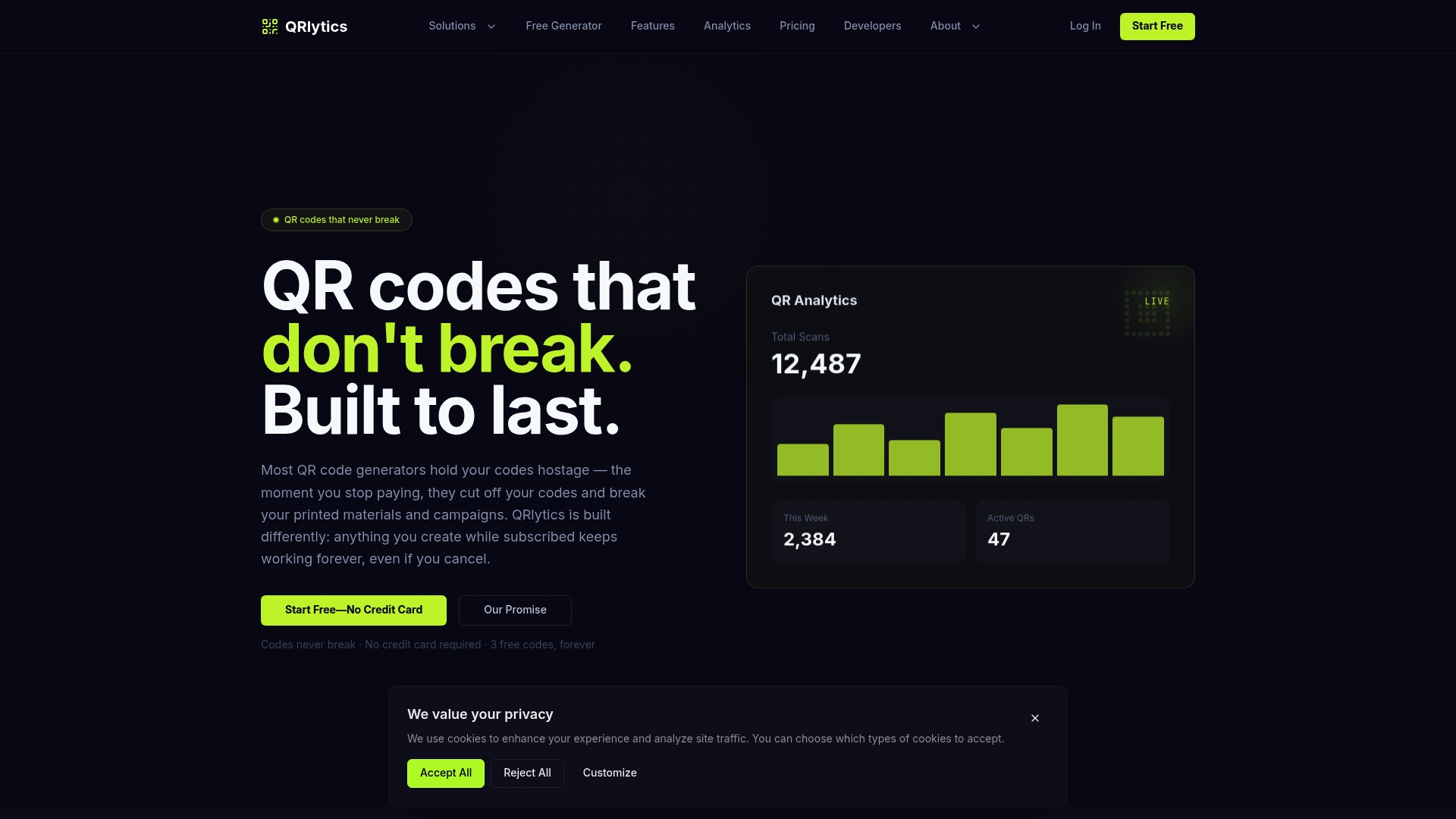
With QRlytics, you can update destination URLs without reprinting anything, track scans by location, device, and time, and customise codes to match your brand identity. All codes created during an active subscription remain functional permanently, protecting every printed material you produce. Start with the free QR code generator to test the platform before scaling up, then explore dynamic QR code generation and full scan analytics for ongoing campaigns. No credit card is needed to begin.
Frequently asked questions
How do QR codes specifically help reduce print waste?
QR codes enable digital access to content like manuals, menus, and certifications, allowing businesses to update information without reprinting materials. Dynamic QR codes help avoid frequent packaging reprints, reducing material waste and carbon footprint significantly.
What makes dynamic QR codes more sustainable than static codes?
Dynamic QR codes allow content updates without changing the printed code, eliminating the need for repeated print runs when information changes. Dynamic codes enable updates and scan tracking without reprinting, which static codes simply cannot do.
Can QR codes help consumers avoid greenwashing?
Yes. QR codes link to detailed, verified data such as carbon footprints and third-party certifications, allowing consumers to assess genuine sustainability claims beyond vague marketing language. Granular sustainability data provided via QR codes gives consumers a reliable defence against misleading claims.
What are best practices for placing QR codes to ensure they reduce waste effectively?
Place codes on flat, well-lit surfaces at eye level with a clear call to action directly beside them. Strategic placement at eye level with good lighting improves scan rates, which is essential for ensuring your printed materials do their job rather than becoming waste.