QR scan data enrichment: a guide for marketers
TL;DR:
- QR scan data enrichment automatically appends verified contact and firmographic details to minimal scan events. It achieves over 95% match rates by querying multiple data sources for immediate, CRM-ready profiles. This process enhances lead qualification, personalization, and campaign effectiveness at every event or marketing initiative.
QR scan data enrichment is defined as the process of automatically appending verified contact and firmographic details to raw scan events, transforming minimal data into complete, CRM-ready profiles. A standard QR badge scan returns little more than an attendee ID. Enrichment engines cross-reference that ID against 50 or more data sources, achieving match rates above 95% compared to the 65% industry average for manual data entry. That gap matters enormously for marketing professionals and data analysts who need accurate, usable profiles the moment a prospect scans a code, not days later when interest has cooled.
What is QR scan data enrichment and how does it work?
Raw scan data is almost always incomplete. Standard QR badge scans return only a unique identifier, leaving sales and marketing teams with nothing actionable until someone manually fills in the gaps. Data enrichment solves this by triggering an automated lookup the instant a scan occurs.
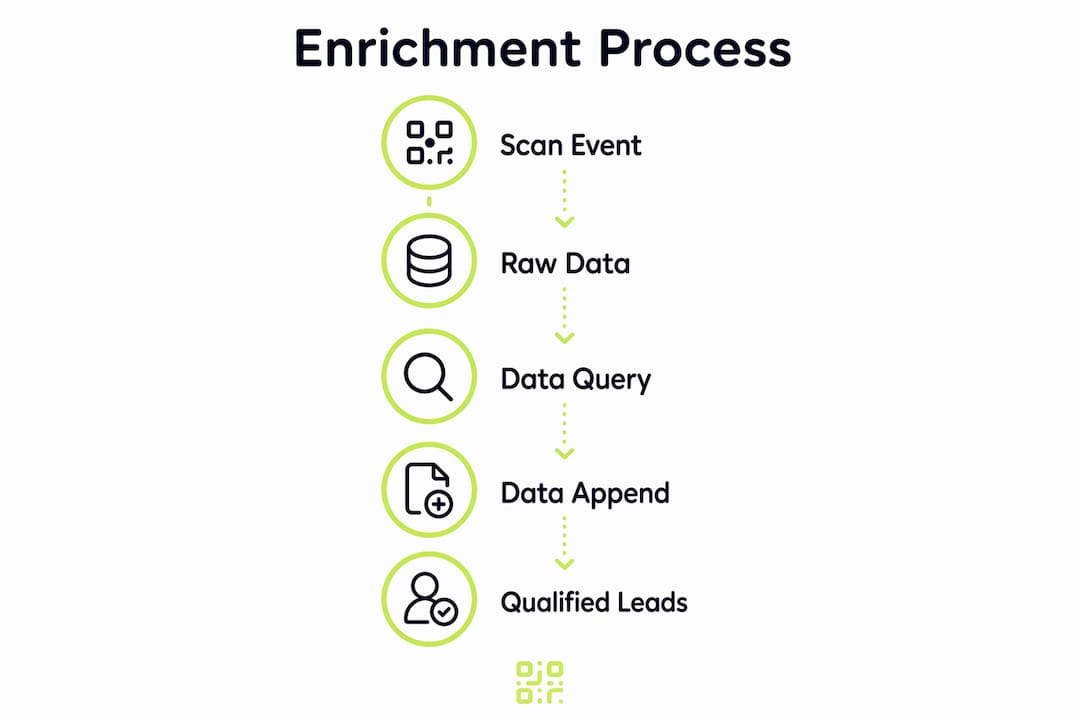
The enrichment workflow follows a clear sequence:
- Scan capture: A QR code, NFC chip, or badge is scanned, generating a raw event record containing minimal fields such as an attendee ID or timestamp.
- AI-powered lookup: An enrichment engine queries multiple data sources simultaneously, including CRM records, third-party B2B databases, social profiles, and firmographic directories.
- Field appending: Verified details such as full name, job title, company size, email address, and phone number are written back to the record automatically.
- De-duplication: The engine checks for existing records and merges or flags duplicates before the profile reaches your CRM.
- CRM delivery: A complete, verified contact profile arrives in your system within seconds, ready for segmentation and follow-up.
AI-powered OCR technology extends this further by reading physical badges and business cards, not just digital QR codes. This means enrichment works across every event format, from large trade shows with printed lanyards to intimate networking events where contacts share LinkedIn QR codes.
Pro Tip: Always capture a full badge scan rather than just the QR code read. A complete scan gives the enrichment engine more raw fields to match against, which directly improves the accuracy of the appended profile.
What benefits does QR scan data enrichment bring to marketing and sales?
Enriched scan data changes the economics of event marketing. Instead of collecting a pile of IDs and hoping your team can qualify them later, you receive verified profiles the moment contact is made.
The practical advantages are significant:
- Faster lead qualification: Enriched profiles include job title, seniority, and company revenue, so sales reps can prioritise high-value prospects on the event floor rather than guessing.
- Personalised follow-up: Verified demographics and firmographics let you tailor email sequences, ad retargeting, and sales outreach to each prospect’s specific role and industry.
- Reduced data decay: B2B contact data decays at approximately 22.5% annually, meaning a list collected at an event last year is already significantly degraded. Enrichment automates ongoing verification to slow that decay.
- Duplicate prevention: Automated de-duplication stops the same contact appearing multiple times across campaigns, which distorts reporting and wastes budget.
- Real-time sales enablement: Enrichment at the point of scan closes the speed-to-lead gap, giving reps immediate access to qualified data while prospect interest is at its peak.
The compounding effect is worth noting. Faster qualification, cleaner data, and personalised outreach each improve conversion rates independently. Combined, they produce a measurable lift across the entire marketing funnel, from initial scan to closed deal.
How is QR scan data enrichment applied across events and campaigns?
Events are the most obvious use case, but enrichment applies across any campaign that uses QR codes as a data capture point. Understanding the full range of applications helps you extract more value from every scan.
Event lead capture
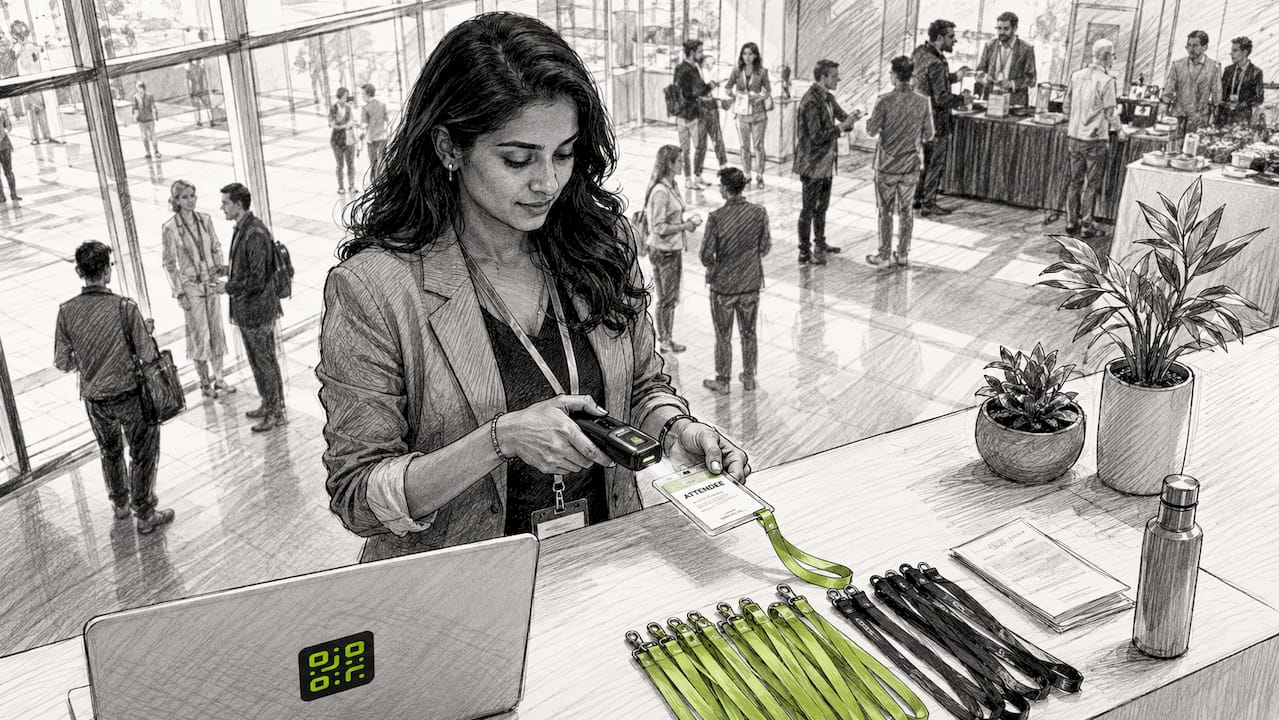
At trade shows and conferences, enrichment integrates with badge scanning to deliver complete profiles without manual data entry. A rep scans a badge, and within seconds the CRM record is populated with verified contact details and company information. This replaces the traditional process of collecting business cards and entering data manually after the event.
Campaign QR codes
Print campaigns, packaging, and out-of-home advertising all benefit from enriched scan analytics. When a prospect scans a QR code on a poster or brochure, the scan event captures device type, location, and time. Enrichment layers on known contact data where available, building a richer picture of who is engaging with each campaign asset.
CRM and marketing automation integration
Enriched data flows directly into platforms such as Salesforce, HubSpot, and Marketo through API connections. This means enriched profiles trigger automated workflows immediately, including welcome sequences, lead scoring updates, and sales alerts.
The difference between raw and enriched scan data is stark:
| Data point | Raw scan data | Enriched scan data |
|---|---|---|
| Contact identity | Attendee ID only | Full name, verified email, phone |
| Company details | None | Company name, size, industry, revenue |
| Role information | None | Job title, seniority, department |
| Follow-up readiness | Manual research required | CRM-ready, immediate action |
| Data accuracy | Unverified | Cross-referenced, de-duplicated |
The table makes clear why enriched profiles allow marketers to segment and personalise with verified, up-to-date data. Raw scan data requires significant manual effort before it becomes useful. Enriched data is useful the moment it arrives.
What are common data enrichment techniques and challenges?
Several distinct techniques underpin modern QR scan data enrichment. Each addresses a different gap in the raw data record.
- AI-powered lookup: Machine learning models query multiple databases simultaneously and rank results by confidence score, selecting the most accurate match for each field.
- OCR (Optical Character Recognition): Reads text from physical badges, business cards, and printed materials, converting it into structured data fields that enrichment engines can process.
- Database cross-referencing: Verified records from B2B data providers, company registries, and social platforms are compared against the raw scan event to fill missing fields.
- Waterfall enrichment: Enrichment engines access 20 or more data sources sequentially, moving to the next source only when the previous one fails to return a verified match. This maximises completeness without sacrificing accuracy.
- API integrations: Direct connections to CRM systems and marketing platforms ensure enriched data flows into existing workflows without manual export or import steps.
The challenges are real and worth planning for. Inconsistent data formats across sources can cause field mismatches. Privacy regulations including GDPR require that enrichment processes handle personal data lawfully, with clear consent and data minimisation practices. Partial scans, where only part of a badge is captured, reduce the enrichment engine’s ability to find a confident match.
Real-time enrichment integrates data from CRM systems, third-party providers, and social profiles to address these gaps as they occur. The key is selecting an enrichment approach that draws on AI applications for appending verified contact data from multiple sources rather than relying on a single database.
Pro Tip: When evaluating enrichment technology, ask specifically how many data sources the engine queries and whether it uses a waterfall or parallel lookup method. A waterfall approach across 20 or more sources consistently outperforms single-source lookups on both match rate and data accuracy.
How can marketing professionals use enriched QR scan data for better campaigns?
Enriched data is only valuable if you act on it. The following steps turn enriched QR scan profiles into measurable campaign outcomes.
-
Segment immediately on arrival. Use enriched firmographic fields such as company size, industry, and job seniority to place new contacts into the correct nurture track the moment they enter your CRM. Do not wait for a manual review step.
-
Trigger personalised sequences. Set up marketing automation rules that fire different email sequences based on enriched role data. A CFO and a marketing manager scanning the same QR code should receive entirely different follow-up content.
-
Enable real-time sales alerts. Configure your CRM to notify the relevant sales rep the instant a high-value prospect scans a code at an event. Real-time QR data gives reps the context they need to approach a conversation with confidence.
-
Measure enriched campaign performance. Track not just scan volume but the quality of profiles generated. Enriched analytics reveal which campaign assets attract the highest-value prospects, informing future placement and creative decisions. Qrlytics provides QR code tracking that captures the scan-level data your enrichment engine needs to build those profiles.
-
Align sales and marketing on shared data. Enriched profiles give both teams a single, verified view of each prospect. This removes the friction caused by sales working from a different contact record than marketing, which is one of the most common causes of misaligned follow-up.
-
Optimise QR code placement using scan analytics. Enriched data combined with scan performance insights shows you which physical locations and campaign formats generate the highest-quality leads, not just the highest scan volumes.
Key takeaways
QR scan data enrichment is the single most effective way to convert raw scan events into qualified, CRM-ready leads that sales and marketing teams can act on immediately.
| Point | Details |
|---|---|
| Enrichment fills the data gap | Raw QR scans return minimal fields; enrichment appends verified contact and firmographic details automatically. |
| Match rates matter | Advanced enrichment engines achieve 95%+ match rates, far above the 65% industry average for manual entry. |
| Speed-to-lead is critical | Enrichment at the point of scan lets sales reps qualify and engage prospects while interest is highest. |
| Data decay is a real cost | B2B contact data decays 22.5% annually; ongoing enrichment is the only reliable way to maintain accuracy. |
| Integration drives ROI | Enriched data connected to CRM and automation platforms produces personalised, measurable campaign outcomes. |
Why enrichment is the part of QR strategy most teams get wrong
Most marketing teams treat QR codes as a distribution mechanism. They focus on design, placement, and scan volume, then hand a list of IDs to sales and consider the job done. That approach wastes the majority of the value a QR scan can generate.
What I have seen consistently is that the teams producing the best results from event and campaign QR codes are the ones who treat the scan as the beginning of a data process, not the end of one. The scan is just the trigger. Enrichment is where the commercial value is created.
The shift to AI-driven real-time enrichment changes the competitive dynamics of event marketing in a way that is still underappreciated. When your sales rep can approach a prospect at a trade show already knowing their job title, company revenue, and likely pain points, the conversation is fundamentally different. That is not a marginal improvement. It is the difference between a cold introduction and a warm, informed conversation.
My honest recommendation is to treat enrichment technology as a core part of your QR code infrastructure, not an optional add-on. Select tools that integrate directly with your CRM, support GDPR-compliant data handling, and draw on multiple verified data sources. The lead generation potential of QR codes is only fully realised when the data those codes generate is complete, accurate, and immediately usable.
— The
How Qrlytics supports your QR scan data strategy
Qrlytics gives marketing professionals and data analysts the QR code infrastructure that enrichment workflows depend on. Every code generated through Qrlytics is dynamic, meaning you can update the destination URL without reprinting materials, and every scan generates structured analytics data that feeds directly into your enrichment and reporting processes.
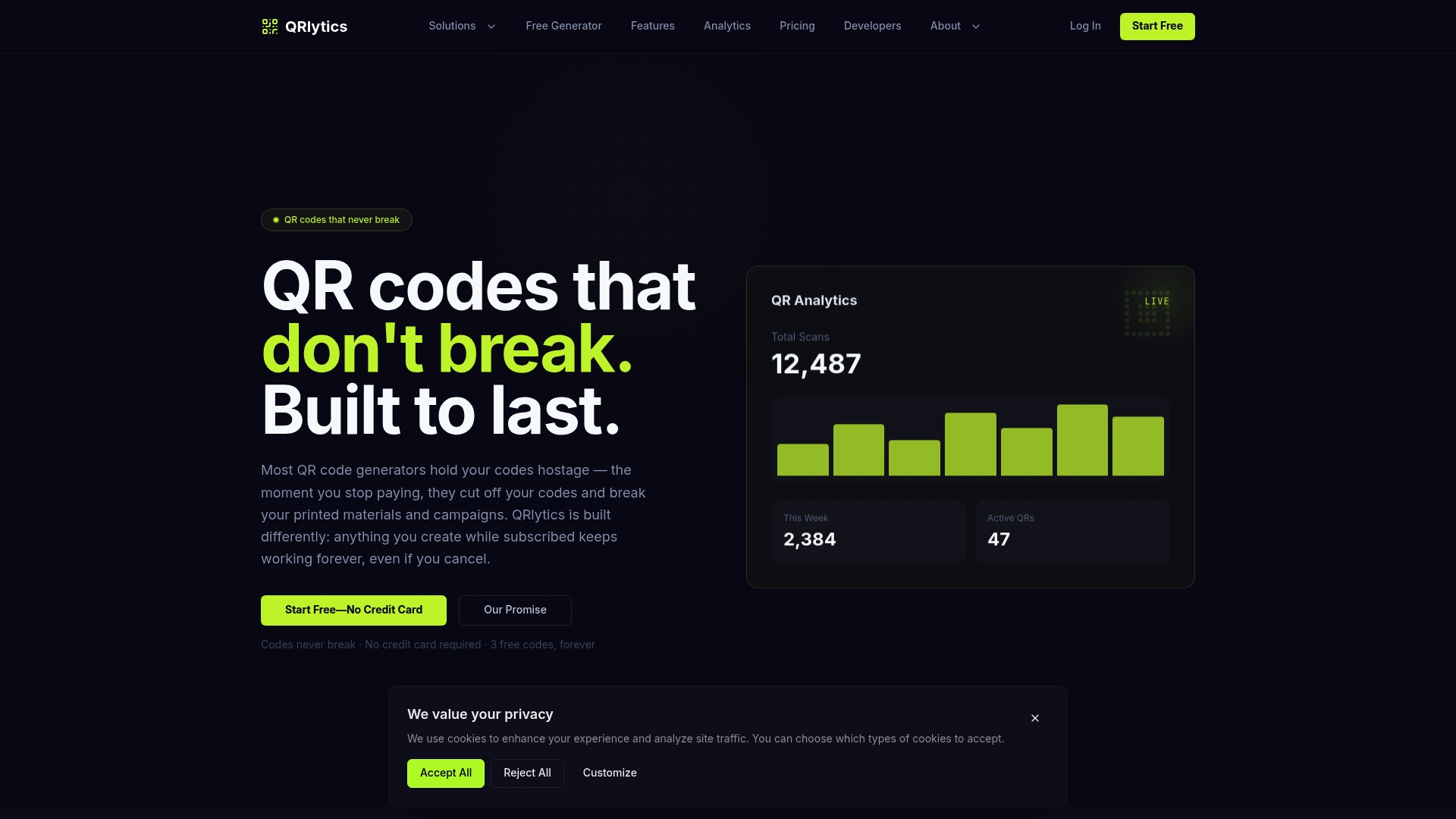
Qrlytics tracks scan time, device type, and location for every code, giving your enrichment engine the raw event data it needs to build complete profiles. Codes created during an active subscription remain functional permanently, so your campaign assets never go dark due to a billing issue. Start with the free QR code generator to create trackable codes instantly, or explore QR codes with analytics to see the full tracking capability available to your team.
FAQ
What is QR scan data enrichment?
QR scan data enrichment is the automated process of appending verified contact and firmographic details to raw scan events, turning minimal data into complete CRM-ready profiles. Advanced enrichment engines achieve match rates above 95% by querying 50 or more data sources.
How does enrichment differ from standard QR code analytics?
Standard QR analytics track scan volume, device type, and location. Enrichment goes further by identifying who scanned the code and appending their verified job title, company, email, and phone number to the scan record.
Why does B2B contact data decay matter for enrichment?
B2B contact data decays at approximately 22.5% annually. Without ongoing enrichment, leads collected at events or through campaigns become inaccurate within months, reducing the effectiveness of follow-up and personalisation.
What data sources do enrichment engines use?
Enrichment engines typically query CRM records, third-party B2B databases, social profiles, and company registries. Waterfall enrichment accesses 20 or more sources sequentially to maximise match rates and data completeness.
Is QR scan data enrichment GDPR-compliant?
Enrichment can be conducted in a GDPR-compliant manner when the platform applies data minimisation principles, processes only lawfully obtained data, and provides clear records of consent. Always verify that your enrichment provider documents its compliance approach.