Why real-time QR data matters for marketers
TL;DR:
- Most marketing teams overlook the strategic value of real-time QR scan analytics, which reveal user location, device, and timing data crucial for campaign optimization. Dynamic QR codes enable flexible, trackable, and privacy-compliant campaigns, facilitating faster decisions and measurable outcomes like conversions and operational insights. Proper planning, integration, and privacy governance are essential to unlock the full potential of QR code tracking and drive meaningful business results.
QR codes appear on everything from restaurant menus to product packaging, event lanyards to billboard advertisements. Yet the importance of real-time QR data is something most marketing teams still overlook. They count scans, declare a campaign successful or not, and move on. What they miss is the rich stream of scan analytics sitting right behind those codes: who scanned, where, on what device, and at what moment in the buying journey. This article explains what that data actually tells you, why it matters strategically, and how to act on it before the moment passes.
Table of Contents
- Key takeaways
- The importance of real-time QR data explained
- Core advantages for marketing and business strategy
- Choosing the right tracking approach
- Real-world examples that show the value
- How to implement real-time tracking effectively
- My honest view on where most teams go wrong
- Start tracking smarter with Qrlytics
- FAQ
Key takeaways
| Point | Details |
|---|---|
| Real-time data beats batch reporting | Instant scan insights let you adjust campaigns mid-flight rather than waiting for weekly reports. |
| Scans are a starting point, not an end | Linking scan events to conversions is what connects QR activity to genuine business outcomes. |
| Dynamic codes unlock true flexibility | Updating redirect URLs without reprinting means you can test, correct, and optimise at any time. |
| Privacy compliance is non-negotiable | Choosing platforms with transparent data handling protects users and your brand reputation. |
| Segmentation turns noise into signal | Splitting scan data by device, location, and context reveals which channels actually drive intent. |
The importance of real-time QR data explained
The term “real-time QR data” refers to the stream of information generated the moment someone scans a code. In practice, this falls under the broader discipline of scan analytics, which encompasses everything from individual scan events to aggregated behavioural patterns across a campaign.
The critical distinction is between static and dynamic QR codes. A static code encodes a destination directly into its pixels. Once printed, it cannot be changed, and it records nothing. A dynamic code routes the scan through a tracking service before redirecting the user. That redirect is where the data is captured.
Here is what a well-configured dynamic code can record in real time:
- Scan timestamp: the exact date and time, enabling time-of-day and day-of-week analysis
- Geographic location: country, city, or even postcode level, depending on device permissions
- Device type and operating system: iOS versus Android, mobile versus tablet
- Referrer context: which printed material, channel, or placement triggered the scan
- Unique versus repeat scans: distinguishing a loyal customer from a first-time interaction
Dynamic QR codes route scans through tracking services that log device fingerprint, location, and timing, which raises real privacy considerations, particularly in regulated sectors such as healthcare and education. Any platform you choose must handle this responsibly, with clear disclosures to users and compliant data storage practices.
Core advantages for marketing and business strategy
Understanding the mechanics is one thing. Knowing what those mechanics make possible is what changes how you run campaigns.
Faster, better decisions. Real-time analytics support faster marketing decisions and smarter campaign optimisation. If a QR code on a direct mail piece is generating strong scan volume in Manchester but almost nothing in Birmingham, you know within 48 hours, not six weeks after the campaign ends. You can redirect budget, swap creative, or add a follow-up touchpoint while the campaign is still live.
Personalised consumer engagement. Scan location and device data let you serve contextually relevant landing pages. A scan from a mobile device at 8pm on a Friday evening deserves a different experience than one from a desktop at 11am on a Tuesday. Real-time data makes that differentiation possible.
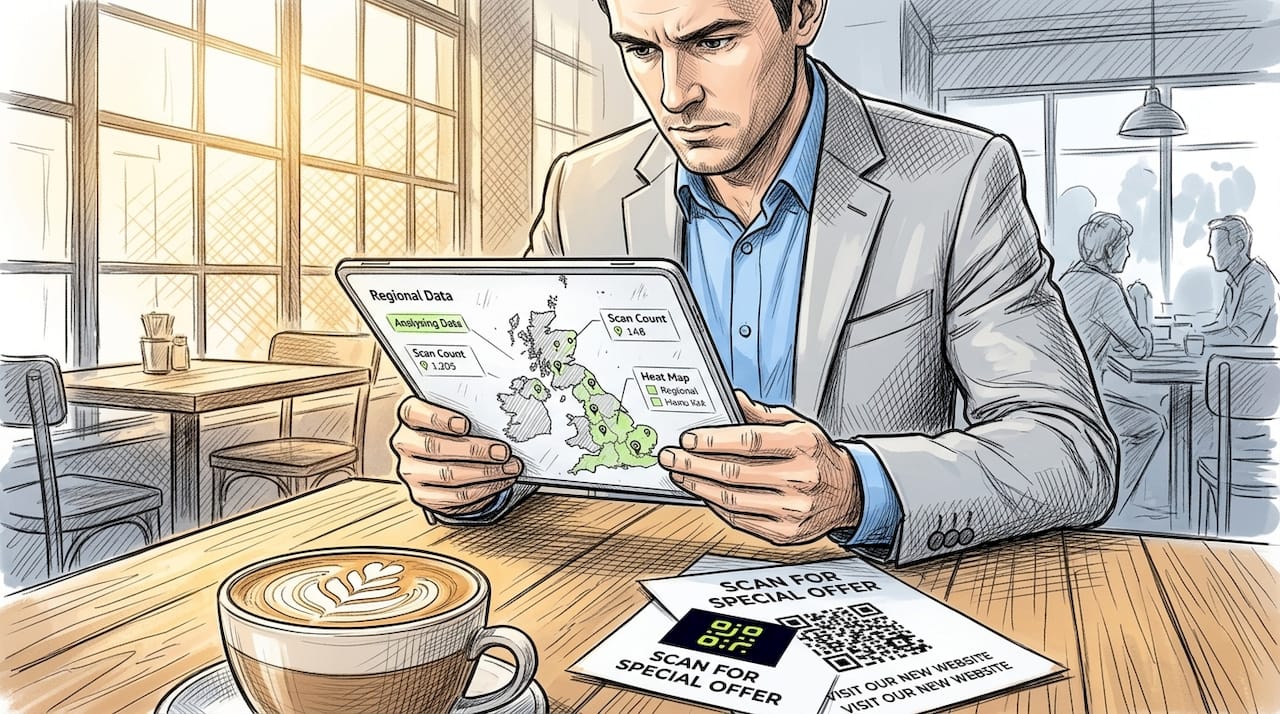
Measurable ROI. Tracking scan-to-CRM capture rates and time-to-contact KPIs significantly improves lead qualification and conversion velocity. When a scan feeds directly into your CRM and triggers a sales follow-up within minutes, the pipeline impact is measurable in concrete numbers rather than assumptions.
Operational gains. Granular event data supports statistical segmentation that drives not just marketing but operational decisions. A retail brand that sees scan spikes on Friday afternoons can use that signal to align staffing, stock levels, or promotional offers accordingly.
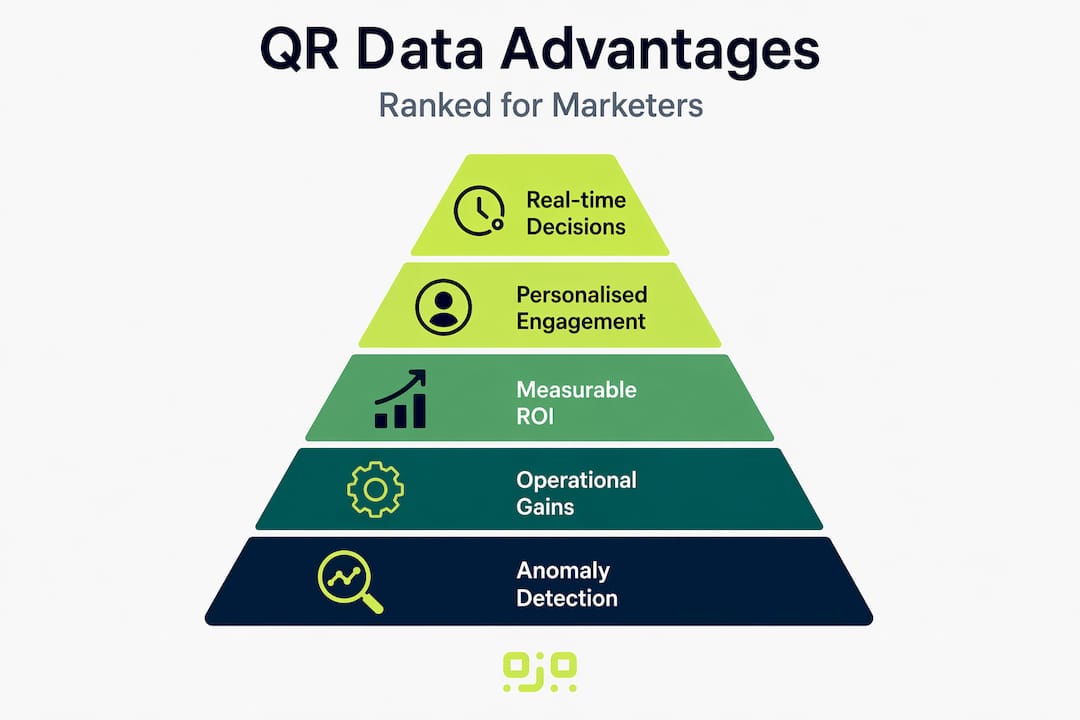
Anomaly detection. Real-time monitoring helps detect suspicious scan patterns such as sudden spikes from unexpected locations, which adds a security layer to your campaign infrastructure. It will not prevent every threat, but it flags unusual activity early.
Pro Tip: Set up automated alerts for unusual scan behaviour from day one of any campaign. A sudden spike from a single IP address range, or a geographic cluster that makes no sense for your distribution, is worth investigating immediately rather than discovering it in a monthly report.
Choosing the right tracking approach
Not all QR tracking methods deliver the same depth of insight. Before committing to a platform or workflow, it is worth understanding the trade-offs clearly.
| Feature | Static QR codes | Dynamic QR codes |
|---|---|---|
| Destination editable post-print | No | Yes |
| Scan data collected | None | Full (location, device, timing) |
| A/B testing capability | No | Yes |
| Privacy considerations | Minimal | Requires data governance |
| Campaign flexibility | Very limited | High |
| Best for | One-off, low-stakes uses | Ongoing marketing campaigns |
Dynamic codes enable swapping destinations mid-campaign without reprinting, supporting precise tracking, engagement optimisation, and quick error correction. For any campaign involving printed materials, this flexibility alone justifies using a dynamic code over a static one.
When evaluating platforms, look beyond the dashboard. Ask whether the tool integrates with your CRM, whether it supports UTM parameter passing, and whether the analytics can export into your existing business intelligence stack. A practical guide for marketers on QR code tracking covers exactly this kind of workflow thinking.
Privacy is not optional. QR analytics tools must be treated as data processing workflows requiring governance, including privacy disclosures and secure data handling. If you are operating in the EU, GDPR compliance is a legal requirement, not a nice-to-have. Choose platforms that make their data handling transparent and documented.
Security matters too. Using trusted QR sources, secure link infrastructure, and verifying destination domains are baseline practices. Any platform that cannot tell you where scan data is stored, for how long, and under what jurisdiction should give you pause.
Pro Tip: Never plan a QR campaign around scan counts alone. Before launch, map the full tracking chain: scan, redirect, landing page, conversion event. If any link in that chain breaks, you will have data that looks fine but tells you nothing useful about business outcomes.
Real-world examples that show the value
Theory only takes you so far. Here is where scan analytics importance becomes visible in practice.
Retail packaging. 79% of shoppers prefer products with a scannable QR code, and GS1 Sunrise 2027 is making QR codes a global packaging standard. Brands using dynamic codes on packaging can update the destination to reflect seasonal promotions, new product launches, or updated safety information without a single reprint. The code on the shelf stays the same. The experience behind it changes in real time.
Events and exhibitions. A conference organiser places unique QR codes on each sponsor’s branded material. Real-time scan data shows which sponsor placements generated the most engagement, at which times of day, and from which areas of the venue. Sponsors receive a live performance report rather than a vague post-event summary.
Smart tourism. QR codes in tourism enable personalised experiences and real-time destination management, but only when real-time tracking and strategic implementation are in place. A heritage site in Edinburgh uses QR codes at each exhibit. Real-time data reveals which exhibits hold attention longest, which are skipped entirely, and which prompt social sharing, informing how the site redesigns its visitor flow.
Lead generation pipelines. Linking QR scan events into operational processes transforms raw data into signals that power faster follow-up and better lead qualification. A B2B brand runs a direct mail campaign with a unique QR code per recipient segment. Scans trigger CRM records automatically, flagging high-intent leads for same-day sales outreach. The result is a measurable reduction in time-to-contact and a clear scan-to-revenue attribution trail.
Key metrics worth tracking in every campaign:
- Unique scan rate versus total scans (measures reach versus repeat engagement)
- Scan-to-conversion rate (the critical business outcome metric)
- Geographic distribution against target market coverage
- Device split (informs landing page optimisation priorities)
- Time-of-day scan patterns (informs send timing and staffing)
How to implement real-time tracking effectively
Getting the mechanics right from the start saves you from chasing incomplete data later. Follow these steps.
-
Define your business goal before generating a single code. Scan volume is an activity metric. Revenue, leads generated, or content engagement are outcome metrics. Know which you are measuring and why.
-
Select a platform with full analytics integration. You need a tool that captures scan data and passes it cleanly into your CRM or analytics stack. QR codes with analytics that track every scan give you the raw material. Integration is what makes it useful.
-
Segment your codes by context. Use a unique code for each placement: one for the print ad, one for the packaging, one for the event banner. Segmenting scan data along context, device, and intent axes separates signal from noise and tells you which channels are genuinely working.
-
Build your tracking chain end-to-end. Plan the redirect URL, the landing page, and the conversion event before launch. Test the full chain on multiple devices. A broken link on iOS discovered three days into a campaign is an avoidable problem.
-
Address privacy and compliance upfront. Review your GDPR obligations for QR campaigns before going live. Users whose data you collect through scan analytics deserve a clear privacy notice.
-
Monitor and act during the campaign. Set a weekly review cadence at minimum, and daily alerts for anomalies. The value of real-time data disappears if nobody looks at it until the campaign ends.
Pro Tip: Create a simple campaign brief template that includes a “tracking chain” section. Force every QR campaign to document the scan-to-outcome path before any code is generated. This single habit eliminates most of the attribution gaps that make QR data feel unreliable.
My honest view on where most teams go wrong
I’ve spent a significant amount of time reviewing how marketing teams actually use QR analytics, and the pattern that frustrates me most is the obsession with scan volume. Teams celebrate hitting 10,000 scans without once asking how many of those scans led to a purchase, a sign-up, or even a second page view. Optimising solely for scan counts instead of downstream conversions causes misguided metrics and missed opportunities. I’ve seen it derail otherwise well-funded campaigns.
What I’ve found works is treating the scan as the start of a measurable journey, not the destination. Plan the conversion chain before you generate the code. Ask yourself: if someone scans this at 9pm on a mobile device, what do they see, what do we want them to do, and how do we know if they did it?
Privacy concerns are real, but I think they are often used as an excuse to avoid setting up proper analytics. With the right platform and transparent disclosures, compliance is achievable and user trust is maintained. The challenge is choosing a platform that takes data governance seriously rather than treating it as a checkbox.
My broader observation is that real-time QR data is one of the most underused tools available to physical marketing. It genuinely connects offline interactions to digital outcomes in a way that few other channels can. The teams that treat it with the same rigour they apply to paid search or email automation are the ones seeing it pay off.
— The Qrlytics Team
Start tracking smarter with Qrlytics
If you are ready to put these principles into practice, Qrlytics gives you the infrastructure to do it properly. The platform offers a dynamic QR code generator with real-time analytics built in, including scan location heat maps, device breakdowns, and time-based trend views. You can update redirect URLs without reprinting, integrate scan data with your CRM, and monitor campaign performance as it happens.
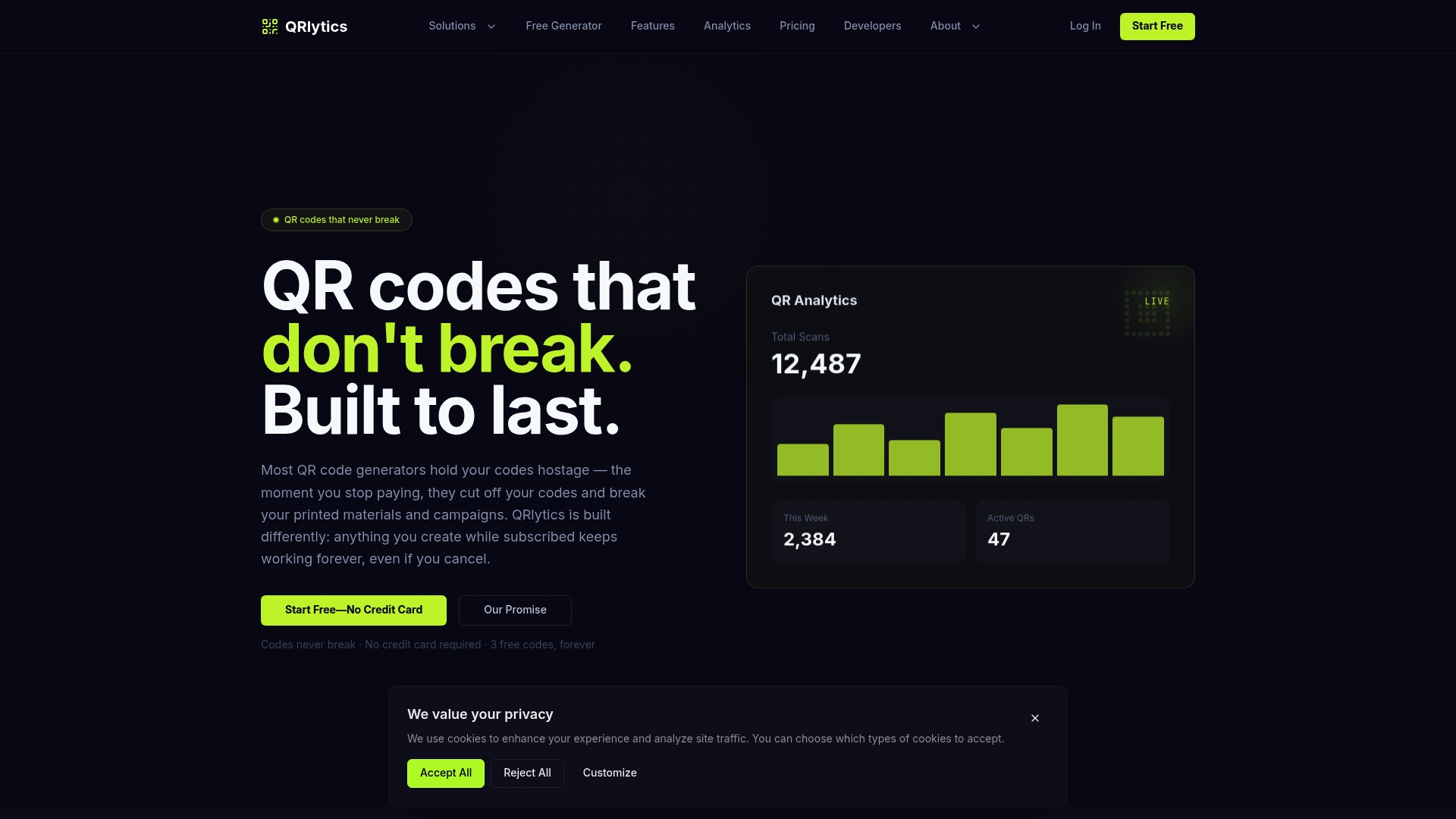
Every code created during an active Qrlytics subscription remains functional permanently, so your printed materials are never at risk. GDPR-compliant tracking and transparent data handling are standard across all plans. You can start exploring the platform through the free QR code generator with no credit card required. For teams running ongoing campaigns that demand reliable QR code tracking and performance data, Qrlytics is built for exactly that purpose. Visit Qrlytics to see what your scan data has been trying to tell you.
FAQ
What is real-time QR data?
Real-time QR data refers to scan analytics collected the moment a QR code is scanned, including location, device type, timestamp, and scan frequency. It is captured via dynamic codes that route scans through a tracking service before redirecting the user.
How do dynamic and static QR codes differ for tracking?
Static QR codes encode the destination directly and collect no data. Dynamic QR codes route scans through a server, enabling real-time tracking of location, device, and timing, plus the ability to update the destination without reprinting.
Why is tracking scans alone not enough?
Optimising for scan counts without tying data to conversions leads to misleading campaign metrics. The scan is the start of the journey. Conversion events, lead captures, and sales are the outcomes that actually measure business impact.
Is real-time QR tracking GDPR-compliant?
It can be, provided you use a platform with documented data governance, including user privacy disclosures and compliant data storage. Reviewing GDPR guidance for QR campaigns before launch is the safest approach.
What metrics should marketers monitor in a QR campaign?
Focus on unique scan rate, scan-to-conversion rate, geographic distribution, device split, and time-of-day patterns. These give you a complete picture of reach, intent, and channel performance beyond simple scan totals.