What is QR code ownership? A guide for entrepreneurs
TL;DR:
- QR code ownership involves controlling the creation, redirect destination, and backend data, not possessing the visual pattern itself.
- Effective management requires understanding the separation between legal ownership of the data and custodianship of the backend systems, which ensures security and link integrity.
QR code ownership is defined as control over the creation, management, and backend data linked to a QR code, not possession of the visual pattern itself. Most entrepreneurs and marketers misunderstand this distinction, and that misunderstanding leads to real problems: broken campaigns, lost data, and legal grey areas. Platforms like Qrlytics and verification services like VerifyDoc have made this clearer by separating the code as a transport mechanism from the data it points to. Even governments in Cambodia and Dubai embed QR codes on official land title deeds, not to grant ownership of the code, but to verify ownership of the underlying property record.
What does QR code ownership mean in practice?
QR code ownership means you control what the code does, where it points, and who can access the data it generates. The visual pattern itself is freely reproducible. Anyone with a basic tool can generate a QR code that looks identical to yours. What you actually own or manage is the redirect URL, the scan analytics, and the linked content behind it.

Think of it this way. The QR code is a key. The database, the landing page, or the document it unlocks is the asset. QR code ownership must be understood as encompassing both creation and custodianship of the linked data, especially as use cases expand with dynamic and secure verification. That means if you lose control of the destination URL or the platform hosting your redirect, you lose meaningful ownership regardless of who printed the code.
In practice, QR code ownership and usage rights break down into three distinct roles:
- Creator: The person or organisation that generates the QR code and sets the initial destination URL.
- Custodian: The party responsible for managing the backend data, updating redirect targets, and securing the linked content.
- Legal owner: The entity with rights over the data or document the QR code references, such as a property title, a signed contract, or a product record.
These three roles are often held by the same person in a small business. In larger organisations, they are frequently split across teams. Platforms like Qrlytics support this by allowing ownership transfer between team members, so a departing employee does not take critical campaign infrastructure with them.
Marketers, product managers, and legal professionals all encounter QR code ownership differently. A marketer cares about who controls the redirect and the analytics. A solicitor cares about who holds rights to the document the code verifies. A product manufacturer cares about whether the code on their packaging can be hijacked or spoofed.
Pro Tip: Always verify the destination URL of any QR code before printing it on physical materials. A code pointing to an unsecured or third-party domain can be redirected without your knowledge, exposing your audience to fraud.
How does QR code custodianship differ from legal ownership?
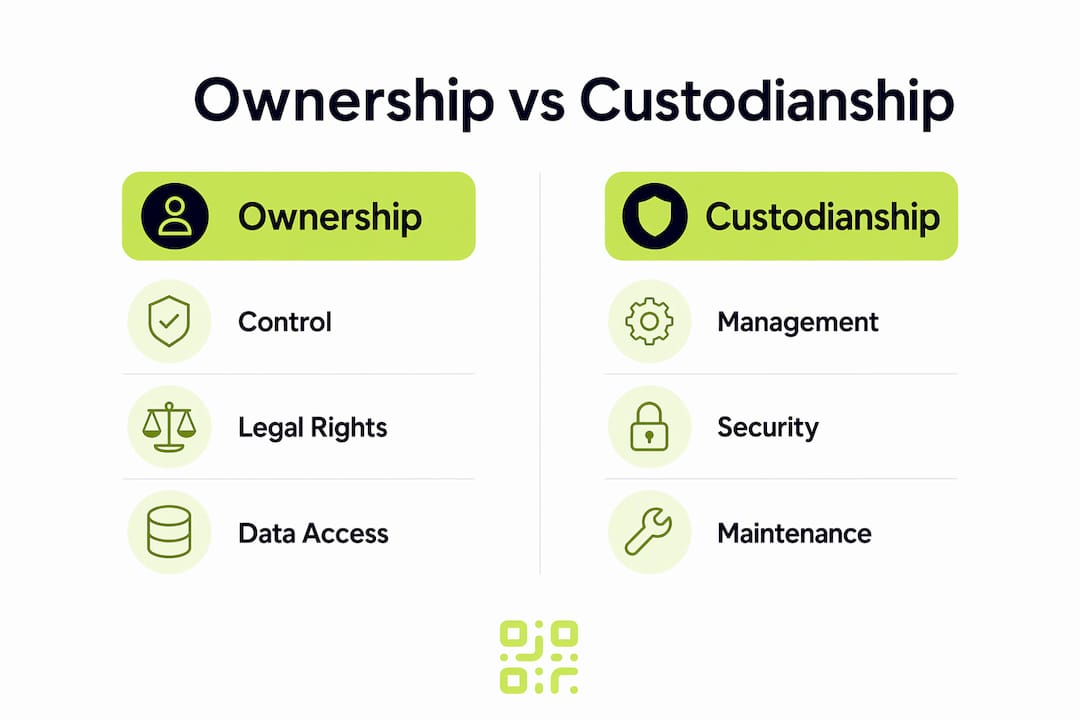
QR code custodianship is the ongoing management of the backend systems a QR code relies on, while legal ownership refers to rights over the data or document the code references. The two concepts overlap but are not the same, and confusing them creates real risk.
Custodianship of QR codes is becoming as important as legal ownership since the QR acts as a gateway to back-end records for assets or documents. A custodian keeps the gateway open, secure, and pointing to the right destination. A legal owner holds the rights to what lies behind it. If your QR code platform shuts down or cancels your account, you lose custodianship even if you retain legal ownership of the underlying document.
VerifyDoc illustrates this well. Its QR code signature validation uses cryptographic pointers embedded in QR codes that link to hosted verification pages, confirming authenticity, issuer identity, and tamper status in under three seconds. No app or account is required. The legal weight, however, sits in the qualified electronic signature (QES) under eIDAS 2.0, not in the QR code itself. Platforms that add cryptographically verified QR codes on documents do not create new legal artefacts. They provide trust and convenience through instant validation.
The table below clarifies the distinction between ownership and custodianship across three key dimensions.
| Dimension | QR code ownership | QR code custodianship |
|---|---|---|
| Definition | Rights over the linked data or document | Management of backend systems and redirect security |
| Who holds it | Legal entity named in the document or record | Platform operator or designated team member |
| Primary risk | Unauthorised use of linked data | Link expiry, redirect hijacking, or platform failure |
| Regulated example | Dubai Land Department property title | QR platform maintaining live redirect to registry |
In regulated industries, this distinction is legally significant. The Dubai Land Department assigns legal ownership of property to the named titleholder. The QR code on the deed is managed by the department’s registry infrastructure. If someone forges the physical deed but cannot replicate the secure backend, the QR scan reveals forgery immediately. The code is custodian-controlled; the rights are legally owned.
Pro Tip: If you use QR codes on contracts or compliance documents, confirm that your platform stores cryptographic verification data independently of your subscription status. Losing access to your account should not invalidate your documents.
What are the best management practices for QR code ownership in marketing?
Effective QR code management in marketing means treating your codes as live digital assets, not static images. Dynamic QR code platforms provide analytics and security that help marketers securely track, transfer ownership, and maintain brand consistency across campaigns. Static codes, by contrast, lock you into a single destination with no ability to update, track, or transfer control.
For entrepreneurs running campaigns across print, packaging, and digital channels, the following steps define sound ownership management:
- Generate codes on a platform you control. Free, anonymous generators offer no backend access and no analytics. Use a platform like Qrlytics where you hold the account and can update the redirect URL at any time.
- Set clear access controls. Define who in your team can edit, transfer, or delete a QR code. Marketing teams benefit from platforms that allow ownership transfer between members, which prevents single points of failure.
- Monitor scan analytics regularly. Unusual scan patterns, such as sudden spikes from unexpected geographies, can indicate spoofing or unauthorised replication. Real-time analytics catch this early.
- Update destination URLs without reprinting. Dynamic codes let you change where a code points without changing the code itself. This is critical for printed materials where reprinting is expensive.
- Maintain GDPR compliance on tracked data. Scan data includes location, device type, and timestamp. Confirm your platform handles this under a compliant data processing agreement before deploying codes in the EU.
- Document ownership formally. For high-value campaigns or legal documents, record which team member or entity holds custodianship and update that record when ownership transfers.
QR code consistency across a campaign is also a brand protection issue. A code that redirects to a broken page or a competitor’s site because a platform subscription lapsed does not just inconvenience users. It damages trust and can expose you to liability if the code appeared on a legal or financial document.
The data privacy implications of QR tracking are increasingly scrutinised by regulators. Entrepreneurs operating in the EU or UK must treat scan data as personal data under GDPR and ensure their QR platform provides a compliant processing framework.
How do government QR codes illustrate what ownership really means?
Government-issued QR codes on official documents are the clearest illustration of the difference between owning a code and owning what it represents. Every Dubai Land Department title deed since 2015 carries a unique QR code linking directly to the official property ownership database, enabling instant real-time verification of owner name, property details, plot number, and registration date. A failure to scan correctly indicates possible forgery. The QR code is the verification mechanism. The property rights belong to the registered owner in the database.
Government land registries are taking this further. Land ownership documents increasingly embed QR codes linked to GIS-based spatial data and textual records, enabling tamper-proof verification and historical tracking beyond traditional certificates. A single scan can reveal parcel location, ownership history, liens, and usage details in real time. This is a level of transparency that paper records cannot match.
The table below compares three verification methods for a government-issued property document.
| Verification method | Speed | Forgery resistance | Data depth |
|---|---|---|---|
| QR code scan | Under 3 seconds | High (backend-linked) | Full record including history |
| Database query | 1 to 5 minutes | High | Full record |
| In-person check | Hours to days | Medium | Depends on officer access |
For entrepreneurs, this model carries a direct lesson. If you use QR codes as authenticity markers on products, certificates, or contracts, the code itself proves nothing. The secure backend it connects to is what provides legal and commercial weight. Invest in the infrastructure, not just the image.
Key takeaways
QR code ownership is defined by control over the linked data and backend infrastructure, not possession of the visual code pattern.
| Point | Details |
|---|---|
| Ownership is about control | True ownership means managing the redirect URL, scan data, and linked content. |
| Custodianship is a separate role | Custodians maintain backend security and link integrity, independent of legal rights. |
| Dynamic codes protect your investment | Platforms like Qrlytics let you update destinations without reprinting physical materials. |
| Government examples set the standard | Dubai and Cambodia use QR codes as verification tools, not ownership objects. |
| Legal weight sits in the data | Cryptographic signatures and database records carry legal validity; the QR code does not. |
Why most entrepreneurs underestimate QR code custodianship
Most entrepreneurs I speak with treat QR codes as a one-time task. Generate the code, print it, move on. That approach works until it does not, and when it fails, it tends to fail publicly. A code on 10,000 product boxes that redirects to a dead page because a platform subscription lapsed is not a minor inconvenience. It is a brand credibility problem that costs real money to fix.
What I find consistently underestimated is the custodianship layer. Entrepreneurs focus on creation rights and ignore the ongoing responsibility of keeping the backend secure, live, and accurate. As QR codes appear on more legal documents, certificates, and regulated materials, that responsibility is only growing. The shift toward cryptographic verification under eIDAS 2.0 and the expansion of blockchain-linked QR codes in supply chains means the technical bar for custodianship is rising.
My honest recommendation is to treat your QR codes the way you treat your domain names. You would not let a domain expire without a plan. You would not hand domain access to a contractor without access controls. Apply the same discipline to your QR infrastructure. Choose platforms that guarantee code longevity, support ownership transfer, and give you real analytics. The entrepreneurs who get this right in 2026 will have a measurable advantage in both brand trust and legal defensibility.
— The Qrlytics editorial team
Take control of your QR codes with Qrlytics
Qrlytics is built for entrepreneurs and marketers who need more than a basic code generator. It gives you full control over your QR code infrastructure, from creation to long-term management.
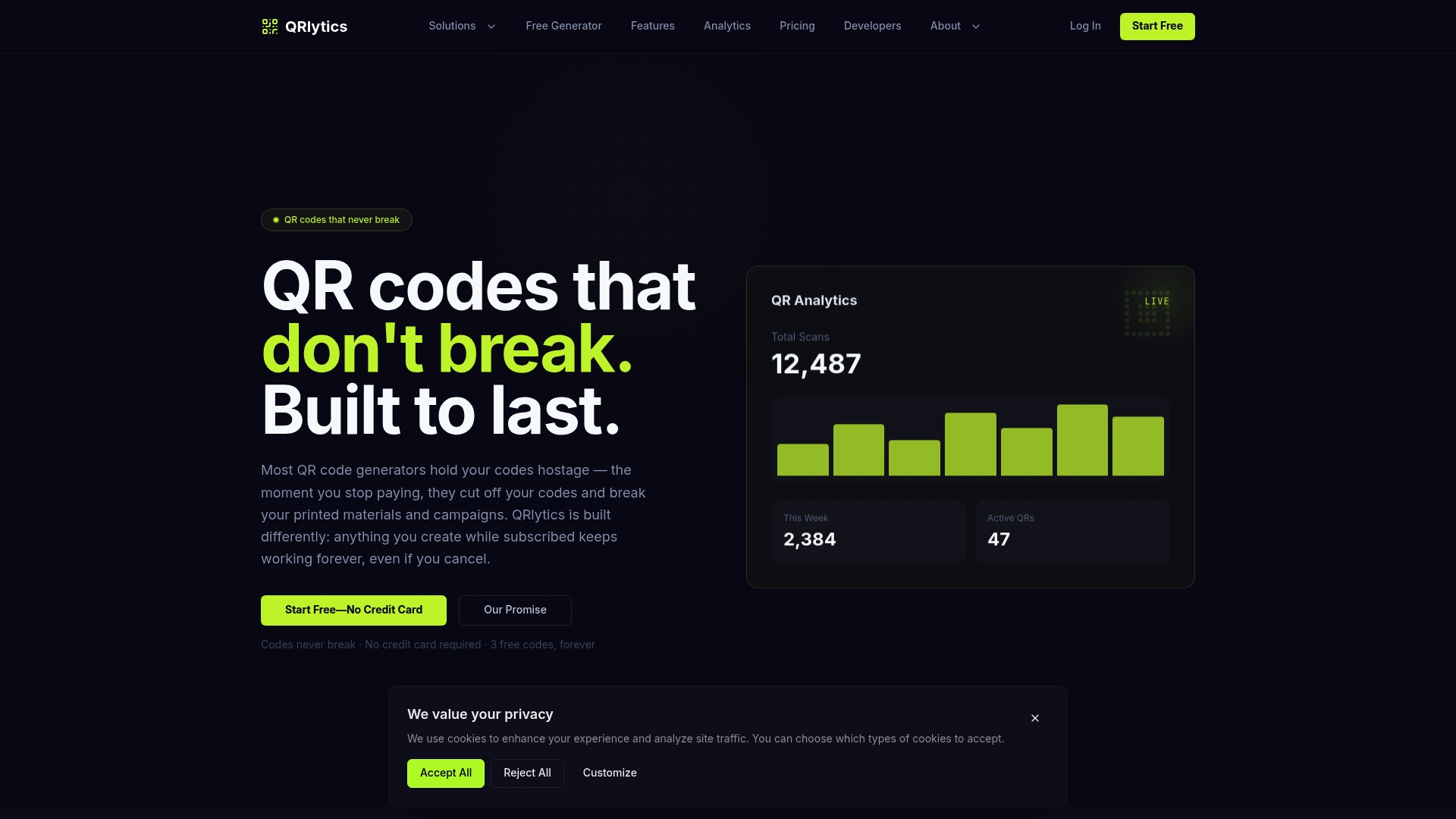
With Qrlytics, codes created during an active subscription remain functional permanently, regardless of billing changes. You can update redirect URLs without reprinting, monitor scan analytics in real time, and transfer ownership between team members securely. The platform is GDPR-compliant and requires no credit card to start. Use the free QR code generator to create your first code instantly, or explore the dynamic QR code tools to build a trackable, editable campaign infrastructure you actually own.
FAQ
What is QR code ownership in simple terms?
QR code ownership means controlling the creation, redirect destination, and backend data linked to a QR code. It is not about owning the visual pattern, which anyone can replicate.
Who legally owns a QR code?
No one owns the QR code image itself, as the QR code standard is open. Legal ownership applies to the data, document, or content the code links to, held by the named entity in the underlying record.
What is QR code custodianship?
QR code custodianship is the ongoing management of the backend systems a QR code relies on, including redirect security, link integrity, and data access. It differs from legal ownership, which concerns rights over the linked content.
How do I take ownership of a QR code I created?
Generate your code on a platform where you hold the account and can control the redirect URL, access analytics, and transfer management rights. Platforms like Qrlytics provide these controls with permanent code functionality.
Can a QR code on a legal document prove ownership?
A QR code on a legal document does not itself prove ownership. It serves as a verification tool linking to a secure database or signed record. The legal weight lies in the underlying electronic signature and data, not the code.