14 QR Campaign Ideas for Marketers That Prove ROI
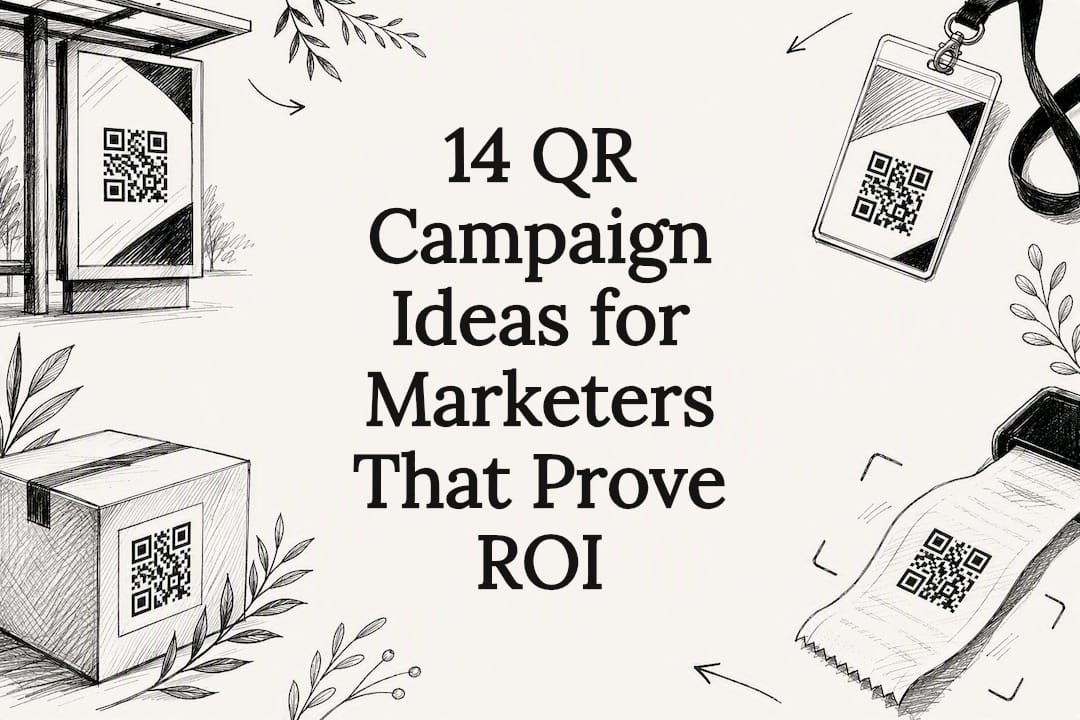
The best QR campaigns treat the scan as the opening move, not the finish line: pair a dynamic QR code with a mobile-first landing page and one unmistakable piece of value, and the code does far more than link to a website. Static, generic “scan for more” codes still underperform because they give the customer no reason to act. The ideas below are grouped by commercial goal, so pick the one that matches what you’re actually trying to achieve this quarter.
TL;DR:
- Using dynamic QR codes helps update offers, modify landing pages, and access real-time analytics for long-term campaigns.
- Placing QR codes directly within creative and associating them with immediate value increases scan engagement, especially on billboards or packaging.
- Tracking beyond total scans—such as conversions, redemption rates, and customer journey metrics—is essential to measure actual campaign success and ROI.
- Ensuring proper placement, contrast, size, and a clear benefit statement improves scan reliability and response rates.
- Protecting user privacy by complying with GDPR and separating aggregate from personally identifiable data reduces legal risks.
Table of Contents
- QR code campaign ideas grouped by marketing objective
- Design and placement rules every QR campaign needs
- A simple framework for planning your next QR launch
- Measuring QR performance and proving ROI
- What to demand from a QR platform before you commit
- What well-known QR campaigns actually teach us
- Legal and privacy considerations for QR campaigns
- The scan is the start, not the KPI
- A practical way to put these ideas into action
- Sources
- FAQ
QR code campaign ideas grouped by marketing objective
Different objectives call for different mechanics. A code designed to build awareness works nothing like one designed to close a sale at the shelf, and treating them the same is the fastest way to waste a print run.
Awareness campaigns
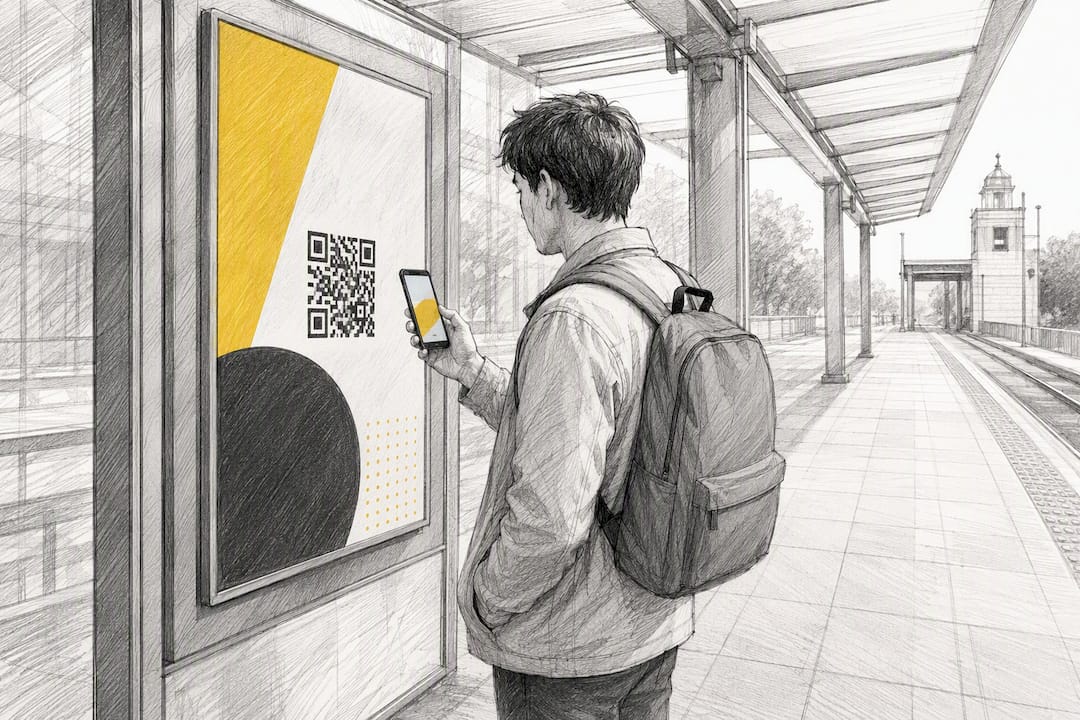
1. Interactive billboards and transit posters. A code that fills the whole creative, rather than sitting in a corner, gives passers-by a reason to stop. RocketLink’s analysis of standout campaigns found that Coinbase’s colour-bouncing Super Bowl code worked precisely because the code was the advert, not an afterthought glued onto one. Track scan volume against impressions and time-of-day to learn which placements actually pull attention.
2. AR-enabled packaging and print. Linking a code to an augmented-reality filter or product demo gives print media a reason to outperform a static advert. Measure completion rate on the AR experience itself, not just the scan.
3. TV and streaming scan-along moments. A code that appears on screen for a specific playlist, offer, or trailer creates urgency because it’s only live for seconds. Scan-through rate within that narrow window is the KPI that matters here, far more than total daily scans.
Acquisition campaigns
4. Exclusive on-pack coupons. A code that unlocks a discount unavailable anywhere else gives every unit of packaging a reason to be scanned before it’s binned. Track redemption rate, not just scans, since that’s the number that proves revenue impact.
5. Event badge-to-lead capture. Printing a code on a lanyard or badge that captures contact details in one tap replaces the clipboard sign-up sheet entirely. Conversion rate from scan to completed form is your headline metric.
6. App deep-link scans. A code that opens directly inside an app (rather than a browser first) removes a full step from onboarding. Compare deep-link scan-to-install rates against a standard web redirect to see the lift.
Retention campaigns
7. Personalised coupon sequences. Sending a physical mailer or receipt with a code that reveals a different offer depending on purchase history turns a static print piece into a living conversation. Track repeat-scan rate from the same customer over a defined window.
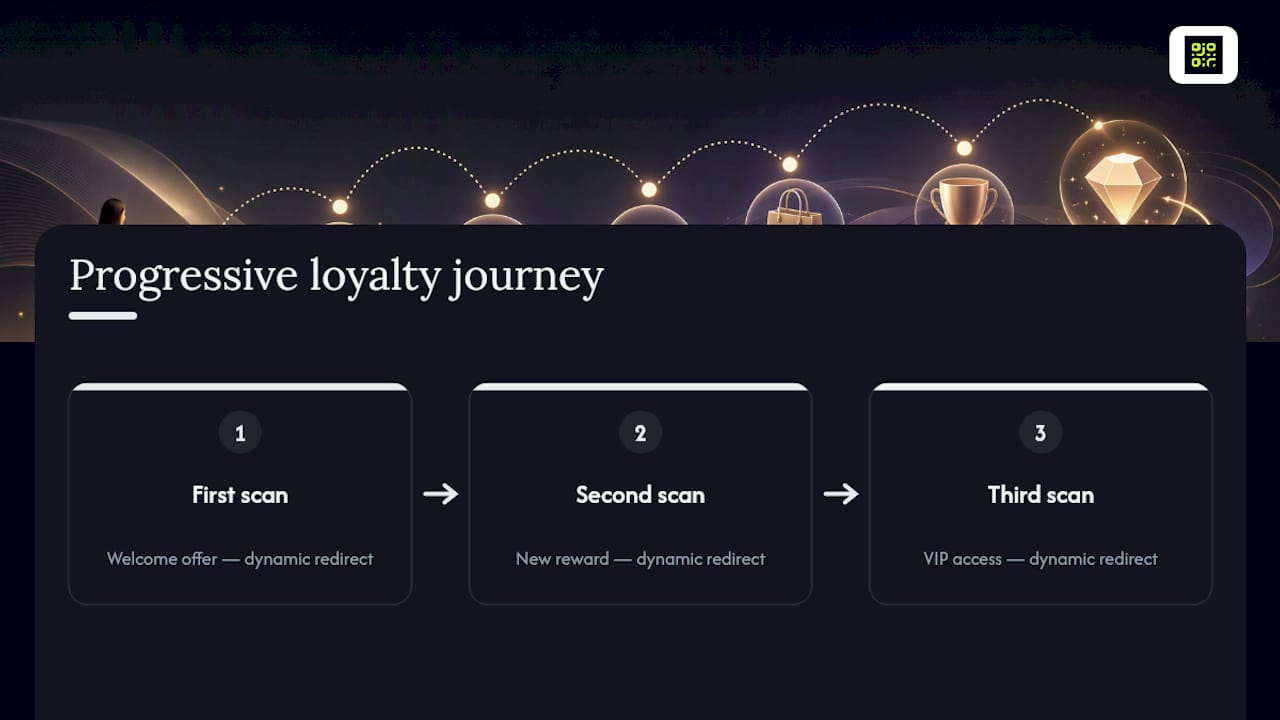
8. Progressive loyalty journeys. A code that unlocks new content or rewards each time a customer scans it (rather than the same static page) builds a habit loop. This is one of the clearest cases for dynamic QR codes, since the destination has to change without reprinting anything.
9. VIP content drops. Codes distributed only to top-tier customers, linking to early access or behind-the-scenes material, reward loyalty visibly. Segment scan data by customer tier to prove the tactic’s worth.
In-store and retail campaigns
10. Shelf-edge product detail. A code beside a product that opens ingredient lists, comparison charts, or reviews answers the question a customer is already asking, right where they’re standing. Match placement to purchase intent, a lesson RocketLink’s campaign review repeats across multiple retail case studies.
11. Receipt-based offers. A code printed on the till receipt that triggers a “come back within 7 days” offer captures footfall that would otherwise walk out cold.
12. Scan-to-basket. A code that adds an item straight to an online cart, skipping search entirely, shortens the path from curiosity to checkout to a single tap.
Verification and authenticity campaigns
13. Product provenance stories. Patagonia’s packaging codes, which link to sourcing and repair information, show how a code can build trust rather than just push a sale, according to RocketLink’s write-up.
14. Ownership and warranty registration. A code that registers a product’s warranty at the point of unboxing removes a paper form and starts a service relationship immediately.
Design and placement rules every QR campaign needs
A brilliant idea still fails if the code physically doesn’t scan. NN/g’s usability guidelines stress testing across devices and keeping destinations mobile-friendly, and a few concrete rules make that far easier to hit:
- Follow the 10:1 size-to-distance rule: a code meant to be scanned from three metres away needs to be roughly 30cm across.
- Leave a quiet zone of at least four modules of blank space around the code so cameras can lock on.
- Use strong dark-on-light contrast, and keep any logo overlay small enough that error correction can still recover the pattern.
- Write a short caption that states the benefit (“Scan for 20% off”) rather than a vague “scan for more”.
- Include a visible short URL underneath for the people who won’t or can’t scan, a tactic QR code marketing examples consistently show lifts overall response.
- Use dynamic codes for anything printed or long-lived; save static codes for one-off digital uses where the destination will never change.
- Keep the landing page loading in under two seconds, with a single clear call to action for higher conversions and the shortest form you can get away with.
Pro Tip: *Print a proof at final size and scan it with three or four different phone models before the job goes to press.
A simple framework for planning your next QR launch
- Define one KPI before you design anything. “Scans leading to 15% landing-page conversion” is a target you can act on; “more engagement” is not.
- Design the value exchange first. Decide exactly what the customer gets in the first three seconds after scanning, whether that’s a coupon, a video, or an instant answer.
- Choose your code type, domain, and tracking setup. Pair a dynamic redirect with UTM parameters so every scan ties back to the campaign that generated it, a step Rebrandly’s guide to QR marketing treats as non-negotiable for anything printed.
- Pilot before you scale. Test the physical asset in situ, on the actual wall, shelf, or till receipt, with multiple devices, then refine placement and copy before the full print run goes out.
Measuring QR performance and proving ROI
Every scan should feed a report someone actually reads. At minimum, track total scans, unique scans, conversion rate, device type, location, and time of day, since these five numbers alone tell you whether the placement and creative are working.
- Pair dynamic codes with UTM parameters so scans map cleanly to CRM records and specific campaigns, not just a generic “QR traffic” bucket.
- Add a one-question survey on the landing page (“How did you hear about us today?”) to catch qualitative context analytics alone can’t give you.
- Build a dashboard that exports to CSV so performance data can move between marketing, retail, and finance teams without manual re-entry.
- Forbes argues that treating each scan as the start of a customer relationship, rather than a one-off click, is what separates marketers who learn from their QR data from those who simply collect it.
What to demand from a QR platform before you commit
Printed campaigns live for months or years, so the platform behind the code matters as much as the creative on top of it. A code that stops resolving because of a lapsed subscription turns a finished print run into wasted budget.
- Permanent code functionality, so a billboard or product box printed today still resolves correctly next year.
- Dynamic redirect control, so you can change an offer or landing page without reprinting anything.
- Real-time analytics and scan heat maps to see where engagement is actually happening, not just how much.
- GDPR-compliant tracking and a genuinely easy onboarding process, since marketers shouldn’t need a developer just to launch a campaign.
What well-known QR campaigns actually teach us
- Coinbase’s bouncing Super Bowl code: making the code itself the creative drove a huge early scan spike, proving curiosity beats explanation.
- Patagonia’s provenance codes: linking packaging to sourcing stories builds trust, showing QR codes work as well for storytelling as for discounts.
- Shelf-edge retail codes: placing a code exactly where purchase intent peaks converts far better than the same code on a wall poster, because context and placement decide outcomes as much as the offer behind the code.
Legal and privacy considerations for QR campaigns
A QR code is a data collection point the moment it captures a scan location, device type, or a form submission, so it falls under the same data protection rules as any other marketing channel. For campaigns reaching customers in the UK or EU, that means UK GDPR and the EU GDPR apply to any personal data gathered through a scan, including IP addresses and precise location if you capture it.
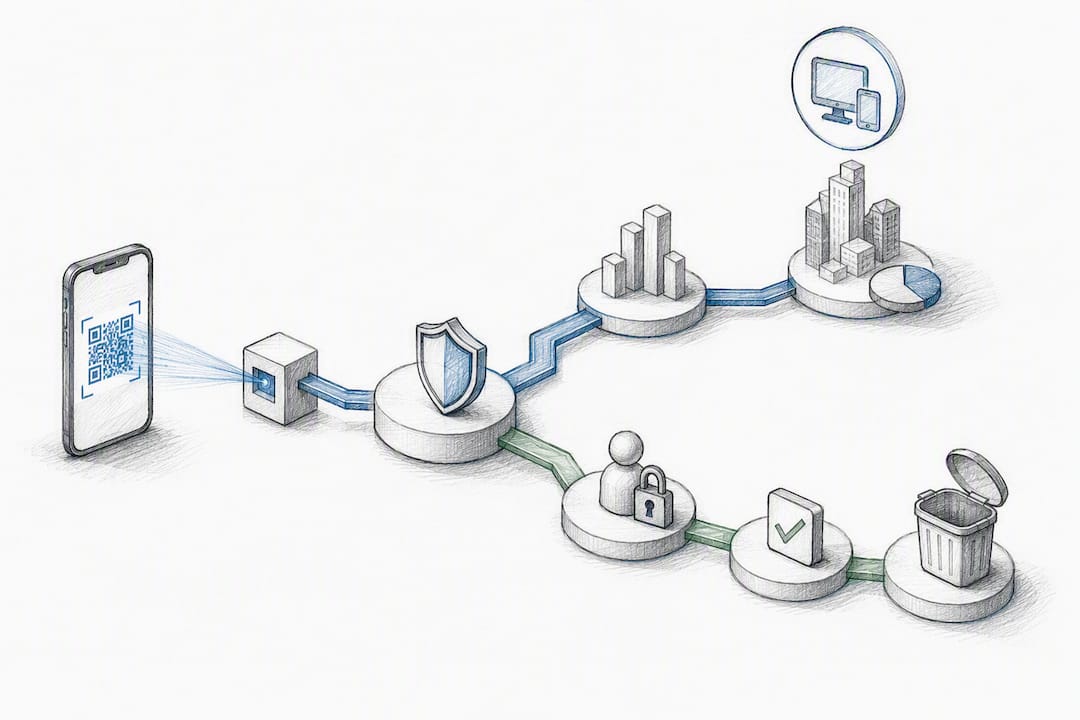
Practically, that means a few things belong in every campaign brief. If the landing page collects an email address, name, or phone number, it needs a clear privacy notice explaining what’s collected and why, plus a lawful basis for processing it, usually consent or legitimate interest depending on the use. If you’re using cookies or tracking pixels on the post-scan page, UK and EU rules on electronic communications require the same consent banners you’d use on any other webpage.
Anonymised, aggregate scan analytics, such as total scans by city or device type, carry far less regulatory weight than anything tied to an identifiable person. The safest approach is to separate the two: keep campaign performance analytics aggregate wherever possible, and treat any personally identifiable data captured through a scan (loyalty sign-ups, warranty registrations, lead forms) with the same care as data collected through your website or app.
Retention limits matter too. If a QR campaign captures customer data for a one-off promotion, delete or anonymise it once the campaign’s purpose is served, rather than holding it indefinitely on the assumption it might be useful later.
The scan is the start, not the KPI
Most marketing teams still measure QR success by scan count alone, and that’s the wrong number to chase. A billboard with ten thousand scans and no conversions has taught you nothing except that people are curious, which you probably already knew.
What’s changing heading into 2026 is the expectation that a scan should trigger a journey tailored to that specific customer, not a generic landing page identical for everyone. Progressive personalisation, where the second scan reveals something different from the first, is where the more sophisticated campaigns are heading. Platforms like QRlytics exist because marketers need the redirect control and analytics depth to make that kind of journey possible without rebuilding infrastructure for every campaign.
— The
A practical way to put these ideas into action
Every idea in this piece falls apart if the code stops working halfway through the campaign, which is a common failure QR code platforms seek to prevent. Codes created on an active subscription may keep resolving permanently, so a billboard, product box, or event badge printed today won’t turn into a dead link if a card payment fails or a plan changes months later.
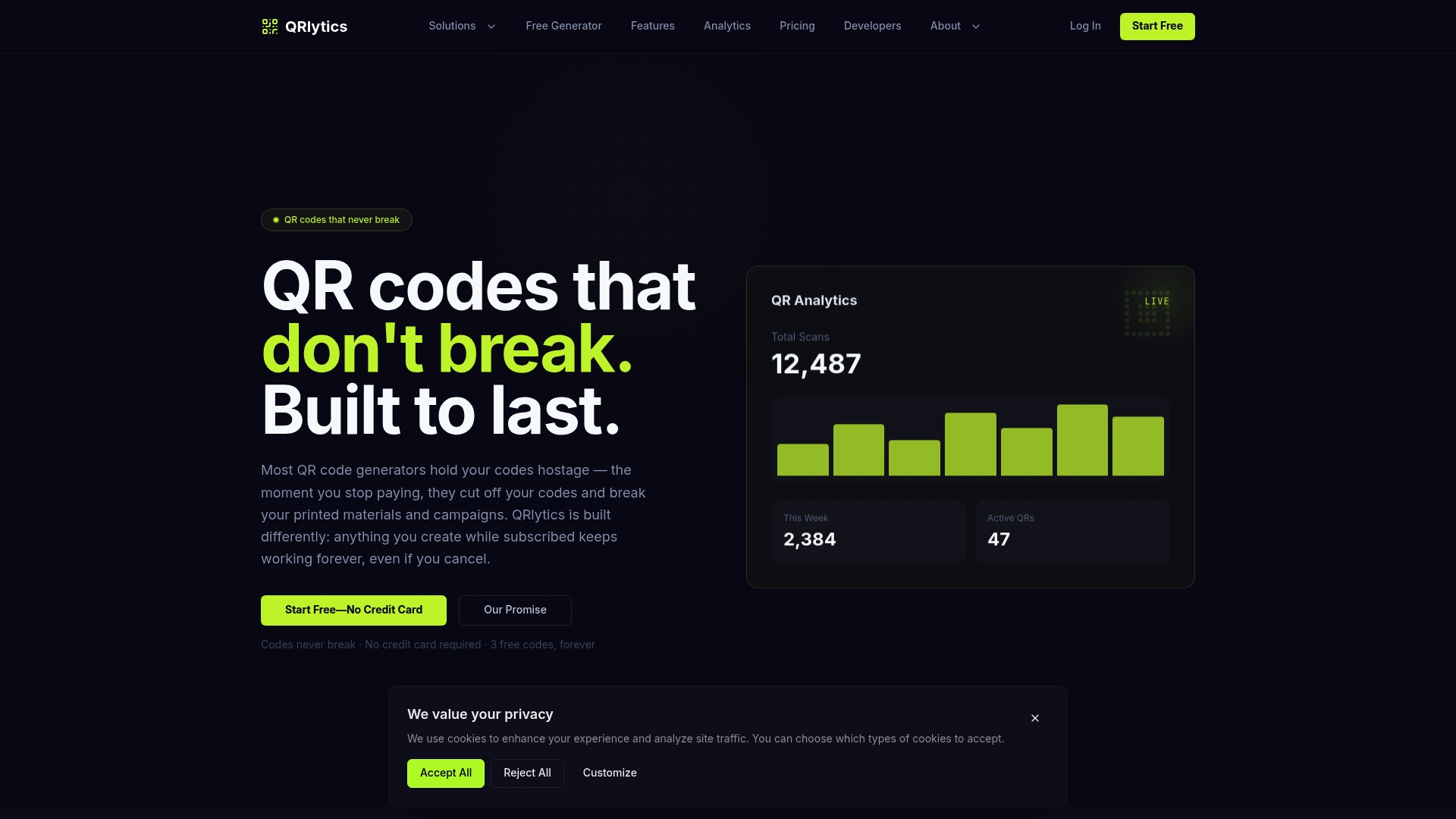
That permanence pairs with dynamic redirects, meaning you can swap an offer, update a landing page, or fix a typo without reprinting a single asset, plus real-time analytics and scan heat maps to see exactly where and when engagement happens. Onboarding needs no credit card, so testing a campaign idea costs nothing but a few minutes. If you’re planning an acquisition or retention campaign from the list above, start with the dynamic QR code generator to build a code that updates as your offer does, or try the free QR generator first if you just want to test a concept before committing a design to print.
Sources
- 13 QR-Code usability guidelines · NN/g
- QR codes are a direct line to your customer — now what? · Forbes
- From print to digital: creative QR campaigns that drove real results · RocketLink
- The complete guide to QR code marketing: A strategic roadmap for driving traffic and measuring results · Rebrandly
FAQ
What is a QR code campaign?
It’s a marketing effort that uses a QR code as the bridge between a physical or digital touchpoint and a tracked online destination, designed around one specific goal like awareness, acquisition, or retention.
How do you make QR codes more interesting?
Make the code itself part of the creative, rather than a small add-on, and connect it to something the customer gets immediately, such as a coupon, an AR experience, or exclusive content.
Should I use a dynamic or static QR code for my campaign?
Use dynamic codes for anything printed or long-lived, since they let you update the destination and read analytics without reprinting; static codes only suit throwaway digital uses with no need for tracking.
What’s the biggest mistake marketers make with QR codes?
Treating the scan as the finish line instead of the start, then measuring success by scan count alone rather than conversion rate, device data, and what happens after the landing page loads.