Global event tracking features: 2026 guide for marketers

TL;DR:
- Global event tracking captures audience interactions across channels in real time and combines metadata for accurate analysis. AI-powered agents analyze data continuously and deliver plain language insights, improving decision-making for marketing teams. Using schema discipline and global context reduces errors, while cross-platform tracking unifies user journeys for comprehensive insights.
Global event tracking features are the mechanisms that capture, contextualise, and analyse audience interactions across every digital touchpoint in real time. For marketing professionals and event organisers, these capabilities determine whether you understand your audience or merely guess at their behaviour. The industry standard term for this discipline is event analytics, and it encompasses everything from custom interaction tracking to AI-driven diagnostics. The best implementations combine real-time event monitoring, global context metadata, and schema management to give you a complete picture of event performance.
1. What are the primary methods for implementing custom event tracking?
Custom event tracking is implemented via two main approaches: CSS class-based triggers and native JavaScript functions. CSS triggers require no coding at all. You add a specific class to any HTML element, and the tracker fires automatically when a visitor interacts with it. This suits standard use cases such as button clicks, form submissions, and link taps.
JavaScript tracking functions give you far greater control. You can apply conditional logic, pass custom properties, and record revenue values alongside each event. A subscription confirmation, a media play, or a product purchase each carries different data requirements. JavaScript handles all of them cleanly.
- CSS class triggers: No coding required; ideal for clicks, downloads, and outbound links
- JavaScript functions: Support conditional logic, revenue tracking, and custom event properties
- Tracked interaction types: Button clicks, newsletter subscriptions, video plays, form completions, and file downloads
Pro Tip: Choose CSS triggers when your team lacks developer resource. Switch to JavaScript functions the moment you need to pass revenue figures or conditional properties alongside an event.
2. How does global context improve event tracking accuracy?

Global context is defined as a set of metadata entities attached once at tracker initialisation and applied automatically to every event that fires. You define the context once. Every subsequent event carries it without any additional code. This removes the need to repeat shared attributes across dozens of individual tracking calls.
The practical benefits are significant. Payload sizes shrink because shared metadata travels once rather than with every event. Data consistency improves because the same taxonomy applies uniformly. Taxonomy management becomes far easier when you control context centrally rather than per event.
Global context also supports dynamic generation and rulesets. You can filter which events receive which context entities based on conditions such as page type, user segment, or session state. Conditional context providers take this further, attaching metadata only when specific criteria are met.
| Feature | Without global context | With global context |
|---|---|---|
| Metadata consistency | Varies per event | Uniform across all events |
| Payload size | Larger, repeated fields | Smaller, shared fields |
| Taxonomy management | Fragmented | Centralised |
| Developer effort | High, per-event coding | Low, defined once |
Pro Tip: Use conditional context providers to attach campaign metadata only on pages where a promotion is active. This keeps your data clean and avoids polluting unrelated events with irrelevant fields.
3. What role do AI-powered analytics agents play in modern event tracking?
AI-driven analytics agents provide always-on analysis using large language models to correlate behaviours, trends, and anomalies across your entire event dataset. They do not wait for you to ask a question. They surface patterns continuously and flag issues before they affect campaign performance.
The most significant benefit for marketing teams is accessibility. Non-technical staff can query event data in plain language and receive expert-level diagnostic narratives in return. A campaign manager can ask “Why did registrations drop on Tuesday?” and receive a structured explanation referencing specific event sequences, without writing a single line of query code.
AI analytics agents connect the dots between raw event data and business outcomes. They translate thousands of interaction signals into plain language narratives that any team member can act on immediately, regardless of their technical background.
- Always-on monitoring: Agents detect anomalies and trend shifts without manual intervention
- Plain language queries: Non-technical users receive expert diagnostics in conversational responses
- Cross-dataset correlation: Agents link behaviours across sessions, channels, and audience segments
- Efficiency gains: Teams spend less time building reports and more time acting on findings
Analytics-driven marketing consistently produces better outcomes when AI agents handle the diagnostic layer, freeing your team to focus on strategy rather than data wrangling.
4. Which advanced techniques maintain data integrity at scale?
Tracking-schema drift is one of the most damaging problems in enterprise event analytics. It occurs when implementation code falls out of sync with the tracking plan, producing events that no longer match their intended schema. CLI-based code generation tools such as Snowtype solve this by tying implementation code directly to the tracking plan. Any schema change triggers an automatic code update or an error flag before the change reaches production.
Framework-specific approaches add another layer of precision. React tracking libraries that use fiber introspection capture the nearest component name and its props automatically. This provides rich event context without scattering manual tracking calls throughout your codebase. The result is detailed metadata with minimal instrumentation effort.
- Schema synchronisation: CLI tools like Snowtype flag drift before it reaches production
- React fiber introspection: Captures component names and props automatically, reducing manual calls
- Nested context: Layers metadata hierarchically so child components inherit parent context
- Global context over redundant attributes: Attach shared metadata once rather than repeating it per event
Pro Tip: Run your CLI code generation tool as part of your CI/CD pipeline. Any schema mismatch fails the build before it can corrupt your live event data.
5. What criteria define effective global analytics tools?
Selecting the right platform for event tracking capabilities starts with data ownership. Privacy-first platforms offer full access to unsampled raw event data, which is the only way to guarantee compliance with GDPR and similar regional regulations. Sampled data introduces gaps that distort audience analysis and undermine campaign decisions.
Unified observability platforms treat events, logs, and traces as a single contextualised dataset rather than separate silos. This approach improves diagnostic speed and gives marketing and engineering teams a shared view of system behaviour. Siloed data points cannot support the kind of cross-functional analysis that modern event programmes require.
Enterprise analytics platforms consolidate event data into self-service dashboards that both product and marketing teams can access without specialist support. Real-time ingestion is non-negotiable. If your dashboard reflects data from six hours ago, you cannot respond to audience behaviour during a live event.
| Evaluation criterion | Why it matters |
|---|---|
| Unsampled raw data ownership | Enables compliance and accurate audience analysis |
| Unified events, logs, and traces | Supports cross-team diagnostics and full observability |
| Real-time ingestion | Allows immediate response during live events |
| Flexible API and custom context | Supports advanced metadata schemas and integrations |
| AI agent compatibility | Enables plain language querying and automated anomaly detection |
6. How does cross-platform tracking unify audience data?
Cross-platform event tracking is the practice of capturing audience interactions consistently across web, mobile, and physical touchpoints. Without it, you see fragments of behaviour rather than complete audience journeys. A visitor who scans a QR code at a physical event, visits your website, and then registers online appears as three separate data points unless your tracking infrastructure connects them.
QR codes are a particularly effective bridge between physical and digital event data. When you use QR codes for marketing, each scan generates a trackable event that carries location, time, device type, and campaign attribution. This turns printed materials into a measurable part of your event analytics programme. Qrlytics supports this workflow with real-time scan analytics and GDPR-compliant tracking built into every code.
The key to effective cross-platform tracking is a consistent event schema applied across every channel. When your web events, mobile events, and QR scan events all share the same taxonomy, you can analyse audience behaviour as a single unified journey rather than disconnected channel reports.
7. What are event tracking best practices for marketing teams?
Event tracking best practices centre on three principles: track with purpose, maintain schema discipline, and review data regularly. Tracking every possible interaction produces noise. Tracking the interactions that map directly to your campaign objectives produces signal.
Start by defining your tracking plan before writing any code or configuring any triggers. A tracking plan specifies which events matter, what properties each event carries, and which team owns each data point. This document becomes the reference that prevents schema drift and keeps your data consistent as campaigns evolve.
Review your event data weekly during active campaigns. Anomalies in scan rates, drop-off points, or conversion sequences often signal technical issues rather than audience behaviour changes. Catching these early prevents corrupted data from influencing budget decisions. A practical tracking guide for marketers covers the specific steps for setting up and auditing event tracking across campaign types.
Key takeaways
Effective global event tracking features require a combination of schema discipline, global context metadata, and AI-driven analysis to produce reliable, compliant, and actionable audience data.
| Point | Details |
|---|---|
| Use global context | Attach shared metadata once at tracker setup to reduce payload size and improve consistency. |
| Choose the right trigger method | Use CSS triggers for simplicity and JavaScript functions when you need revenue or conditional data. |
| Prevent schema drift | Run CLI tools like Snowtype in your CI/CD pipeline to catch mismatches before production. |
| Prioritise unsampled data | Select platforms that give you full raw data ownership for accurate analysis and GDPR compliance. |
| Adopt AI analytics agents | Use LLM-powered agents to surface anomalies and deliver plain language insights to non-technical teams. |
The uncomfortable truth about event tracking maturity
Most marketing teams I have worked with believe they have event tracking in place. What they actually have is a collection of disconnected triggers, inconsistent schemas, and dashboards that nobody fully trusts. The gap between “we track events” and “we understand our audience” is wider than most teams realise.
The shift happens when you treat your tracking plan as a living document rather than a one-time setup task. Global context is the single most underused feature in event analytics. Teams spend weeks adding the same campaign attributes to dozens of individual events when they could define them once and apply them everywhere. The efficiency gain is immediate, and the data quality improvement is permanent.
AI analytics agents are not a replacement for analytical thinking. They are a force multiplier for teams that already have clean data and a clear tracking plan. Feed an AI agent messy, inconsistent event data and it will produce confident-sounding nonsense. Feed it a well-structured event stream and it will surface insights your team would have taken days to find manually.
The future of digital engagement tracking belongs to teams that invest in infrastructure first and dashboards second. Build the schema. Define the context. Then let the AI do the heavy lifting.
— The
Qrlytics: event tracking built for marketing teams
Marketing professionals who want reliable event data without complex infrastructure have a direct path forward with Qrlytics.
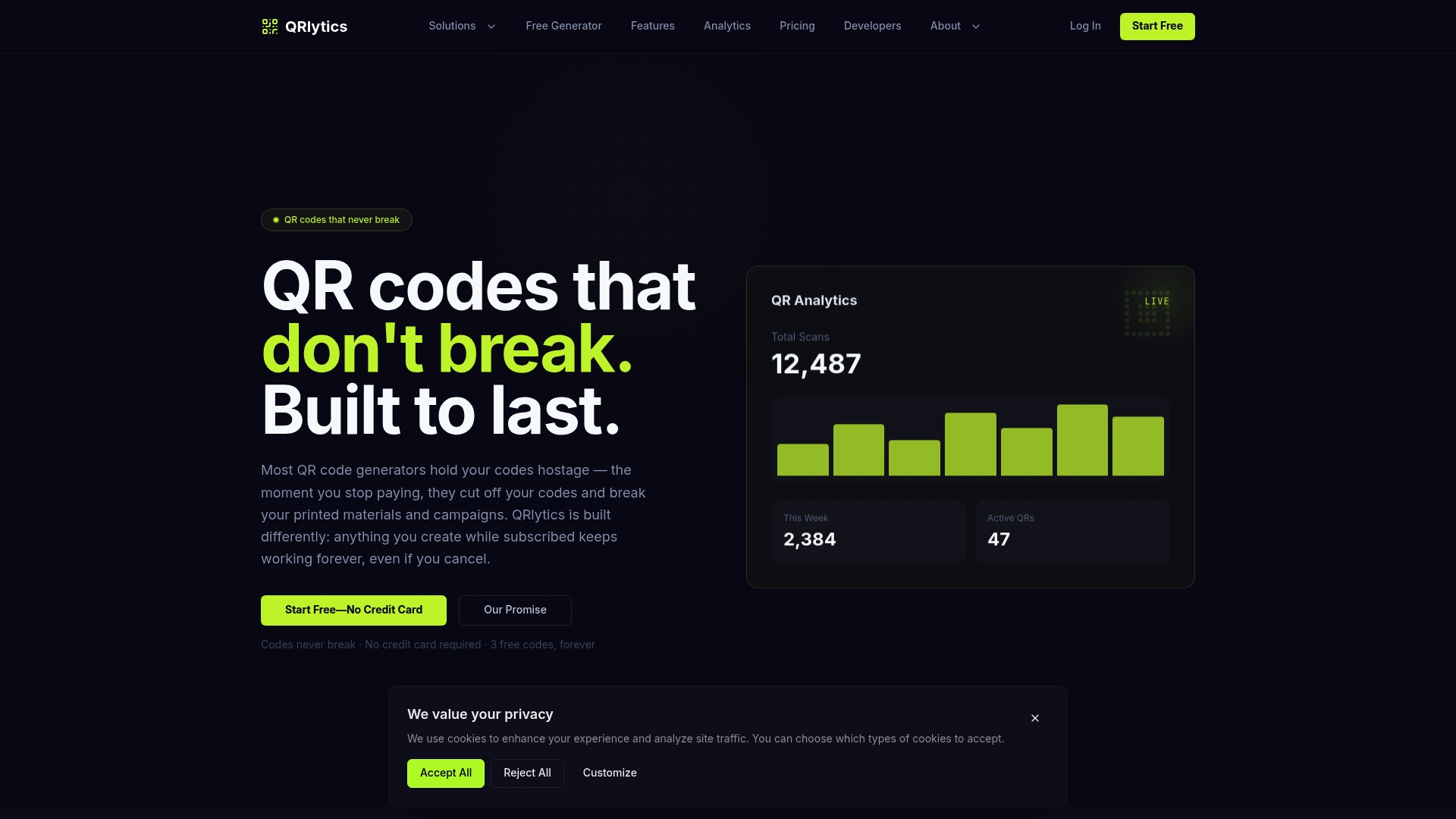
Qrlytics provides dynamic QR codes with analytics that capture real-time scan data including location, device type, time, and campaign source. Every code remains active regardless of billing status, so your printed materials never become dead ends. The platform is GDPR-compliant, requires no credit card to start, and gives you full access to your raw event data from day one. For teams running physical and digital events simultaneously, Qrlytics connects both worlds through a single free QR code generator with built-in reporting. Your audience data stays yours, unsampled and complete.
FAQ
What are global event tracking features?
Global event tracking features are the tools and methods that capture audience interactions across digital and physical channels, attach consistent metadata, and deliver real-time analytics. They include custom event triggers, global context schemas, and AI-powered diagnostic agents.
How does global context reduce tracking redundancy?
Global context attaches shared metadata entities once at tracker initialisation and applies them automatically to every event. This eliminates the need to repeat common attributes across individual tracking calls.
What is tracking-schema drift and how do you prevent it?
Tracking-schema drift occurs when implementation code falls out of sync with the tracking plan, producing malformed events. CLI tools like Snowtype prevent drift by synchronising code with the tracking plan automatically and flagging mismatches before deployment.
Can non-technical marketers use AI analytics agents effectively?
Yes. AI analytics agents accept plain language queries and return structured diagnostic narratives, so non-technical team members can interrogate event data without writing query code.
Why does unsampled data matter for event analytics?
Sampled data omits interactions, which distorts audience analysis and undermines campaign decisions. Privacy-first platforms that provide full raw data ownership give you accurate, complete event records and support compliance with GDPR and regional privacy regulations.