Avoid Costly Reprints in Two Weeks: QR Codes for Hospitality

Yes, QR codes are a practical, measurable expectation for modern hospitality, not a passing gimmick. Use dynamic, single-purpose codes for each guest moment, from pre-arrival through checkout, rather than one code doing everything. Done properly, they cut front-desk friction, generate real guest data, and simplify contactless transactions. Done carelessly, they print broken links onto thousands of room cards.
TL;DR:
- Using dynamic QR codes ensures updates to menus, Wi-Fi links, and review links do not require reprinting, reducing costs and operational disruptions.
- Proper placement and clear call-to-actions significantly increase scan rates, with the highest engagement on check-out receipts, nightstands, and lobby displays.
- Testing QR codes in real-world conditions and coordinating with print vendors on sizing and error correction prevent common failures and scanning issues.
- Tracking scan metadata like timestamps and device types helps optimize guest engagement by identifying high-performing placements and times.
- Starting with a two-week pilot on main placements allows for data-driven decisions before scaling across the property, minimizing wasted resources.
Table of Contents
- Where QR codes for hospitality actually earn their keep
- How to implement QR codes without the rollout falling apart
- Dynamic versus static QR codes: what hospitality actually needs
- Best placements, sizing, and how to stop fraud on printed codes
- Measuring scans: what the data actually tells you
- A two-week pilot to get started
- What hospitality operators consistently get wrong about QR codes
- Get your QR code pilot running this week
- Sources
- FAQ
Where QR codes for hospitality actually earn their keep
QR code scans have increased 433% since 2021, and a large majority of travellers now expect some form of technology amenity from wherever they stay. That shift means guests aren’t tolerating a QR code on the nightstand; they’re actively looking for one. The question for hospitality leaders isn’t whether to deploy hospitality QR code solutions, but where they deliver the clearest operational return.
Map placements to the guest journey and the priorities become obvious:
- Pre-arrival and mobile check-in: a code in the confirmation email or SMS lets guests complete forms before they arrive, thinning out front-desk queues at peak check-in hours.
- Digital keys and contactless access: paired with a mobile wallet, a QR code can trigger secure room access without a physical card, which also cuts key-card replacement costs.
- In-room directory and guest information: one scan replaces the laminated binder, and updates to spa hours or Wi-Fi passwords no longer require reprinting anything.
- F&B table ordering and room service: QR code menus for restaurants speed up turnaround and reduce the order-accuracy errors that come from handwritten tickets.
- Spa and amenity booking: a code on the elevator poster or in-room tablet nudges cross-sell revenue that would otherwise need a phone call to the front desk.
- Post-checkout review requests and loyalty enrolment: linking straight to the write-a-review field, rather than a general listings page, meaningfully shortens the path to a completed review.
- Staff-facing codes: shift rosters, back-of-house prep menus, and incident-reporting forms benefit from the same technology, just pointed inward rather than at guests.
Each of those is a distinct guest engagement QR code, and each should be treated as its own placement with its own destination, not a single all-purpose link plastered everywhere.
How to implement QR codes without the rollout falling apart
Most QR failures in hospitality trace back to skipped steps, not bad technology. Follow this sequence for every placement:
- Decide the single call to action. One code, one job. A code that tries to offer the menu, the spa booking, and the Wi-Fi password all at once will confuse guests and dilute your data.
- Build a mobile-first landing page that fulfils that call to action in one tap, no pinch-zooming, no desktop-only forms.
- Shorten the destination URL. A shorter link creates a less dense QR pattern, which scans faster and more reliably under poor lighting or scuffed lamination.
- Generate a dynamic QR code, so the destination can change without reprinting a single door hanger.
- Test on both iPhone and Android, at the actual print size and in the actual lighting the code will live in, not just on a laptop screen.
- Coordinate with your print vendor on minimum scannable size and error correction level before the run goes to press.
- Train staff on where every code lives, how to visually check for tampering, and how to help a guest whose phone camera won’t cooperate.
Pro Tip: Print one test batch at the smallest size you’re considering and scan it with a mid-range Android phone in dim lighting before committing to a full print run. Cheap paper and low light expose scan problems that a laptop test never will.
Dynamic versus static QR codes: what hospitality actually needs
A static QR code embeds a fixed destination permanently; a dynamic one points to an editable short link, so you can change where it sends guests after the code is already printed and laminated on 200 tables. That distinction decides whether your seasonal menu update costs you a five-minute edit or a full reprint.
- Static works only for genuinely permanent resources, a fire-safety notice, a building floor plan, or when budget constraints leave no other option.
- Dynamic suits nearly everything guest-facing: menus, directories, Wi-Fi credentials, review links, and seasonal offers, because the destination can be redirected without touching the printed asset.
- Free generators typically produce static-only codes, which can be acceptable for a single permanent menu link but risky at hotel scale where content changes constantly.
For a property running dozens of placements, dynamic is the only version that scales without a standing reprint budget.
Best placements, sizing, and how to stop fraud on printed codes
Placement and presentation decide whether a code gets scanned at all. Codes with a visible, specific call to action get up to 60% more scans than a bare code with no context.
- Folio or receipt: ideal for review requests, since the guest is already holding their phone at checkout.
- Nightstand or table: best for F&B and room service, right where the decision to order gets made.
- Lobby or check-in desk: mobile check-in and Wi-Fi onboarding belong here, at the first moment of contact.
- Elevator and concierge boards: strong for local guides and amenity cross-sell, since guests are a captive audience for thirty seconds.
- Door hanger or in-room desk: the natural home for the full digital directory.
On sizing, most printed materials scan reliably at 2cm by 2cm minimum for close-range items like table tents, rising to 5cm or more for posters viewed from a metre away. Write the call to action in plain language, “Scan to order room service”, never just “Scan”. On fraud: overlay stickers on public codes are a known tactic, so use tamper-evident fixtures and have staff visually check lobby and elevator codes during routine walkthroughs.
Measuring scans: what the data actually tells you
Every scan carries metadata worth watching: timestamp, the placement-specific short link, device type, and approximate location. The single most important habit is tagging each placement with its own separate short link, because a shared link across ten locations gives you a scan count with no actionable signal about which one performed.
Track four numbers:
- Scan rate, scans per guest or per stay, to gauge overall adoption.
- Completion rate, how many scans finish the intended call to action rather than bouncing.
- Time-of-day patterns, which flag when to staff up for room service or check-in support.
- Placement conversion, revealing that an elevator poster might convert better than the room card ever did, which is exactly the kind of insight that should redirect your signage budget.
Use that data to move staff, redesign a landing page, or retire a placement that never earns its printing cost.
A two-week pilot to get started
Pick 2 to 3 high-impact placements, room service, check-in, and review requests are a sensible starting trio, and run them for two weeks before rolling out property-wide.
- Build mobile-optimised landing pages and shorten every destination URL.
- Generate dynamic codes, print test assets, and check them on real devices at real print size.
- Set KPIs before launch: target scan-to-complete rate, time-of-day patterns, and a review-conversion baseline.
- Assign one person to monitor the analytics dashboard weekly, not monthly.
- Set a scale-up threshold in advance, for instance a defined improvement in review conversion, so the decision to expand isn’t made on gut feeling.
What hospitality operators consistently get wrong about QR codes
Most properties treat QR codes as a print decision instead of a data decision. They generate one code in a rush before a soft launch, print it onto 500 table tents, and only discover months later that the destination needs updating, by which point the printing budget is already spent and the code is stuck.
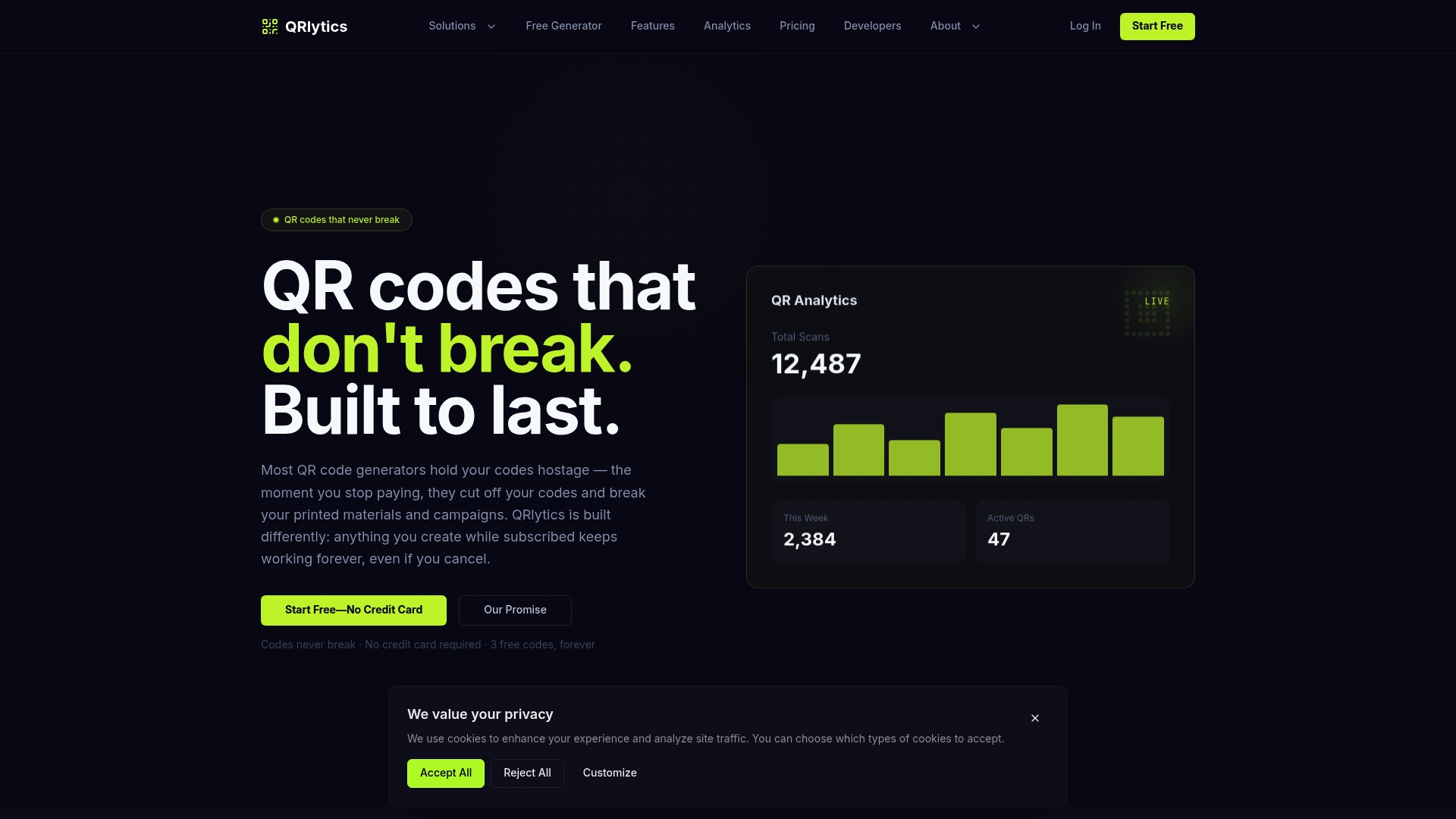
QRlytics exists precisely because permanent code functionality matters more than most hotels realise at the point of purchase. A dynamic QR platform that guarantees codes stay live regardless of billing status, offers GDPR-compliant tracking, and supports custom branding removes the single biggest operational risk in hospitality QR deployment: the broken link on a printed asset you can’t easily replace. Combined with heatmap-level scan tracking, that reliability turns a laminated card into an actual measurement tool, not a shot in the dark.
— The.
Get your QR code pilot running this week
A leading QR code platform solves the two problems that undo most hospitality QR rollouts: codes that stop working when a subscription lapses, and destinations that can’t be updated once they’re printed. Codes created during an active subscription stay functional permanently, so a seasonal menu change or a room-service link update never means reprinting a single card. Every placement also gets its own real-time analytics, so you see exactly which table tent or elevator poster is converting.
Start with the free QR code generator to pilot your first two or three placements, no credit card required. Once you’re ready to manage codes at property scale, move to the dynamic QR code generator for editable destinations and placement-level analytics you can actually act on. For teams focused purely on table ordering, the restaurant QR menu solution is built for that exact workflow, and BabyLoveGrowth’s research on review-driven revenue is worth a read if review generation is your priority placement.
Sources
- How hotels use QR codes: A practical guide for 2026
- QR Codes for Hotels: One dynamic code per guest moment
- Free digital menu QR code — QRWink
FAQ
How do I get a QR code for my restaurant menu?
Use a QR code generator to create a dynamic code linking to a mobile-optimised menu page, then print it at table tents or receipts with a clear call to action like “Scan to view menu.” A dynamic code lets you update seasonal dishes without reprinting.
Can ChatGPT generate QR codes?
No. ChatGPT can describe how QR codes work and suggest wording for calls to action, but it cannot generate a functional, scannable QR code image; that requires a dedicated QR code generator.
What is the QR code for a hotel room?
It’s typically a code placed on the door, desk, or in-room directory linking guests to the digital room directory, Wi-Fi credentials, room service ordering, or a digital key activation page, depending on what the property has configured for that placement.
Which QR code platform is best for hospitality businesses?
The best choice depends on whether you need permanence and analytics at scale. Some platforms offer codes that remain functional indefinitely, dynamic destination updates, and placement-level scan data, which matters more for hotels than basic free generators that only produce static codes.