QR code uptime: what it means and how to check it
QR code uptime is the measure of whether a scanned code reliably delivers a user from the printed image to a working destination page, every time, without interruption. It covers three linked events: the scanner reading the image, the redirect service resolving the link, and the analytics platform logging the scan. If any one of those breaks, the code is effectively down even if the printed graphic looks perfectly fine.
Run these checks the moment you suspect a problem:
- Scan the physical code yourself with a normal phone camera.
- Open the resulting URL in an incognito or private browser window to rule out cached results.
- Check your provider’s public status page for open incidents.
- Log into your analytics dashboard to confirm the scan registered.
Triage in this order, from most to least likely culprit:
- Image damage — is the printed code scratched, faded, or too small to read?
- Redirect failure — does the short link resolve at all, or does it hang and time out?
- Destination failure — does the final landing page load, or is that site itself down?
Key Takeaways
QR code uptime depends on redirect availability, DNS resolution, and analytics logging working together, not on the printed image alone.
| Point | Details |
|---|---|
| Uptime is four systems, not one | Scanner reading, DNS resolution, redirect availability, and landing-page uptime all have to hold simultaneously. |
| SLAs rarely cover everything | Most vendor SLAs exclude your own destination site and scheduled maintenance windows, so read the scope carefully. |
| Test providers yourself | Run scans from multiple regions and resolve the short-link URL over several days before committing to a print run. |
| Permanence hinges on billing status | Many free generators deactivate dynamic codes when a subscription lapses; QRlytics guarantees codes stay active regardless of later billing status. |
Table of Contents
- What “uptime” actually covers for QR codes and redirect services
- How reliable QR platforms detect and recover from outages
- How do you check a provider’s uptime before you commit?
- What to do the moment a QR code or redirect fails
- How long does a QR code stay active, and what controls that?
- Building a monitoring routine that catches problems early
- How QRlytics builds uptime and permanence into the product
- Get guaranteed uptime and permanent QR links
- Sources
- FAQ
What “uptime” actually covers for QR codes and redirect services
Most people assume uptime just means “the code works.” In practice it is four separate systems that all have to hold at once: the scanner’s ability to decode the image, DNS resolution for the short-link domain, the redirect server itself, and the landing page it points to. A written SLA from a provider almost never covers all four. Read the fine print and you will usually find it only guarantees redirect-service availability, explicitly excluding your own destination website and any scheduled maintenance windows.
The most common causes of a QR code appearing “down” are rarely dramatic:
- DNS misconfiguration or an expired domain on the short-link
- CDN or hosting outages at the redirect provider
- Routing or load-balancer errors during traffic spikes
- Application bugs introduced by a recent deployment
- Simple human error, such as someone deleting or editing the wrong redirect rule
Given how widely QR codes are now used, with 89 million people in the United States scanning one in 2022 alone, even a short outage during a live campaign can mean thousands of failed scans before anyone notices.
How reliable QR platforms detect and recover from outages
A provider that takes uptime seriously builds detection, communication, and recovery into the product, not just into a support ticket queue. Public status pages with historical uptime dashboards are the baseline signal here. If a vendor cannot show you 30 or 90 days of past performance, you are being asked to take their reliability entirely on trust.
Behind that status page, the monitoring stack usually includes:
- Synthetic probes that scan test codes from multiple regions on a fixed schedule.
- External monitors that check redirect resolution independently of the provider’s own servers.
- Log-based alerting that flags unusual error rates or latency spikes automatically.
- An on-call rotation that gets paged, not just emailed, when something breaks.
When an incident does happen, the response matters as much as the detection. Look for a clear ticketing trail, a published incident timeline, a postmortem once resolved, and a communication cadence that does not leave you refreshing a support inbox. Redundancy is the other half of the equation: DNS failover, multi-region hosting, CDN fronting, and backup redirect rules that kick in automatically when a primary route fails.
Pro Tip: Ask a provider directly how many regions their synthetic monitoring covers. “We monitor uptime” means little if every probe runs from a single data centre.
How do you check a provider’s uptime before you commit?
Before you commit a print run or a client campaign to any QR platform, get answers to a short list of direct questions. Ask for the exact SLA percentage, the credit policy if it is breached, a summary of incidents from the past year, and a plain description of their monitoring stack.
Then verify some of it yourself:
- Scan test codes from several devices and, ideally, several geographic regions.
- Resolve the short-link URL periodically over a few days rather than once.
- Check whether scan events appear in the analytics dashboard within a reasonable time.
Reading a status page properly means more than glancing at a green tick. Look at the 30 and 90 day history: occasional minutes of downtime are normal, but recurring multi-hour incidents are not. Testing redirects from multiple geographic regions and retaining exported analytics logs gives you your own evidence trail, independent of whatever the vendor reports.
Pro Tip: Treat “no status page at all” as a bigger red flag than a status page showing a handful of past incidents. Transparency about failure is a better signal than the appearance of perfection.
Numbered checklist for a first vendor screen:
- Request the written SLA and credit terms in writing.
- Ask for incident history, not just uptime percentage.
- Confirm multi-region deployment exists, not just claimed.
- Check analytics log retention length before you sign anything.
What to do the moment a QR code or redirect fails
Speed matters here, but so does working through the problem in the right order rather than guessing.
- Scan the physical code again, ideally with a second device, to rule out a one-off camera glitch.
- Test the redirect URL directly in a browser, bypassing the scan entirely.
- Check the provider’s status page for a known, ongoing incident.
- Look up DNS resolution for the short-link domain if the redirect hangs.
- Review your analytics dashboard to see whether scans were logged during the suspected window.
If the fault sits with the provider and will take time to fix, have fallback options ready rather than waiting it out:
- A secondary redirect pointed at a temporary landing page.
- A manually printed shortlink as a stopgap for physical materials already in circulation.
- A social media or SMS message directing people around the broken code.
Tell campaign stakeholders what happened, roughly how long it will take, and what the temporary fix is. Silence during an outage does more reputational damage than the outage itself.
How long does a QR code stay active, and what controls that?
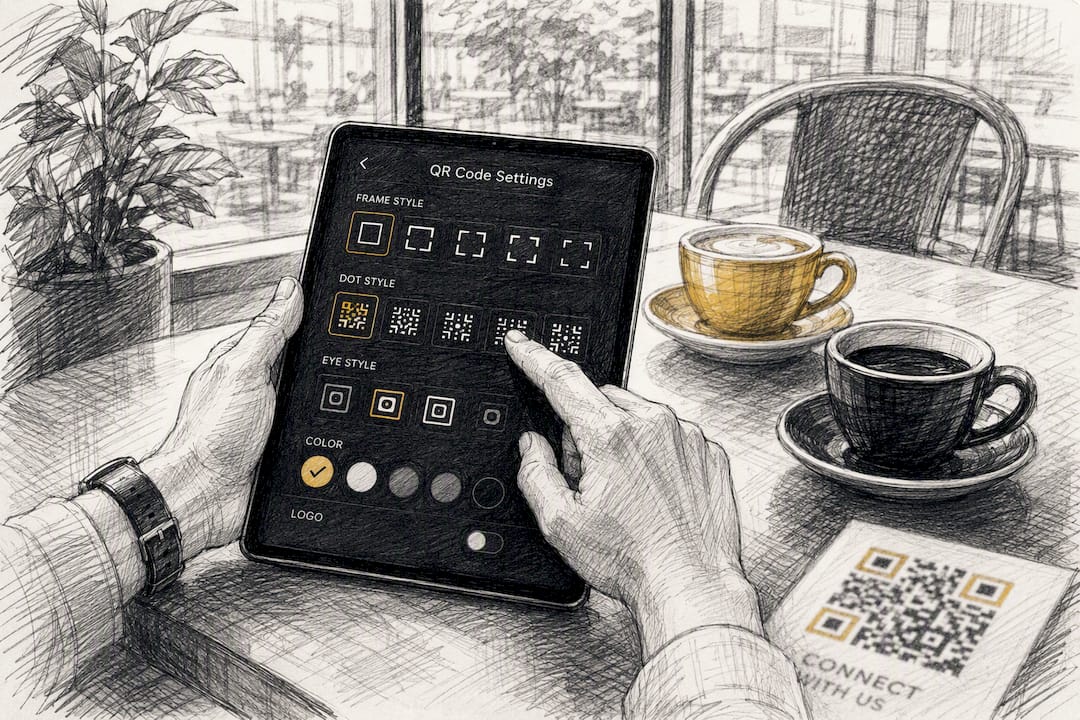
Permanence depends almost entirely on whether the code is static or dynamic, and on the fine print of the provider you chose. A static QR code encodes the destination URL directly into the image itself; it cannot be edited afterwards, but it also has nothing to “expire” unless the destination site goes offline. A dynamic QR code points to a short-link that your provider controls, letting you update the destination without reprinting, but tying its survival to that provider’s business decisions.
| Factor | Static QR code | Dynamic QR code |
|---|---|---|
| Destination editable after printing | No | Yes |
| Scan analytics available | No | Yes |
| Typical failure mode | Destination site goes offline | Account lapses or provider deactivates link |
| Dependent on provider staying in business | No | Usually yes |
The permanence question that catches most marketers out is account status, not technology. Many free QR generators deactivate dynamic codes the moment a subscription lapses or a card payment fails, which can silently break every printed piece from a completed campaign months earlier.
Before trusting any provider with a long print run, confirm in writing:
- Whether codes generated during an active subscription keep working if billing later stops.
- How long analytics logs are retained, and whether they can be exported.
- Whether destination URLs can be updated without reprinting the physical code.
Building a monitoring routine that catches problems early
Waiting for a customer complaint is the slowest possible way to discover a QR code has failed. A proper monitoring routine catches the fault before anyone in the field notices.
The core stack for most campaigns needs only a few pieces: synthetic probes running from more than one region, HTTP checks against the redirect endpoint itself (not just the landing page), DNS monitoring on the short-link domain, and analytics log retention long enough to support a forensic review weeks later if a dispute arises.
Operationally, a few habits do most of the work:
- Run scheduled test scans on a fixed interval, not just when you remember to.
- Gate any redirect-rule change behind a quick manual test before it goes live.
- Set up automated failover so a single region outage does not take the whole campaign down.
- Analytics that track scan volume against expected campaign timing make it far easier to spot a silent drop before it becomes a support ticket.
Pro Tip: Give your on-call responder a one-line playbook: check the redirect endpoint directly, check DNS, check the status page, then confirm recovery by re-running the same synthetic test that flagged the fault.
How QRlytics builds uptime and permanence into the product
QRlytics was built around a specific failure mode we kept seeing across the industry: free QR generators that quietly deactivate codes the instant a subscription lapses, turning a finished print run into dead weight overnight. Codes created during an active subscription on QRlytics keep working permanently, regardless of later billing status.
On top of that permanence guarantee, the platform includes:
- Multi-region hosting so a single data centre issue does not take redirects offline.
- Synthetic monitoring that checks redirect resolution continuously, not just when something already looks wrong.
- Exportable, GDPR-compliant scan analytics you can retain for your own forensic review.
- Dynamic URL updates, so a destination can change without reprinting a single code.
The core problem with disposable QR generators isn’t that they’re unreliable in the moment. It’s that they make permanence conditional on a payment method never failing, which is a fragile promise for something printed on packaging that outlives the subscription.
Why uptime has to be part of campaign planning, not an afterthought
Treating uptime as a launch-day checkbox rather than an ongoing habit is the mistake I see repeated most often. Automate the monitoring now, and you will never have to explain a dead code to a client after the print run has already shipped.
Get guaranteed uptime and permanent QR links
Most of the reliability problems covered above trace back to one root cause: providers that treat uptime as an afterthought rather than a product commitment. QRlytics is built the other way round. Codes created during an active subscription keep redirecting permanently, backed by multi-region infrastructure and continuous synthetic monitoring, so the checklist in this article becomes something you can verify rather than something you have to hope for.
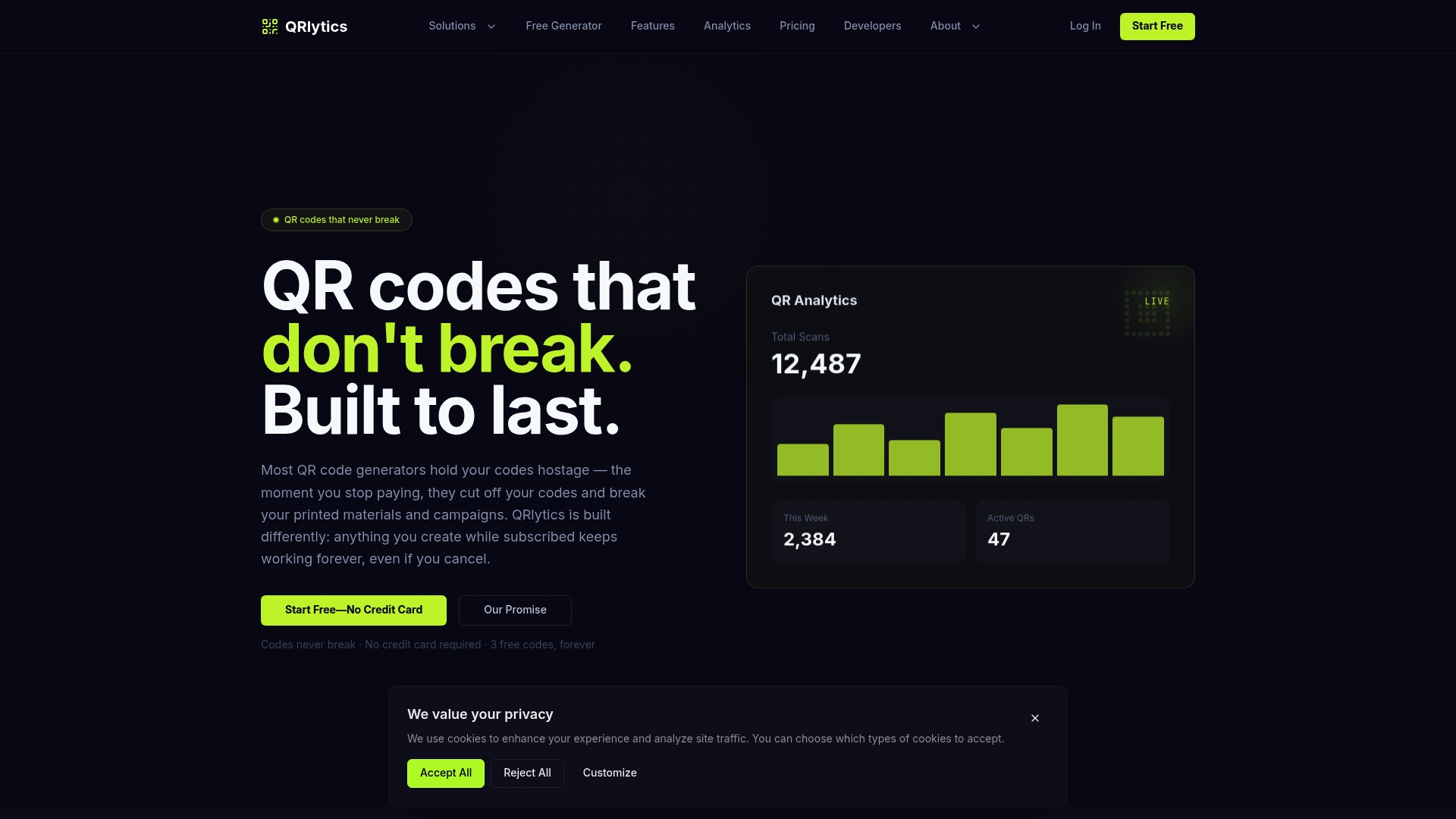
You do not need to take that on faith. Generate a code with the free QR code generator and run your own scan tests from a few locations, or explore the dynamic QR code generator if you already know a campaign will need destination updates down the line. Either way, you get a working code in minutes and no credit card required to start.
Sources
FAQ
How long does a QR code stay active?
A static QR code stays active indefinitely because the destination is encoded directly into the image. A dynamic QR code’s lifespan depends entirely on the provider; QRlytics guarantees codes created during an active subscription remain functional permanently, regardless of later billing status.
Can you check how many times a QR code has been scanned?
Yes, but only with a dynamic QR code linked to an analytics platform. Static codes with no tracking layer offer no way to count scans, which is why most marketing campaigns rely on dynamic codes with logging built in.
How far away will a QR code work from?
Scanning distance depends on the code’s physical size and its error-correction level, roughly following a ratio where a larger printed code and a lower error-correction setting allow a longer scanning range, though camera quality and lighting also play a role.

What causes most QR code downtime?
DNS misconfiguration, expired domains, CDN outages, and human error during redirect-rule changes account for most reported outages, rather than the QR code image itself failing.
What should I ask a QR code provider about reliability?
Ask for their exact SLA percentage, credit policy if it is breached, a summary of past incidents, and details of their monitoring stack, including how many regions it covers.