QR code terminology every marketer needs to know
TL;DR:
- Effective QR code management relies on understanding dynamic versus static codes, governance, and analytics to ensure campaign flexibility and security. Proper validation, trusted providers, and ongoing monitoring protect brand trust and maximize long-term value. Professionals treat QR codes as infrastructure assets that require continuous oversight, not just static print elements.
QR codes look simple. You scan, something opens. But if you manage campaigns at any real scale, you already know there is far more happening beneath the surface. The terminology professionals use around QR codes, words like redirect, governance, dynamic, and validation, shapes how campaigns are built, maintained, and protected. Get the language wrong and you get the strategy wrong. This guide decodes the core industry concepts so you can make confident, informed decisions about every QR code your business puts into the world.
Table of Contents
- Decoding QR code industry terminology
- Security and governance: Protecting brand trust
- From static to dynamic: The evolution of QR code management
- Infrastructure, analytics, and campaign longevity
- Rethinking QR code management: What most marketers overlook
- Take your QR code management further with QRlytics
- Frequently asked questions
Key Takeaways
| Point | Details |
|---|---|
| Dynamic codes for control | Dynamic QR codes enable updates and analytics, crucial for long-term campaign success. |
| Security terminology matters | Proper jargon ensures safer, more trusted campaigns through validation and governance. |
| Analytics drive results | Understanding analytics terms helps marketers optimise campaigns and track success. |
| Infrastructure ensures longevity | Robust routing and redirect language prevents breakage and supports lasting QR codes. |
Decoding QR code industry terminology
With the context set, let us clarify the vocabulary that shapes professional QR code management.
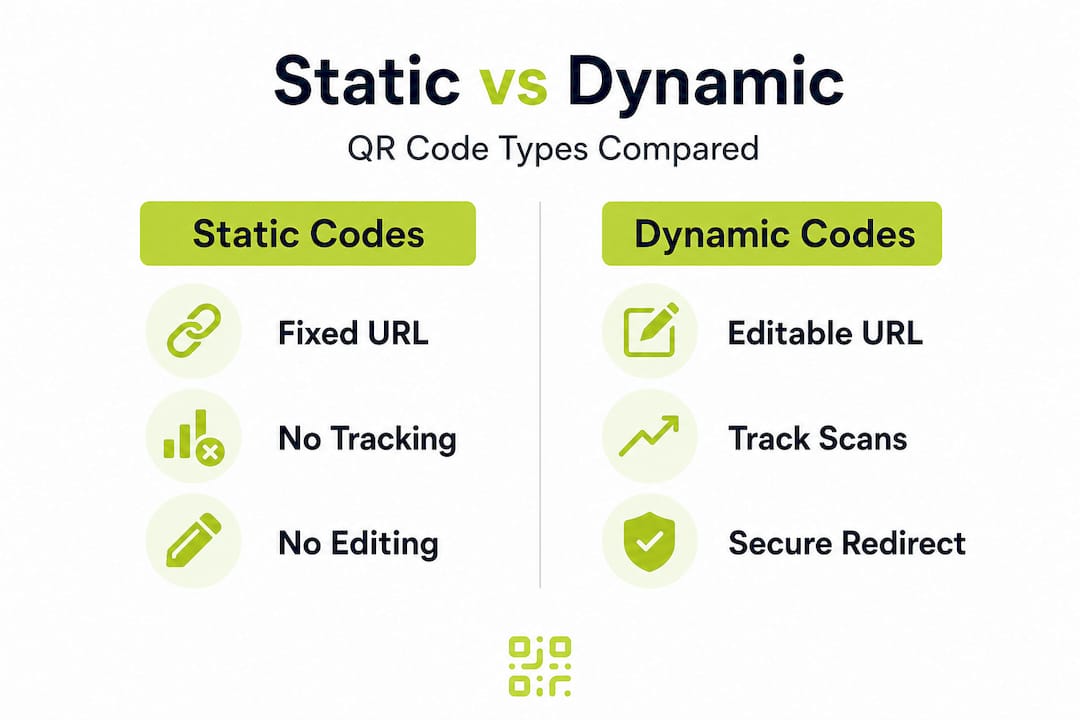
The first distinction every marketer needs to understand is static versus dynamic QR codes. A static QR code has its destination permanently encoded into the code itself. Once printed, it cannot be changed. A dynamic QR code, by contrast, points to a redirect URL (a short, managed web address that forwards the scanner to your chosen destination). You can update that destination at any time without reprinting the code.
Here is why that distinction matters enormously in practice:
- Static codes are locked. If the destination URL changes, goes offline, or contains an error, the code is broken forever.
- Dynamic codes give you control. You can fix errors, update landing pages, and redirect traffic to seasonal promotions without touching the printed material.
- Redirect refers to the process where scanning the code sends the user through a managed link before arriving at the final destination. This is what makes dynamic codes editable.
- Analytics in QR code management means collecting data on every scan: when, where, on what device, and how often. This turns printed materials into a measurable marketing channel.
- Governance is the practice of managing who controls your QR codes, where they point, and how they are monitored. It includes policies around trusted providers, validation, and testing.
QR code security and brand trust are recurring concerns in the industry because codes can be abused when they link to unverified destinations. Governance, which covers trusted providers, safe redirects, and pre-rollout validation, is therefore a core part of professional methodology, not an optional extra.
| Term | What it means | Why it matters |
|---|---|---|
| Static QR code | Fixed destination, cannot be edited | Permanent risk if URL changes |
| Dynamic QR code | Editable redirect destination | Flexible, updatable campaigns |
| Redirect URL | Managed link that forwards to final URL | Enables tracking and updates |
| Scan analytics | Data collected on each scan event | Measures campaign performance |
| Governance | Policy and control over code management | Protects brand and user safety |
| Validation | Testing that destination URLs are correct | Prevents broken or harmful links |
| Trusted provider | Verified SaaS platform managing codes | Ensures reliability and security |
Good QR code tracking for campaigns starts with understanding these terms. When you know what a redirect is, you can assess whether your provider handles it reliably. When you understand analytics, you know what questions to ask about your data. And when you grasp governance, you can build a QR code programme that protects your brand at every stage. Learning how to manage updating QR code destinations is also far easier once you understand the underlying terminology.
Security and governance: Protecting brand trust
Now that terminology is clear, let us see why security and governance are at the heart of brand protection.
QR codes create a direct bridge between your printed materials and your digital presence. That bridge can be misused. Phishing attacks via QR codes, sometimes called “quishing,” involve codes that redirect users to fraudulent websites designed to steal credentials or payment information. Broken links are a less dramatic but equally damaging problem: a code that leads nowhere destroys user trust instantly.

QR codes can be abused because they link to destinations that users cannot preview before scanning. This is precisely why governance, the practice of controlling and verifying every aspect of your QR code infrastructure, is non-negotiable for professional marketers.
Here is a practical, step-by-step approach to secure QR code deployment:
- Choose a trusted provider. Use a reputable SaaS platform that manages redirects through verified infrastructure. Avoid free generators with no accountability or support.
- Validate all destination URLs before printing. Test every link manually and confirm it loads correctly on multiple devices and browsers. A broken link discovered after 10,000 flyers are printed is an expensive mistake.
- Conduct a pre-launch test. Scan your codes from multiple devices, in different lighting conditions, and at various distances. Confirm the redirect works and the destination loads quickly.
- Monitor scan analytics continuously. Sudden drops in scan activity or unexpected geographic spikes can indicate a problem with the destination or potential misuse.
- Maintain a record of all active codes. Know which codes are live, where they appear, and what they point to. This is the foundation of good governance.
- Update destination URLs promptly when needed. If a landing page goes offline or a campaign changes, update the redirect immediately through your SaaS platform.
“Governance is not a one-time checklist. It is an ongoing practice of monitoring, updating, and verifying that your QR codes remain safe, accurate, and effective throughout their entire lifecycle.”
Measuring QR code performance is a key part of governance because anomalies in scan data often reveal problems before your customers report them. A spike in scans from an unexpected country, for example, might indicate someone has shared your code in an unintended context, or that a redirect is misbehaving. Lasting QR campaigns are built on this kind of continuous oversight, not on a “print and forget” mentality.
Pro Tip: Always validate destination URLs at every stage of a campaign, not just at launch. Websites change, pages get deleted, and redirects can break silently. A monthly audit of your active QR codes takes minutes and can save your brand from significant embarrassment.
From static to dynamic: The evolution of QR code management
With governance addressed, it is vital to understand how industry terminology supports the transition to modern QR code management.
The shift from static to dynamic QR codes is not just a technical upgrade. It represents a fundamental change in how professionals think about QR codes. Professionals treat QR codes as a URL/redirect infrastructure problem involving routing, analytics, and updates, rather than a one-time print artefact. This framing is important. It means your QR code is not a finished product the moment it is printed. It is a live, managed asset that requires ongoing attention.
In practical terms, a dynamic QR code works like this: the code itself encodes a short redirect URL managed by your SaaS platform. When someone scans the code, they are briefly routed through that managed URL, which then forwards them to your chosen destination. You can change that destination at any time through your platform dashboard, without altering the printed code at all.
The benefits of dynamic codes for long-term campaigns are significant:
- Real-time updates. Change a landing page, fix a broken link, or redirect traffic to a new offer without reprinting anything.
- Campaign agility. Run A/B tests by switching destinations, or update codes seasonally to keep content fresh.
- Detailed analytics. Track every scan with data on time, location, device type, and operating system.
- Error recovery. If a destination URL goes down, you can redirect traffic to an alternative page within minutes.
- Longevity. A dynamic code printed today can still be actively managed and updated years from now.
| Feature | Static QR code | Dynamic QR code |
|---|---|---|
| Destination editable after printing | No | Yes |
| Scan tracking and analytics | No | Yes |
| Risk of permanent breakage | High | Low |
| Suitable for long-term campaigns | No | Yes |
| Requires SaaS management | No | Yes |
| Redirect URL infrastructure | No | Yes |
Using a reliable dynamic QR code generator is the practical starting point for any marketer making this transition. Once you understand that the code is simply a pointer to a managed redirect, the logic of dynamic management becomes obvious. You are not locked into a decision made at print time. You retain full control. And if you need to update QR code destinations mid-campaign, the process is straightforward and immediate.
Pro Tip: For any campaign involving printed materials, packaging, signage, or anything that cannot be easily reprinted, always use a dynamic QR code. The small additional effort of setting up a managed redirect is insignificant compared to the cost of reprinting materials because a static code broke.
Infrastructure, analytics, and campaign longevity
With dynamic codes explained, let us connect professional language to the hard infrastructure and analytics behind campaign longevity.
The word “infrastructure” might sound like something reserved for IT teams, but it is directly relevant to marketers. In QR code management, infrastructure refers to the systems and processes that keep your codes working reliably at scale. This includes:
- Routing. The process by which a scan is directed through the redirect URL and forwarded to the correct destination. Reliable routing means fast, consistent performance regardless of scan volume.
- SaaS platform management. Using a Software as a Service (SaaS) platform means your redirect infrastructure is maintained by a specialist provider, not dependent on your own servers or technical resources.
- Uptime and reliability. Your redirect infrastructure must be available 24 hours a day. If the platform managing your redirects goes offline, every code pointing through it becomes temporarily broken.
- Maintenance. Regular updates to destination URLs, monitoring for broken links, and reviewing analytics to ensure codes are performing as expected.
Professionals treat QR codes as a URL/redirect infrastructure problem rather than a one-time artefact, and this perspective is what separates campaigns that last from those that quietly fail after a few months.
On the analytics side, the terminology you need to know includes:
- Scan tracking. Recording each individual scan event, including timestamp, location, and device information.
- Engagement metrics. Aggregated data showing how many people scanned a code, when activity peaks occurred, and which geographic regions are most active.
- Conversion measurement. Linking scan data to downstream actions, such as purchases, sign-ups, or page visits, to calculate the real return on your QR code investment.
- Heat maps. Visual representations of scan data by geography, showing you exactly where in the world your codes are being scanned.
- GDPR-compliant tracking. Collecting scan data in a way that respects user privacy and complies with data protection regulations, which is essential for any marketer operating in or targeting European markets.
Accessing robust QR analytics features means you can answer real business questions: Which poster location drives the most scans? Which campaign generated the most conversions? Is a particular code underperforming and why? These are not abstract questions. They directly inform budget decisions and creative strategy. The QR analytics for campaigns you collect today become the evidence base for smarter campaigns tomorrow.
Rethinking QR code management: What most marketers overlook
Having established best practices, let us reflect on what industry terminology really means for marketers and why most miss its impact.
Here is an uncomfortable truth: most marketers treat QR codes as a design element, not an infrastructure decision. They spend time choosing the right colour, adding a logo to the centre, and making sure it fits neatly on the brochure. Then they generate a free static code, print 5,000 copies, and move on. Six months later, the campaign page has been restructured, the URL has changed, and every one of those codes leads to a 404 error. The printed materials are still out in the world, doing active damage to brand credibility.
The terminology we have covered in this guide is not academic. It is the vocabulary of control. When you understand what a redirect URL is, you understand why dynamic codes give you power that static codes never can. When you understand governance, you understand that QR code management is an ongoing responsibility, not a one-time task. When you understand scan analytics, you stop guessing about campaign performance and start measuring it.
There is also a deeper point about brand trust. Every time a customer scans your QR code, they are extending trust to your brand. They are expecting to be taken somewhere useful, safe, and relevant. A broken link, a phishing risk, or a slow-loading page betrays that trust. The language of governance, validation, and trusted providers exists precisely because this trust is fragile and worth protecting.
Most marketers also underestimate the long-term value of well-managed QR codes. A code printed on packaging, embedded in a product manual, or placed on permanent signage can generate scans for years. Treating it as a live asset, one that can be updated, monitored, and optimised, is how you extract maximum value from that investment. Strategies for repeat business with QR codes depend entirely on codes that remain functional, relevant, and measurable long after the initial campaign ends.
The marketers who understand this terminology are the ones who build campaigns that last. The ones who do not are the ones reprinting materials and apologising to clients.
Take your QR code management further with QRlytics
To put expert terminology into practice, here is how QRlytics can support your campaign management.
Understanding the terminology is the first step. Acting on it is where campaigns are won or lost. QRlytics is built specifically for marketers who take QR code management seriously, offering a reliable, transparent platform that puts you in control of every code you create.
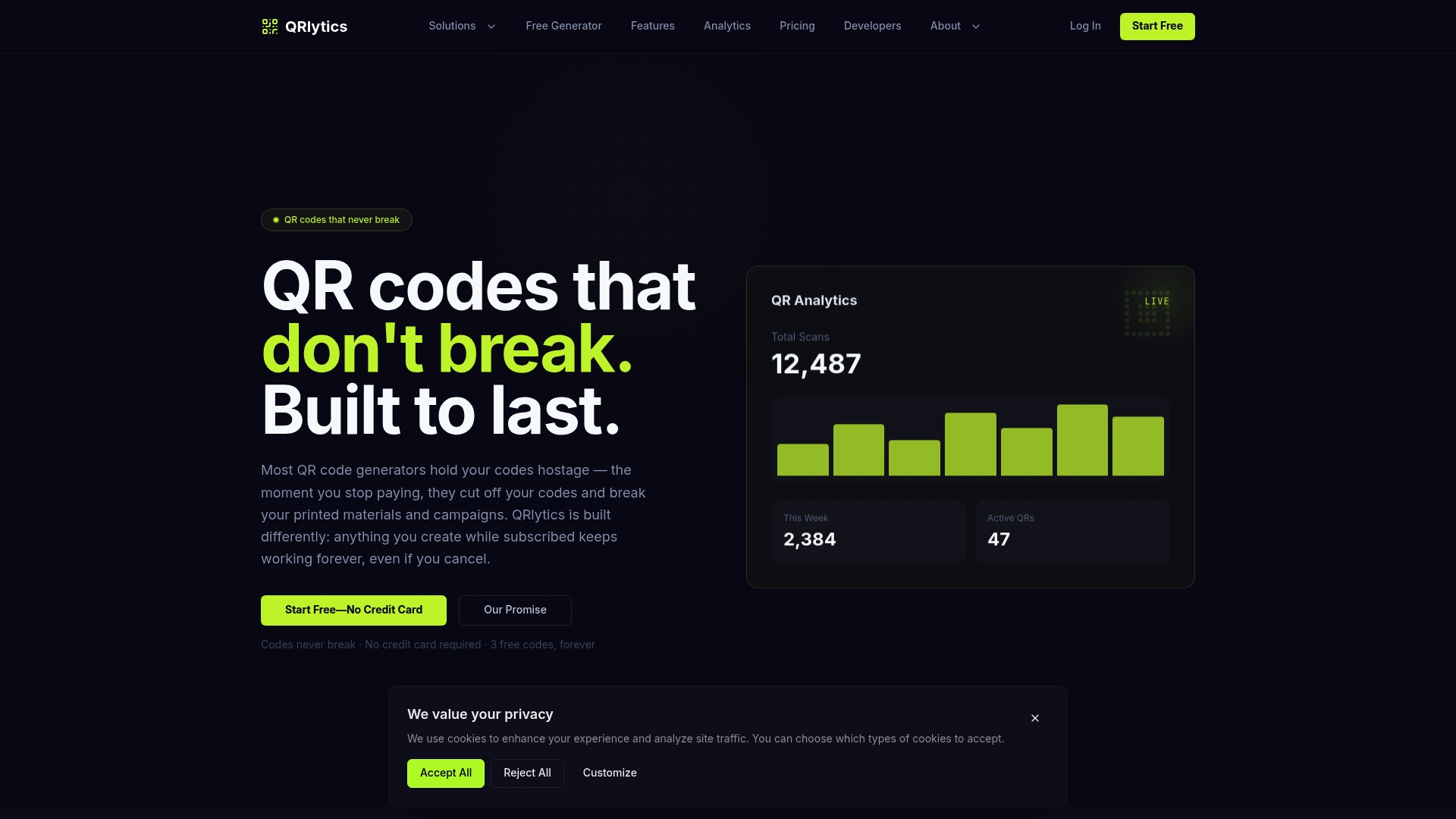
With QRlytics, you get access to a professional dynamic QR generator that lets you create, update, and manage codes without technical expertise. Every code you create during an active subscription remains functional permanently, regardless of your billing status. There are no unpleasant surprises. You also get full QR code analytics including scan tracking, geographic heat maps, device data, and GDPR-compliant reporting. Onboarding requires no credit card, so you can explore the platform and see its value before committing. For marketers who need codes that last, QRlytics is the dependable choice.
Frequently asked questions
What is dynamic QR code terminology and why is it important?
Dynamic QR code terminology refers to codes that can be edited, tracked, and managed after printing, enabling flexible campaigns and real-time updates. Professionals treat them as redirect infrastructure rather than fixed print artefacts, which is why understanding the language matters for long-term campaign planning.
How does QR code security jargon affect campaign outcomes?
Security jargon highlights the risks of malicious links, encouraging marketers to use trusted providers, validate destinations, and regularly test their codes. QR codes can be abused because they link to destinations users cannot preview, making governance and validation essential practices for protecting your audience and your brand.
Why should marketers care about QR code analytics terminology?
Knowing terms like scan tracking, campaign metrics, and conversion measurement helps marketers extract actionable insights and optimise campaign performance. Treating QR codes as redirect infrastructure means analytics become a core management tool, not an afterthought.
What are best practices for QR code governance?
Best practices include using a trusted generator, validating URLs, conducting pre-launch tests, and monitoring QR code scans for anomalies. Governance, trusted providers, and validation are all part of professional QR code methodology because they protect both your brand and your audience from harm.