Boost repeat business with QR codes: Proven strategies
TL;DR:
- Most businesses focus on QR code scan volume without developing strategies to encourage repeat engagement. Reliable, dynamic links integrated with loyalty systems and analytics are essential to transform initial scans into ongoing customer behavior. Proper design, testing, and measurement ensure QR campaigns foster loyalty and long-term revenue growth.
QR codes are everywhere now, from restaurant tables to retail shelves, yet most businesses are still only getting a single scan from each customer. That first scan feels like a win, but if there is no plan for what happens next, you are essentially handing someone a flyer and hoping they return. The real opportunity with QR codes is not in the initial engagement but in building a reliable, measurable loop that brings customers back again and again. This article walks you through the pitfalls, the strategies, and the tools that turn QR codes into genuine repeat business engines.
Table of Contents
- Why QR codes stall repeat business: Common pitfalls
- How to build QR code campaigns that drive repeat action
- Hospitality and retail in action: QR strategies that work
- Avoiding QR code reliability pitfalls
- Measuring ROI: Linking QR codes to revenue and repeat business
- What most QR guides miss: The next scan matters more than the first
- Get more from your QR campaigns with QRlytics
- Frequently asked questions
Key Takeaways
| Point | Details |
|---|---|
| Avoid the one-scan trap | Don’t settle for just scan counts—design next steps that drive repeat business. |
| Check QR reliability | Ensure your QR codes don’t expire or break, so they continue to engage customers. |
| Integrate with loyalty | Connect QR codes to loyalty programmes and track revenue from repeat visits. |
| Harness analytics | Use analytics to measure which QR campaigns drive true retention and repeat sales. |
| Sector solutions | Hospitality and retail should use touchpoint QR integration for ongoing customer engagement. |
Why QR codes stall repeat business: Common pitfalls
Having introduced the QR code opportunity, let us examine why most approaches fall short on repeat business.
Many businesses measure QR code success by scan counts alone. That metric tells you someone pointed their phone at a code. It tells you nothing about whether they bought something, signed up for a loyalty programme, or ever returned. Scan volume is a vanity metric unless it connects directly to a customer action you can track and build on.
The reliability problem is just as damaging. When a QR code leads to a broken or expired link, the customer experience ends there. That single failed interaction is often enough to erode trust permanently. A customer who scans a code on your menu, your packaging, or your hotel key card and lands on a 404 error will not give you a second chance easily.
Common reasons QR campaigns fail to drive repeat business:
- No clear next step after the scan. The landing page has no offer, no loyalty sign-up, and no incentive to return.
- Expired or deactivated links. Free QR platforms often deactivate codes when subscriptions lapse, leaving printed materials useless.
- No integration with loyalty or CRM systems. Scans happen in isolation, with no connection to customer data or purchase history.
- Campaigns built for a single event. A QR code designed for one promotion with no plan to update the destination URL.
- No analytics beyond raw scan counts. Without deeper data, you cannot identify where customers drop off or what drives return visits.
“A common retention failure mode is the ‘one-scan trap’, measuring only scan activity and not designing the next step that converts first scans into repeat purchases, loyalty, or subscriptions.”
This is the core issue. Without measuring campaign ROI properly, you are flying blind. And without tracking QR scan performance at a granular level, you cannot identify which placements, designs, or offers are actually driving customers back through the door.
How to build QR code campaigns that drive repeat action
Knowing the pitfalls, here is how to design QR campaigns for real repeat business.
The difference between a QR code that gets one scan and one that drives ongoing engagement comes down to intentional design. Every QR code you place in front of a customer should have a defined journey attached to it, not just a destination URL.
Follow these steps to build campaigns that convert first scans into repeat business:
- Define the post-scan goal before you create the code. Is the goal a loyalty sign-up, a discount on the next visit, a product review, or a subscription? The destination page must match that goal precisely.
- Create a frictionless landing experience. The page should load quickly, display clearly on mobile, and have a single, obvious call to action. Every extra click reduces conversion.
- Integrate with your loyalty or CRM system. When a customer scans and signs up, that data should flow directly into your customer records. This is how you connect scan activity to real purchase behaviour.
- Use dynamic QR codes so you can update the destination URL. If an offer changes or a campaign ends, you should be able to redirect the code without reprinting anything.
- Set up analytics to track repeat actions. Raw scan counts are not enough. You need to know how many of those scans resulted in a loyalty sign-up, a coupon redemption, or a return visit.
- Test reliability before printing at scale. Scan the code yourself on multiple devices, check the destination loads correctly, and confirm the platform you are using will not deactivate the code unexpectedly.
QR loyalty mechanics show that reducing friction is critical: using QR check-ins or QR points-per-spend at locations like checkout counters, then tracking issued, redeemed, and expired points, gives you a clear picture of repeat behaviour and where customers disengage.
For retail QR integration, this means placing codes at the point of sale where the customer is already in a buying mindset. For hospitality, it means embedding codes at every natural touchpoint in the guest journey. Either way, the code should lead somewhere that makes the customer want to come back.
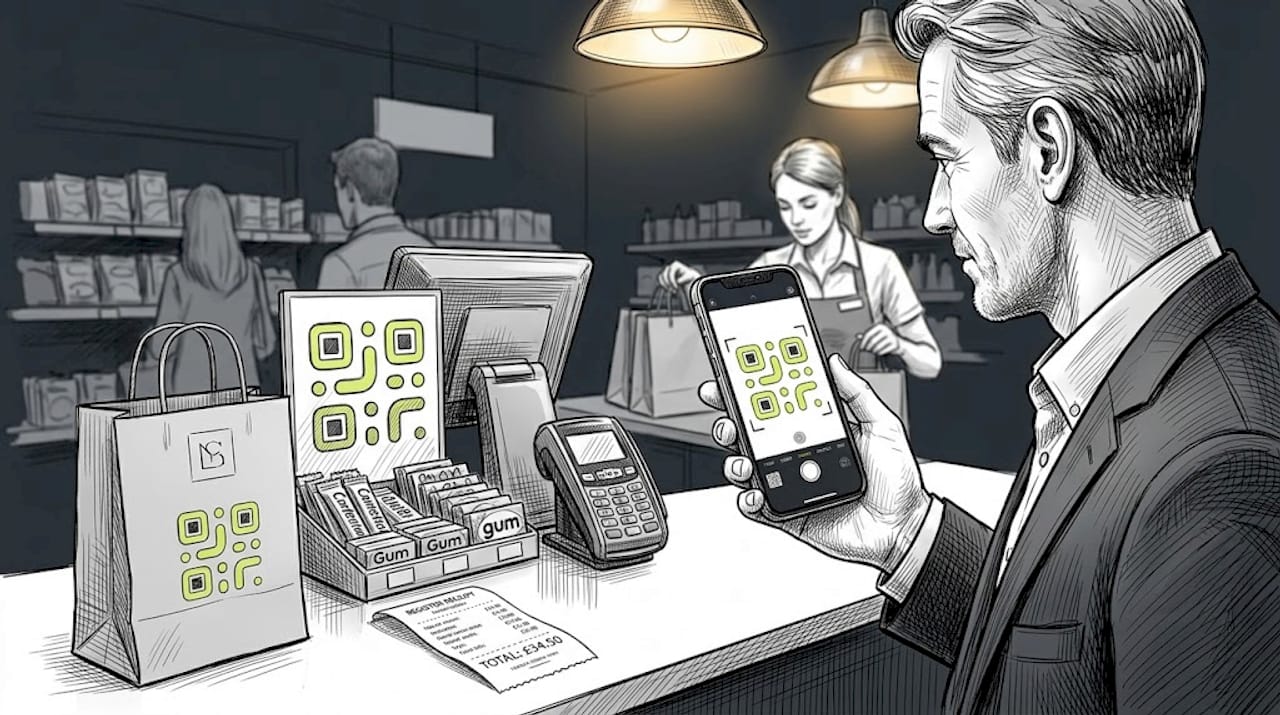
Pro Tip: Always test your QR code on at least three different devices and operating systems before committing to a print run. A code that works perfectly on one phone may render poorly on another, and a failed scan at the point of purchase is a missed retention opportunity.
When you use tracking QR engagement tools properly, you can see not just who scanned but when they scanned again, which is the data point that actually tells you whether your campaign is building loyalty.
Hospitality and retail in action: QR strategies that work
Let us see these strategies at work in leading hospitality and retail environments.
The hospitality and retail sectors have the most to gain from well-designed QR campaigns because their customers interact with physical spaces repeatedly. Every visit is an opportunity to deepen the relationship.
Hospitality sector examples:
- Hotel key cards with QR codes linking to a personalised welcome page, room service menu, and loyalty programme sign-up. Guests scan on arrival and are immediately enrolled in a return-visit incentive.
- In-room screen QR codes that link to local activity guides, restaurant reservations, and exclusive guest offers. These create ongoing digital touchpoints throughout the stay.
- Poolside and cabana QR codes for ordering food and drinks, with a loyalty point added per transaction. Guests accumulate points passively during their stay.
- Post-stay QR codes on checkout receipts linking to a review page and a discount code for the next booking.
Hospitality QR strategies position QR-code ordering and guest-app surfaces as a way to increase repeat behaviour by embedding digital service touchpoints throughout the guest journey, from key cards and cabana tags to in-room screens.
Retail sector examples:
- QR codes on product packaging linking to a loyalty programme sign-up with a points bonus for registering. Customers who buy once are immediately incentivised to return.
- Checkout counter QR codes offering an instant discount on the next purchase in exchange for an email sign-up.
- QR codes on receipts linking to a personalised product recommendation page based on the current purchase.
For QR menus for hospitality, the strategy extends beyond just displaying a menu. The QR code becomes a gateway to upselling, loyalty enrolment, and post-visit re-engagement.
| Strategy | Hospitality | Retail |
|---|---|---|
| Primary placement | Key cards, in-room screens, tables | Packaging, checkout, receipts |
| Post-scan goal | Loyalty enrolment, upsell, review | Discount, loyalty points, recommendations |
| Repeat mechanism | Return booking incentive | Points accumulation, next-purchase offer |
| Data captured | Guest preferences, spend per stay | Purchase history, email, preferences |
| Integration | PMS, guest app, CRM | POS system, loyalty platform, email |
The comparison makes clear that both sectors share the same underlying logic: place the code where the customer already is, make the post-scan experience genuinely useful, and connect it to a system that tracks and rewards return visits.
Avoiding QR code reliability pitfalls
With campaigns running, reliability issues can quietly sabotage repeat business. Here is how to prevent them.
A QR code campaign is only as strong as its weakest link, and that link is almost always the platform hosting the redirect. QR code failures including expired or deactivated links, scan caps, and platform dependencies are a practical risk that directly reduces repeat business by damaging customer trust after a first interaction.
Key reliability risks to address:
| Risk | Impact | Prevention |
|---|---|---|
| Expired links after subscription lapse | Printed materials become useless | Use platforms that guarantee code longevity |
| Undisclosed scan caps | Codes stop working mid-campaign | Confirm scan limits with your provider upfront |
| Platform shutdown or service changes | All codes become inactive | Choose established platforms with clear guarantees |
| Slow redirect speeds | Poor user experience, abandoned scans | Test load times before deploying at scale |
| No URL update capability | Cannot fix errors or update offers | Always use dynamic QR codes, not static ones |
Statistic to note: Research indicates that a significant proportion of consumers who encounter a broken QR link will not attempt to scan that brand’s codes again, making reliability a direct driver of long-term retention.
Use the QR reliability guide to understand what guarantees to look for before committing to a platform. The key question to ask any provider is: what happens to my codes if I cancel my subscription or miss a payment?
Pro Tip: Look specifically for platforms offering unbreakable QR codes that remain active regardless of billing status. For any business investing in printed materials, packaging, or signage, this guarantee is not optional. It is essential.
The checklist for avoiding reliability pitfalls is straightforward: use dynamic codes, confirm your platform’s longevity policy in writing, test codes before print runs, and monitor scan activity regularly so you catch any failures quickly.
Measuring ROI: Linking QR codes to revenue and repeat business
Reliability handled, now ensure every QR initiative is measured against real repeat business and revenue.
The most common mistake after solving the reliability problem is treating QR analytics as a reporting exercise rather than a decision-making tool. Scan counts and even loyalty sign-ups are only meaningful when connected to revenue figures and repeat purchase data.
Key performance indicators (KPIs) that actually matter:
- Repeat scan rate: How many customers scan the same code more than once, indicating ongoing engagement.
- Conversion rate from scan to loyalty enrolment: What percentage of first scans result in a loyalty sign-up.
- Revenue per enrolled customer: Average spend from customers who joined via QR versus those who did not.
- Redemption rate of QR-delivered offers: How many customers actually used the discount or incentive they received post-scan.
- Return visit frequency: How often QR-enrolled customers return compared to non-enrolled customers.
QR loyalty benchmarks confirm that many loyalty teams struggle to prove ROI and link loyalty performance to revenue and profit. QR initiatives must be tied to financial measurement and not treated as standalone marketing links.
| Metric | What it tells you | How to track it |
|---|---|---|
| Scan-to-enrolment rate | Campaign effectiveness | QR analytics platform |
| Repeat purchase rate | Retention success | POS or CRM integration |
| Average order value uplift | Revenue impact of loyalty | Compare enrolled vs non-enrolled |
| Offer redemption rate | Incentive relevance | Coupon or loyalty platform data |
| Cost per retained customer | Campaign efficiency | Total campaign cost divided by retained customers |
Use QR scan tracking tools that allow you to segment data by location, device, time of day, and campaign. This level of detail lets you identify which placements and offers are genuinely driving repeat business, and which are simply generating scans with no downstream value.
What most QR guides miss: The next scan matters more than the first
Most guides on QR codes focus heavily on design, placement, and scan volume. Those things matter, but they are not where the real business value lives.
The first scan is just an introduction. The second scan is where the relationship begins. When a customer scans your code a second time, whether to check their loyalty points, redeem an offer, or re-engage with your content, they are telling you something important: the first experience was worth repeating. That is the signal you should be optimising for, not the raw number of first scans.
We have seen businesses invest significantly in QR campaigns, achieve impressive scan numbers, and still see no measurable improvement in repeat purchase rates. The reason is almost always the same. The post-scan experience was not designed to earn a second visit. There was no loyalty hook, no time-limited offer, no personalised reason to return.
The uncomfortable truth is that most marketing best practices around QR codes stop at the point of scan. They treat the code as the destination rather than the starting point. A well-designed QR campaign should feel to the customer like the beginning of a conversation, not a one-time transaction.
Advanced scan analytics make it possible to track exactly where customers drop off in the post-scan journey. If 500 people scan your code but only 20 complete the loyalty sign-up, the problem is not the QR code. It is the landing page, the offer, or the number of steps required to enrol. That insight is only available if you are measuring the right things from the start.
The businesses that get the most from QR codes are the ones that treat every scan as the beginning of a retention journey, not a marketing tick-box.
Get more from your QR campaigns with QRlytics
If you are serious about turning QR scans into repeat business, the platform you choose matters enormously. Broken links, expired codes, and missing analytics are not just inconveniences. They are direct threats to customer trust and campaign ROI.
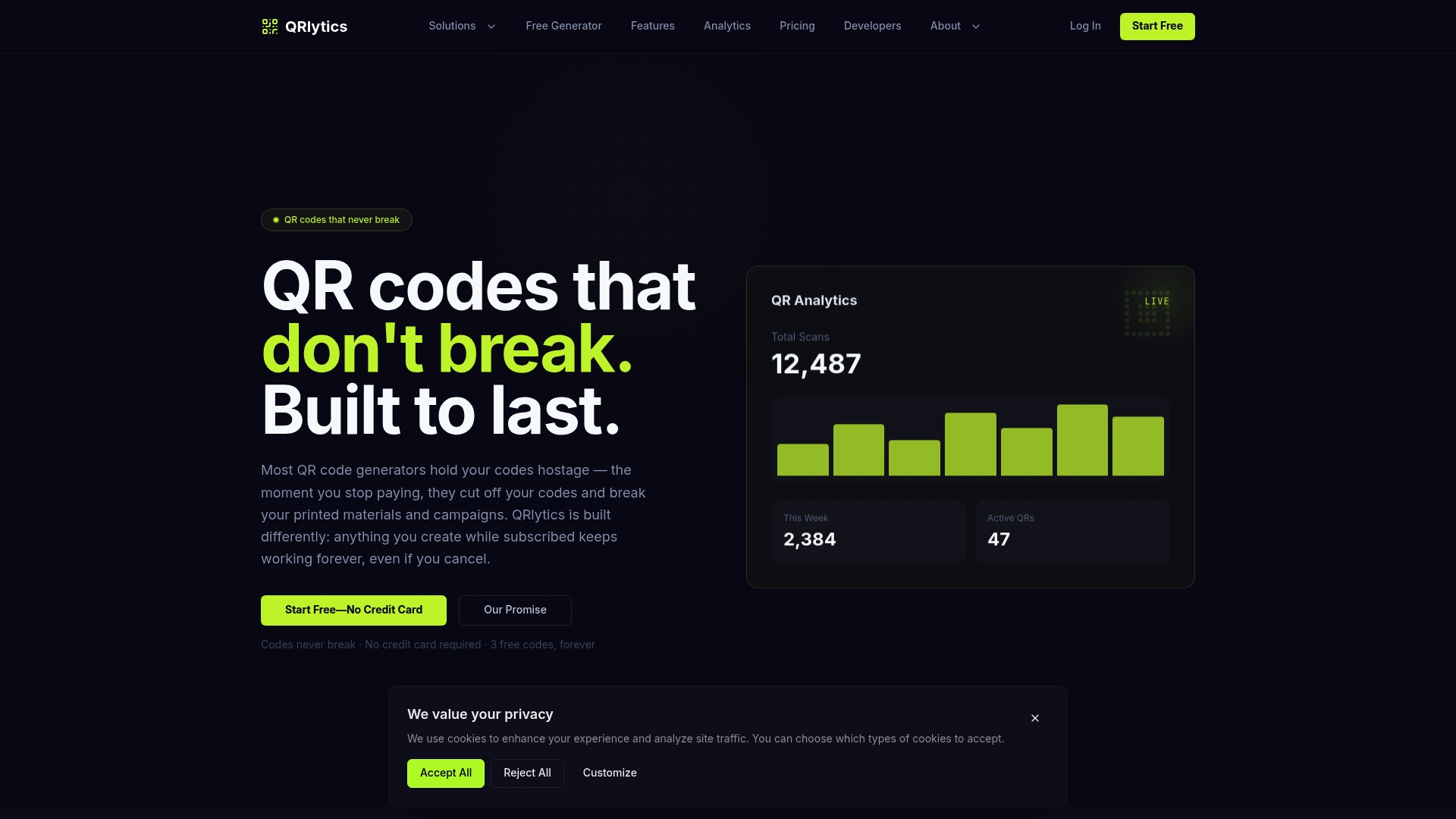
QRlytics is built specifically for businesses that need QR codes to keep working, regardless of billing status or subscription changes. You can start with the free QR generator to see the platform in action, no credit card required. When you are ready to run campaigns at scale, the dynamic QR code generator lets you update destination URLs, track repeat scans, and connect engagement to real revenue metrics. For a full overview of what reliable, analytics-driven QR management looks like in practice, explore the top QR solutions with analytics and see how QRlytics compares to the alternatives.
Frequently asked questions
How can QR codes specifically drive repeat business in restaurants and hotels?
QR codes in hospitality create ongoing touchpoints through ordering, loyalty enrolment, and exclusive offers placed on key cards, tables, and in-room screens, all of which increase the likelihood of repeat visits by embedding digital engagement throughout the guest journey.
What are the biggest reliability risks with QR code campaigns?
Common risks include expired or deactivated links, undisclosed scan caps, and poor platform durability, all of which can erode customer trust after just one failed scan, as QR code failures research confirms.
How can I ensure my QR code campaign actually leads to repeat purchases?
Always design the next-step journey after the scan, such as a loyalty sign-up or time-limited offer, and measure retention using analytics rather than scan counts, since the one-scan trap is the most common reason campaigns fail to convert.
Should QR code campaigns be integrated with loyalty and revenue measurements?
Yes, QR initiatives must link scans to financial metrics, revenue, and repeat visits because loyalty ROI benchmarks show that teams treating QR codes as standalone marketing links consistently struggle to demonstrate business value.