Top 4 qrlinky.app Alternatives 2026
Finding QR code management software that keeps printed codes working after a subscription ends and allows ongoing changes is harder than it sounds. Many platforms disable codes when billing lapses or lock core features behind annual-only plans that do not suit changing campaigns. This comparison covers permanence, editable links, analytics, and pricing so marketing teams can pick a platform matching their update schedule and budget.
Table of Contents
QRlytics
At a Glance
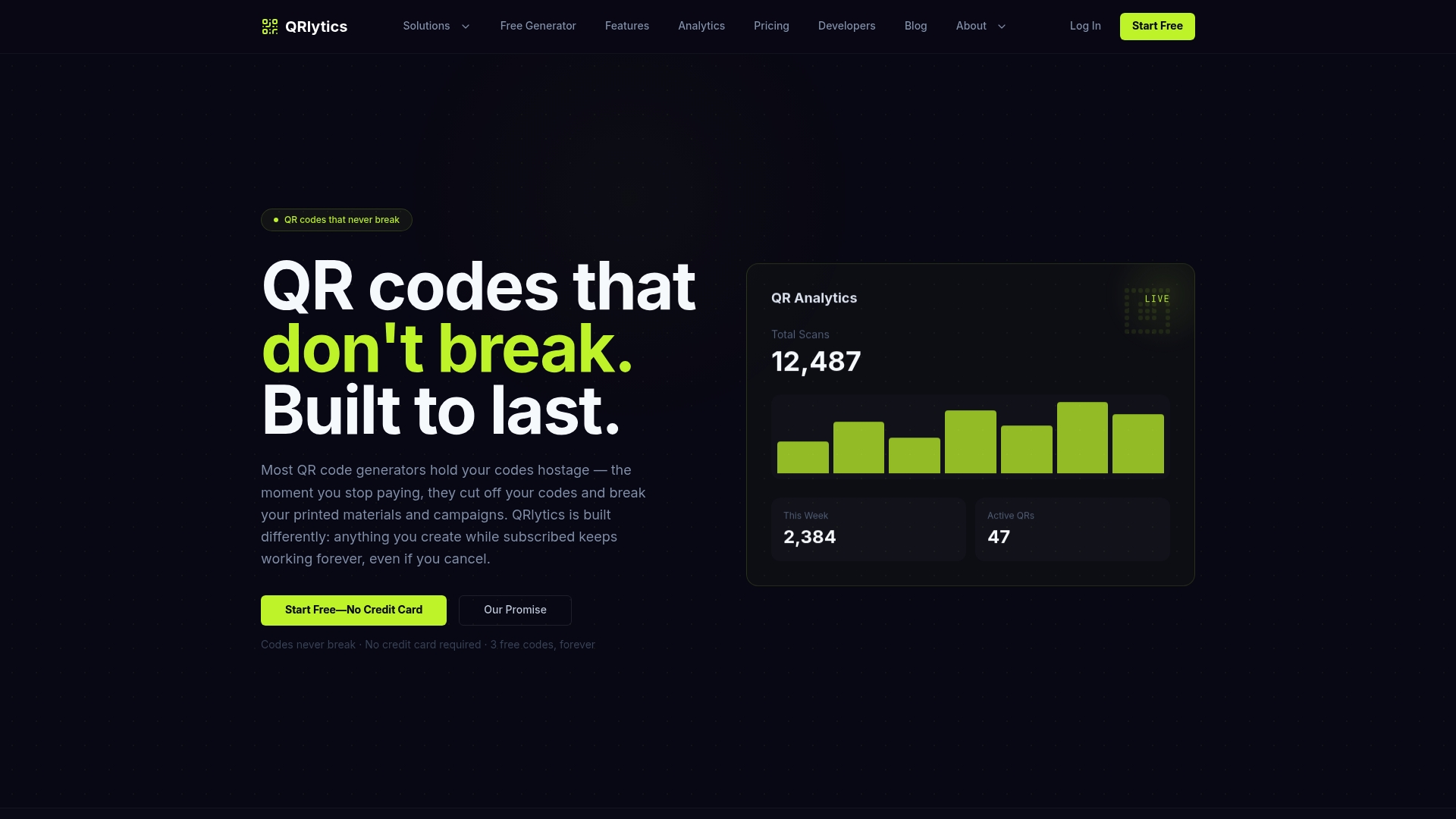
Codes created during an active subscription remain functional forever, even if you cancel. That permanence removes the risk of printed campaigns becoming dead links. The platform also supports live URL changes and GDPR-friendly tracking for privacy-conscious teams.
Core Features
QRlytics lets you edit destination links after printing, so you avoid reissuing materials when a campaign changes. It provides customisable codes with brand colours and varied error correction, plus lifecycle controls that start, pause, or end codes on schedule. You get real-time analytics showing device type, location, and time, exportable for reporting, along with API access and measures to keep redirection fast and reliable.
Key Differentiator
The central claim is code permanence: codes created during a subscription continue to resolve forever. That removes the common failure mode where codes deactivate when a billing issue occurs. For organisations that rely on long-lived printed materials, that behaviour changes the cost calculus for QR deployments.
Pros
The permanence feature protects printed assets and reduces reprint costs for long campaigns. Full ownership and control of QR destinations means you can update links without replacing physical media. The analytics feed supplies device, time, and location data and supports exports for campaign measurement. Lifecycle controls let you schedule start and end dates and pause codes, which suits both short promotions and indefinite resources. The vendor advertises GDPR-compliant tracking, which helps when you need to manage consent and regional privacy controls.
Cons
- The free plan only allows three permanent codes, which may be too few for some small organisations.
Who It’s For
Teams that need long-term, updateable QR codes will benefit most. Marketing teams that print brochures or product packaging gain from link permanence and the ability to repoint traffic. Restaurants, events, and content creators who want easy analytics without frequent reprints will find the feature set useful.
Unique Value Proposition
Onboarding does not require a credit card, so you can create and test codes without an upfront payment method. That low barrier lets you confirm the permanence claim and analytics fit before committing. For buyers weighing reprint costs against subscription fees, the combination of a free trial and permanent codes changes the break-even calculation.
Real World Use Case
A restaurant publishes QR menus and later updates prices and seasonal dishes by changing the destination URL. The operator tracks scans by time and device to learn peak ordering times. If the restaurant stops the subscription, the menus remain resolvable, protecting printed menus already in circulation.
Pricing
A free tier provides up to 3 permanent codes with basic analytics. The Pro plan is billed yearly at $39 per year and adds unlimited codes, advanced analytics, API access, and locking features. The vendor lists the Pro plan as an annual product rather than a monthly subscription.
Website: https://qrlytics.app
Uniqode
At a Glance
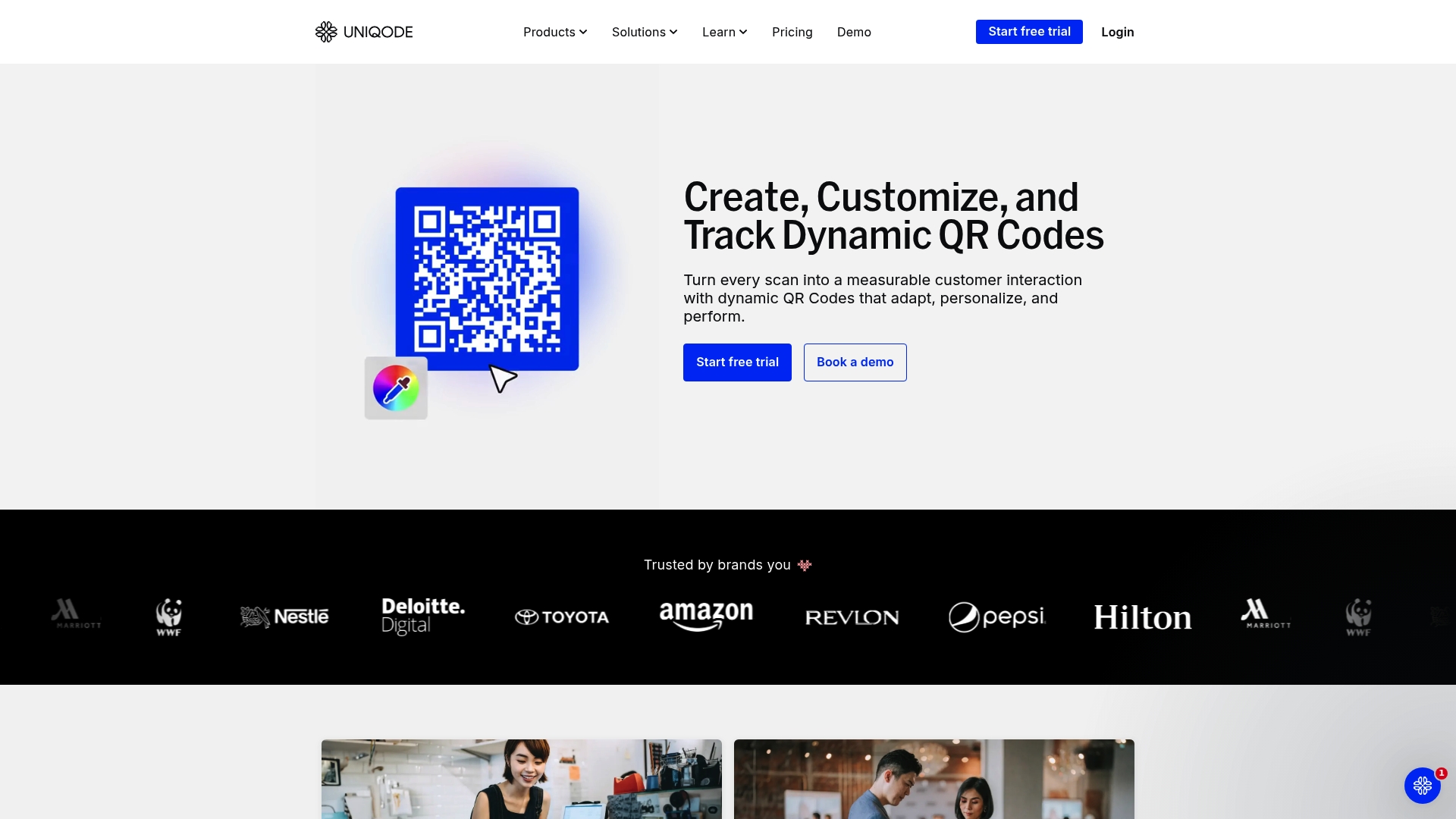
Uniqode reports it is trusted by over 50,000 global organisations. The vendor states compliance with SOC 2, GDPR, HIPAA, and ISO, which it uses to position the product for enterprise use. The platform bundles QR code creation with branded digital business cards and built in campaign tracking for marketing and retail teams.
Core Features
Uniqode lets you create and brand both static and dynamic QR codes and design digital business cards with lead capture fields. The system collects and analyses scan data with real time analytics and centralised campaign management, and it supports automation for common workflows. Integrations connect scan events to CRMs and automation tools so marketing actions flow into existing stacks.
Key Differentiator
Uniqode combines code creation, branding controls, and enterprise security with a wide set of integrations aimed at marketers and retailers. That mix positions it for teams that need branded print assets to remain editable and trackable as campaigns run. The platform emphasises scale and compliance as part of the core offering.
Pros
The interface is straightforward and lets teams generate codes quickly while keeping brand consistency across campaigns. Customer support receives strong feedback for responsiveness, which helps when rolling out large runs of printed materials. The dynamic code capability ties directly into CRM workflows and the security and compliance claims support enterprise procurement conversations.
Cons
-
Automatic renewal policies can frustrate users and complicate budget planning.
-
Pricing is considered high by some customers, especially for advanced plans.
-
Free trial limits are sometimes confusing and not fully transparent to new accounts.
-
Dashboard analytics have occasional inaccuracies or inconsistencies reported by customers.
When It May Not Fit
If you need monthly billing, Uniqode will not match your procurement model because it offers annual plans only. Organisations that create static codes and later want them converted to dynamic will find that change is not possible. Campaigns expecting monthly scan resets will need to adapt because scan limits reset annually. Custom domain capability is restricted to higher tier plans.
Notable Integrations
-
Salesforce
-
HubSpot
-
Google Analytics
-
Zapier
-
Slack
-
Microsoft Entra ID
Who It’s For
Marketing teams, retail chains, and events teams that need branded QR experiences and automated lead routing will find Uniqode useful. Enterprises that require formal security attestations and CRM connectivity will benefit from the integrations and compliance focus. Smaller teams that must avoid annual contracts may find the billing model limiting.
Real World Use Case
A retail chain deploys dynamic QR codes on window displays to gather customer interest and capture leads at point of visit. Scan data flows into the retailer’s CRM and triggers follow up campaigns through marketing automation. The team uses the analytics to refine placement and measure which promotions drive physical visits.
Pricing
Free static QR codes are available, with dynamic codes and premium features starting at $9/month and core plans beginning at $49/month. The vendor sells subscriptions on an annual only basis, which affects budgeting and trial behaviour.
Website: https://uniqode.com
Scanova
At a Glance
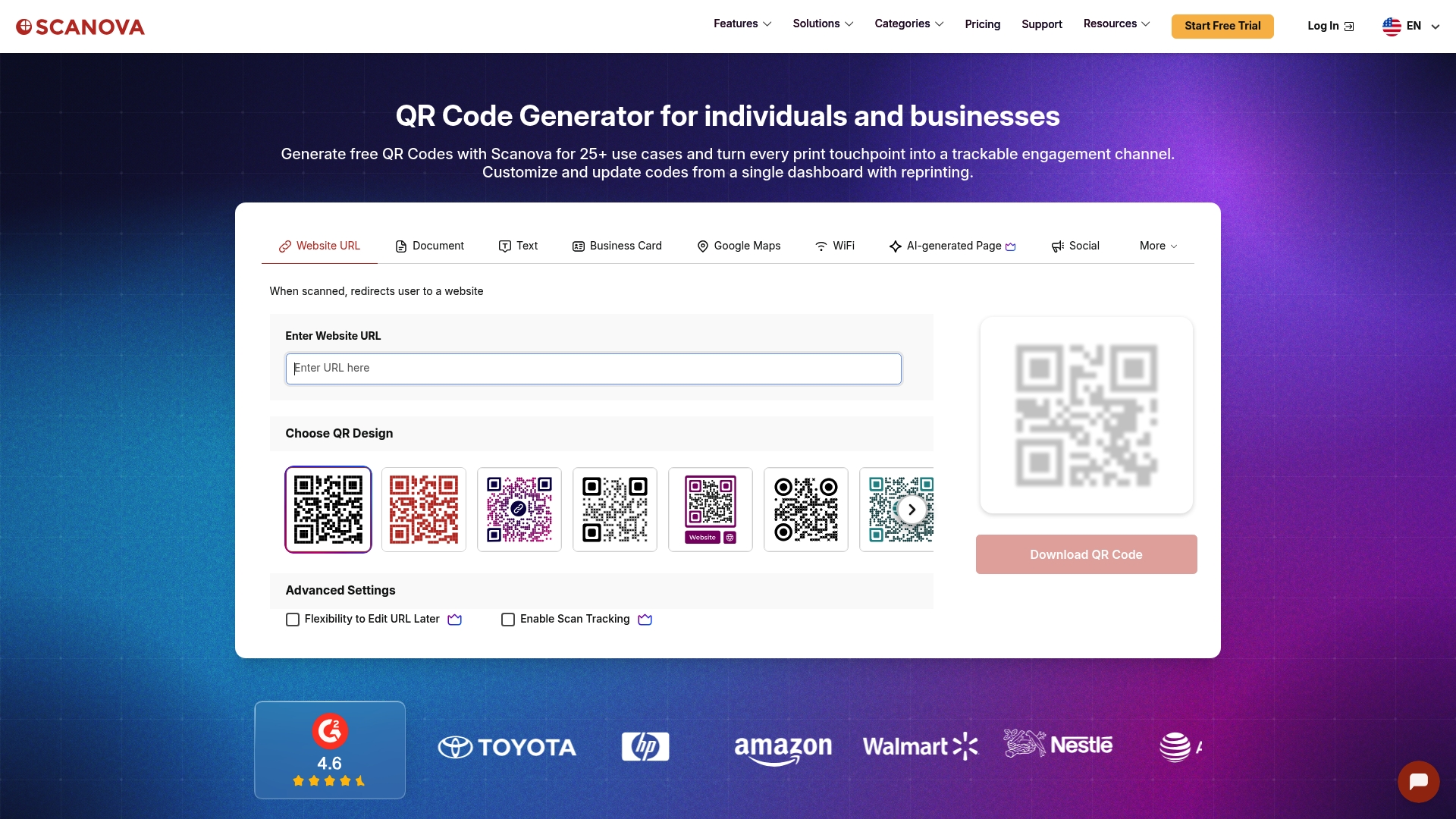
Scanova starts at $5 per month billed annually and includes dynamic QR codes, mobile landing pages, and API access. The platform combines visual customisation with tracking so you can update links without reprinting codes. A 14-day free trial is available to test bulk and branded workflows.
Core Features
Scanova supports dynamic QR codes, custom designs with logos and frames, and mobile-optimised landing pages for scans. It provides analytics and QR code tracking to measure engagement, plus vector export and high resolution assets for print. The dashboard and API enable programmatic management and campaign labelling for organised bulk campaigns.
Key Differentiator
Scanova pairs a broad feature set with a dashboard built for marketers and operations teams, and it includes programme-level API access for automation. The platform focuses on in-app customisation tools and export options that suit print production and brand control. That mix makes it attractive where design fidelity and link updates matter.
Pros
Scanova has a clear and accessible interface that speeds up QR creation and labelling for multiple campaigns. Customer support receives positive mention for being helpful and responsive, which reduces friction when setting up complex assets. The feature set covers enterprise needs such as vector exports, lead generation landing pages, and API-driven workflows, which supports both small teams and larger operations.
Cons
- Bulk upload is sometimes unreliable and can fail to process large CSV batches consistently.
- Frequent promotional emails are intrusive and can clutter notification inboxes.
- The platform website can be slow to navigate at times, which lengthens setup for new projects.
- Some custom designs fail to scan properly on certain phone cameras or under difficult lighting.
When It May Not Fit
If you rely on flawless bulk imports for high volume SKU labelling, the occasional upload failure will disrupt work. If you need guaranteed scannability for highly stylised designs, some custom templates may require extra testing. Agencies that demand near instant site responsiveness for many parallel editors will notice the website speed constraints.
Who It’s For
Businesses, marketing teams, and agencies that need branded, trackable QR codes with printable exports will find Scanova useful. It suits teams that update destination URLs regularly and want API control for campaign automation. Small companies that prefer straightforward design tools will also get value from the entry tier.
Real World Use Case
AutoZone used Scanova to track in-store engagement and refine marketing spend by analysing scan behaviour on promotional signage. The case study shows how tracking and landing pages can convert physical interactions into measurable leads. The example highlights practical gains for retail environments where print collateral remains central.
Pricing
Pricing starts at $5 per month for the Basic plan billed annually. Higher tiers add bulk management, enterprise features, and API limits for larger deployments. A 14-day free trial lets you try designs, analytics, and the bulk workflow before subscribing.
Website: https://scanova.io
Delivr
At a Glance
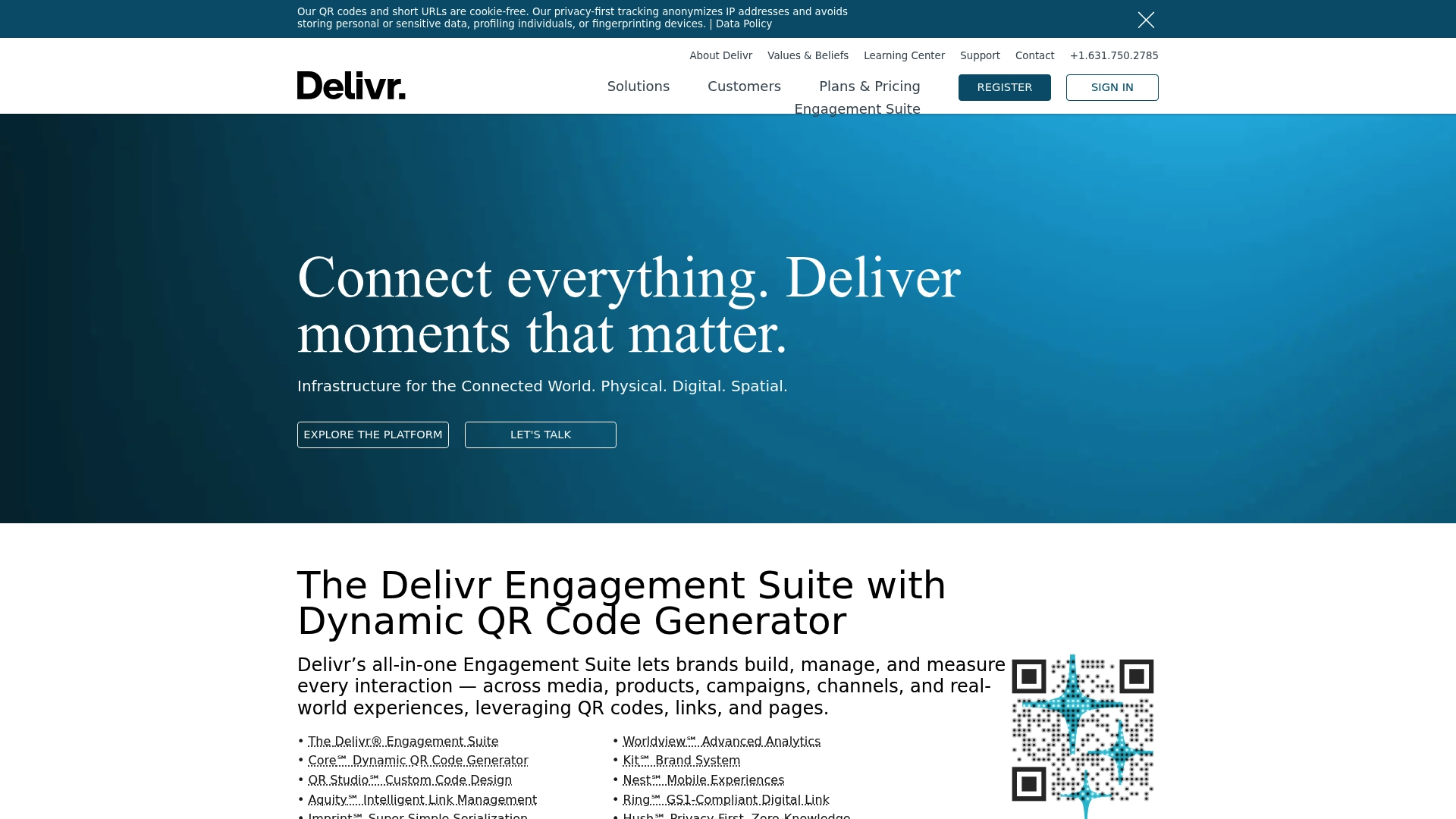
According to the company, Delivr holds a licence from DENSO, the inventor of the QR Code. The platform traces its roots to New York and promotes a privacy first approach that began in 2008. That mix of heritage and purpose appeals to brands that need traceable physical to digital links.
Core Features
Delivr combines a dynamic QR code generator with ISO compliance and GS1 Digital Link support, plus serialization and intelligent routing for device aware redirects. The vendor advertises 99.9% uptime and uses global cloud providers to maintain availability. According to the company, tracking is privacy conscious and aligned with GDPR and CCPA through anonymised analytics and mobile optimised landing pages.
Key Differentiator
The vendor highlights its DENSO licence as the primary distinction, which it pairs with GS1 partnerships and ISO focused QR generation. That claim frames Delivr for teams that want formal QR provenance and standards compliance. The combination of serialization, GS1 Digital Link support, and branded landing pages narrows the platform to use cases demanding standards adherence and traceable codes.
Pros
Delivr offers industry oriented QR tooling with detailed scan analytics for location, device, trends, and real time performance, which suits campaign tracking and product authentication. According to marketing materials, a long operational record and enterprise grade infrastructure back its reliability claim, and the vendor lists responsive human support for campaign management. Broad visual customisation for codes and landing pages lets brands retain consistent identity across packaging and events.
Cons
-
Customer reviews report occasional slow or unresponsive customer support, which can delay urgent campaign fixes.
-
Billing and refund processes have caused dissatisfaction for some users and add friction during onboarding.
-
User experience can vary over time, with periodic inconsistencies reported in the interface and workflows.
When It May Not Fit
Delivr is not ideal if you need deep bespoke integrations or extensive custom engineering beyond standard plans. Large enterprises requiring a dedicated integration layer may find the platform restrictive for complex ERP or PLM connections. The service also relies on internet connectivity, so offline workflows and isolated factories will see limited functionality.
Who It’s For
Marketers, brand managers, and product teams who need standards compliant, privacy conscious QR and link management will find Delivr a close fit. Teams focused on smart packaging, product authentication, or GS1 aligned catalogues benefit most. Smaller teams that want quick customisation and human campaign support also match the offered services.
Real World Use Case
A consumer brand places Delivr dynamic QR codes on product packaging to verify authenticity at point of sale. Scans route users to a mobile friendly landing page while analytics reveal device mix and regional interest. The brand uses those signals to refine campaigns and to detect counterfeit hotspots.
Pricing
Pricing varies across six plans from free to custom enterprise solutions. The vendor offers a free entry tier and paid plans that scale to bespoke enterprise contracts; consult the website for plan details and the full feature matrix.
Website: https://delivr.com
Comparison of alternatives
QRlytics uniquely ensures that QR codes created during an active subscription remain functional indefinitely. This can transform the risk ratio associated with printing high-volume campaigns. In contrast, platforms like Scanova or Uniqode focus more on varied integrations and analytic capabilities.
Use cases: adapting to specific needs
Each alternative serves unique requirements: For organisations needing compliance and scalability, Uniqode’s assortment of CRM integrations and corporate standards like GDPR and ISO offer indispensable assurances. Conversely, Scanova caters excellently to users requiring high-resolution outputs for premium printed branding. While QRlytics targets long-term stability, others like Delivr focus on fulfiling traceability needs for smart packaging and product authenticity.
Balancing costs versus functionality
Factors such as cost present significant decisions for users. QRlytics provides value for organisations needing enduring, perpetual QR code validity but limits its no-cost account capabilities. Alternatively, Delivr’s structured cost approach suits integration-heavy workflows, and Scanova grants inexpensive access while maintaining scalable features.
Best fit
- Teams printing long-term campaigns requiring durable QR codes to remain active without subscription continuity benefit from QRlytics’ unique code permanence feature.
- Organisations emphasising integrated CRM usage or compliance align with Uniqode’s connectivity and certification-centric focus.
- Businesses operating wider-scale printed campaigns with distinctive design preferences find compatibility in Scanova’s export and customisation tools.
- Brands needing strict traceable QR standards and global consistency value Delivr’s ISO compliance and GS1 linking strategy.
Our pick
QRlytics excels for organisations relying on stable, static resources for QR printing efforts. For universal reliability in marketing or operational processes, QRlytics’s unique assurances support longevity initiatives. However, those desiring complex integrations or advanced analytics may explore Uniqode’s offerings.
These platforms for managing and tracking QR codes offer different strengths tailored for various teams and scales of operation.
| Product | Core Feature | Key Differentiator | Best For | Pricing | Notable Limitation |
|---|---|---|---|---|---|
| Qrlytics | Editable URLs and real-time analytics | Codes remain functional indefinitely after creation | Marketing teams with physical media needs | Free tier for basics, Pro at $39/year | Free tier limits to 3 codes |
| Uniqode | Dynamic QR codes and digital business cards | Integrations with CRM and enterprise tools | Retail and enterprise marketing teams | Free static codes, dynamic from $49/month | Annual-only billing restricts flexibility |
| Scanova | Dynamic QR codes and custom designs | Bulk-friendly campaign tooling with API access | Agencies and marketing operations | Plans start at $5/month, billed annually | Occasional failures with bulk uploads |
| Delivr | Standards-compliant QR with analytics | GS1 Digital Link and DENSO license | Product authentication and packaging | Ranges from free to custom enterprise plans | Slower support response times reported |
Challenges with QR Code Permanence and Link Control
Many teams seeking reliable QR code solutions struggle with links that deactivate after subscription cancellation or billing issues. This problem leads to printed materials becoming obsolete and wasted marketing effort. For marketing teams, retailers, and businesses printing brochures or packaging, maintaining code permanence while retaining the ability to update destination URLs is vital.
Qrlytics offers a grounded solution that ensures codes created during your active subscription remain functional indefinitely. You can update destination URLs dynamically, access real-time scan analytics, and comply with GDPR tracking requirements. This combination reduces the risk of reprints and lost engagement over long campaigns.
Start managing your QR campaigns with confidence. Visit Qrlytics today to create permanent, updatable QR codes without providing credit card details. See how your marketing materials can remain live and measurable well beyond subscription periods.
FAQ
What features make Qrlytics suitable for long-term campaigns?
Qrlytics offers code permanence, allowing codes created during a subscription to remain functional indefinitely. This feature protects printed assets and reduces reprint costs for campaigns that last for extended periods.
How does Qrlytics compare to Uniqode for branded designs?
Uniqode excels in creating branded digital business cards and integrating with various marketing tools. In contrast, Qrlytics focuses on offering updateable links with permanent QR codes, which is ideal for teams relying on long-lived printed materials.
Which platform provides real-time analytics for QR code scans?
Qrlytics provides real-time analytics showing device type, location, and scan time, which can be exported for detailed reporting. This makes it easier for marketing teams to measure campaign effectiveness through actionable data.
Can I change destination URLs in Qrlytics after printing?
Yes, Qrlytics allows you to edit destination links after printing, avoiding the need to reissue materials when a campaign changes. This flexibility is crucial for effectively managing dynamic marketing strategies.
What pricing options does Qrlytics offer?
Qrlytics has a free tier that allows for three permanent codes, while the Pro plan is priced at $39 per year and includes unlimited codes and advanced analytics. This structure enables teams to test the service before making a financial commitment.