Top 5 Bit.ly Alternatives for URL Management 2026
Managing long-term, measurable QR codes for printed materials without risking broken links or complex billing is unreliable with mainstream options. Many providers deactivate or block edits to QR codes when subscriptions lapse, so campaigns risk dead links or require costly reprints. You can compare price, code permanence, analytics, and branding controls across five QR code management platforms and select one that prevents link loss for your campaigns.
Table of Contents
QRlytics
At a Glance
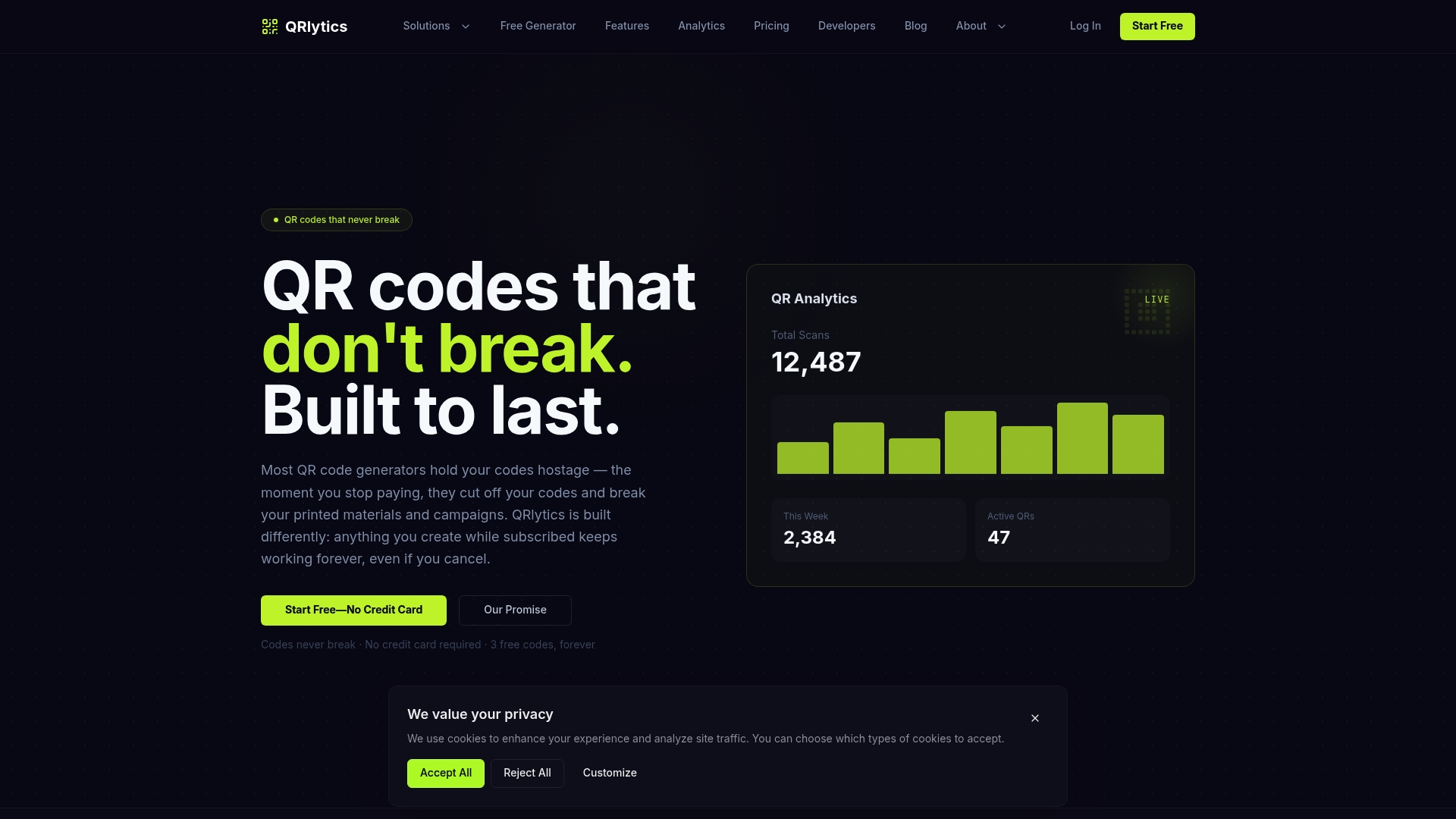
Codes created while you are subscribed remain active and manageable forever. That permanence prevents printed campaigns from becoming invalid when billing changes. The platform also offers immediate URL updates so you can change destinations without reprinting. The combination of permanence and dynamic updates changes how you plan long lived printed materials.
Core Features
- Codes never break: QR codes created during an active subscription remain functional indefinitely.
- Dynamic destination updates let you change the redirect URL without issuing a new code.
- Customisable QR artwork with colour, transparency, and adjustable error correction.
- Real-time analytics that show device type, location, and referrer for each scan.
- Lifecycle controls with start and end dates or indefinite activity and campaign expiry messages.
Key Differentiator
The permanent-code guarantee is the single distinguishing capability. Most consumer QR services deactivate codes when subscriptions lapse. QRlytics keeps codes created during an active subscription live regardless of billing status. That removes the risk of dead links on printed posters, product labels, and menus.
Pros
-
Codes survive subscription cancellation, so printed collateral remains usable and measurable. This saves reprint costs and campaign headaches.
-
You can update the target URL instantly. That feature makes on‑the‑fly corrections and link swaps straightforward for marketing teams.
-
Analytics run in real time and report device, location, and referrer. You can compare platforms, stores, or leaflet runs using the same code.
-
Tracking is privacy conscious and GDPR compliant. The focus on privacy keeps visitors comfortable while preserving useful campaign data.
-
The free tier includes three permanent, trackable codes. That offers a risk free way to test the service on a small campaign.
Cons
- The free plan is limited to three codes, which will not suit larger rollouts or multi location campaigns.
Who It’s For
Small and medium sized businesses, marketers, and content creators who need durable QR codes tied to measurable analytics. It fits restaurants replacing printed menus, event teams tracking check ins, and retail teams linking product packaging to digital assets. Organisations that fear broken printed links will find the permanence guarantee particularly relevant.
Unique Value Proposition
Keeping codes active after subscription lapses reduces recurring reprint costs and operational risk. Instead of treating QR codes as disposable, you retain full ownership and control of each code and its analytics. For teams that use printed materials long term this changes project economics and simplifies campaign maintenance.
Real World Use Case
A restaurant replaces laminated menus with QR codes and updates the menu URL each week. The manager swaps the destination URL as dishes change and uses scan location and device data to decide where to place new promotional stickers. The codes remain valid even if the subscription changes later.
Pricing
A free tier provides three permanent codes with basic analytics. A Pro plan costs $39 per year and unlocks unlimited codes, advanced analytics, CSV export, API access, and cryptographic lock features.
Website: https://qrlytics.app
Scanova
At a Glance
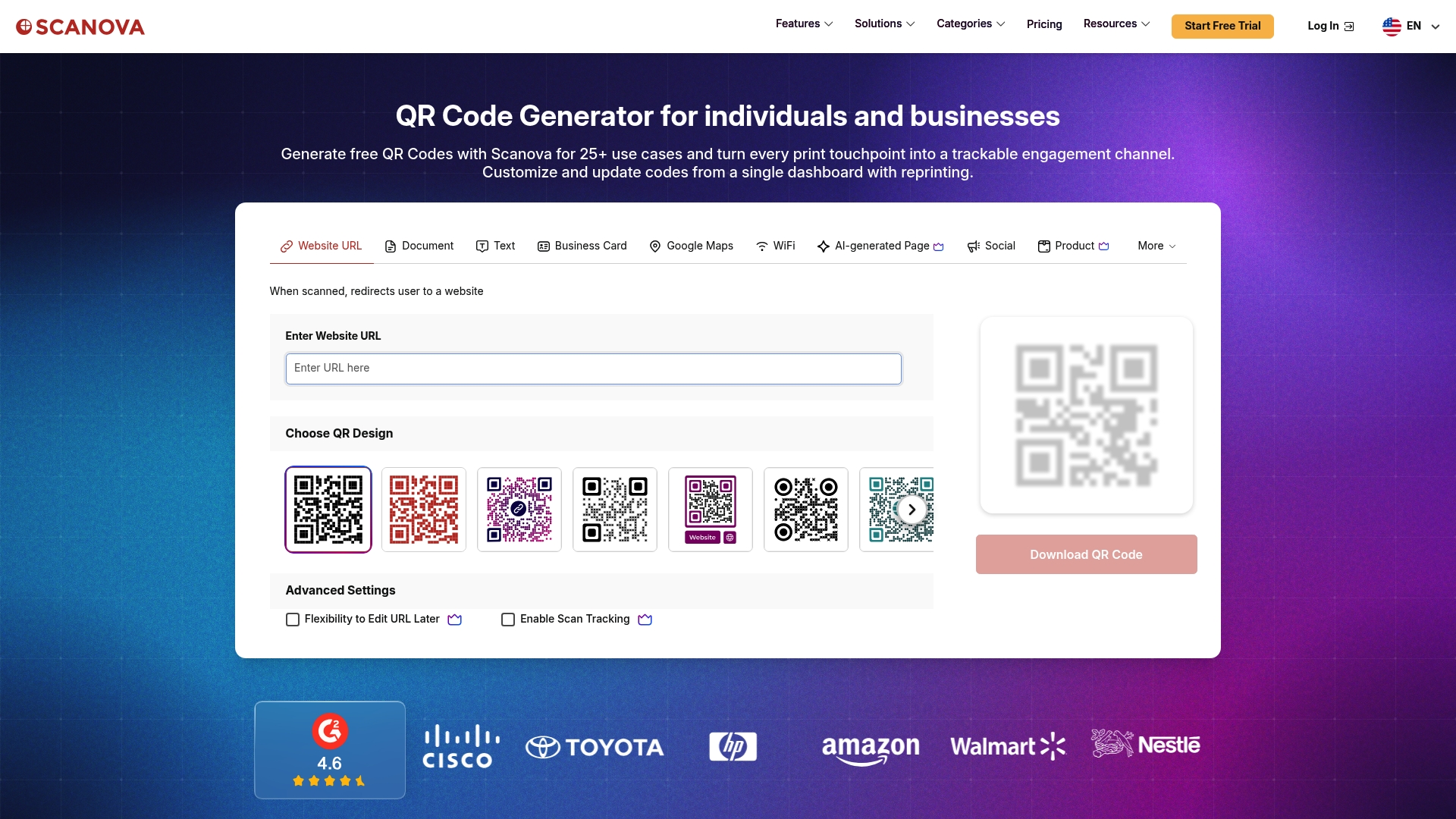
AutoZone employed Scanova’s scan tracking and analytics to streamline operations and improve customer interactions. Scanova pairs editable QR codes with detailed scan data and mobile landing pages that remove the need for extra development. The product targets teams that must design codes for print and measure campaign performance afterwards.
Core Features
Scanova combines code editing, design and analytics into one dashboard. Key capabilities include:
- Dynamic QR Codes — change a redirect URL after printing while keeping the same code. This keeps printed materials useful for longer.
- Customisable code design with logos, frames, backgrounds and high resolution outputs for professional print.
- Mobile landing pages that are optimised for phones and can host content without a developer.
- Tracking and scan analytics that record engagement metrics and location data for each code.
- QR Code APIs for programmatic creation, bulk generation and campaign automation, plus enterprise controls such as user roles and white labelling.
Key Differentiator
Scanova groups deep design options with campaign analytics and enterprise controls inside a single interface. That mix suits teams that want both branded, print-ready codes and the ability to measure and change links after distribution. The platform leans more towards marketing and operations users who need long-running, editable codes.
Pros
-
Easy interface for non-technical users. You can produce a branded code and landing page without developer help.
-
Large set of content types and templates. That speeds up work for marketing campaigns, menus, and product pages.
-
Strong analytics for campaign measurement. Scan data includes engagement metrics that help you judge code placement and creative.
-
Design flexibility for print and brand consistency. High resolution outputs and transparent backgrounds suit packaging and signage.
-
Supports both static and dynamic codes plus enterprise features like SSO and custom roles for teams.
Cons
-
Advanced design and enterprise controls require a paid plan or trial upgrade. The free tier limits access to those features.
-
Some customisation tools are locked behind paid tiers. You may need to upgrade to match strict brand guidelines.
-
Pricing may rise quickly for very large volumes. Organisations running thousands of codes should budget accordingly.
When It May Not Fit
If you need full access to complex analytics and API automation on a free plan, this product will frustrate you. Very large scale campaigns may find the pricing model expensive. Small teams that never change printed links may prefer a simpler free generator.
Notable Integrations
- API access for developers. The API lets you automate code creation, integrate with your CMS and run bulk generation from scripts.
Who It’s For
Marketing teams, retail brands and event organisers who need branded QR codes with measurable results will find this useful. It also suits operations teams that update content behind a single printed code. Larger organisations that require user management and white labelling will benefit from enterprise controls.
Real World Use Case
AutoZone used the platform to track scans and route customers to the right content, reducing in-store staff time on information requests. The analytics helped decide which packaging and signage placements delivered the most engagement. Teams could update links after deployment without replacing printed materials.
Pricing
Scanova offers a 14-day free trial. Subscription plans vary by features and volume, with higher tiers unlocking APIs, enterprise controls and bulk creation. See the vendor site for current tier details and limits.
Website: https://scanova.io
BL.INK
At a Glance
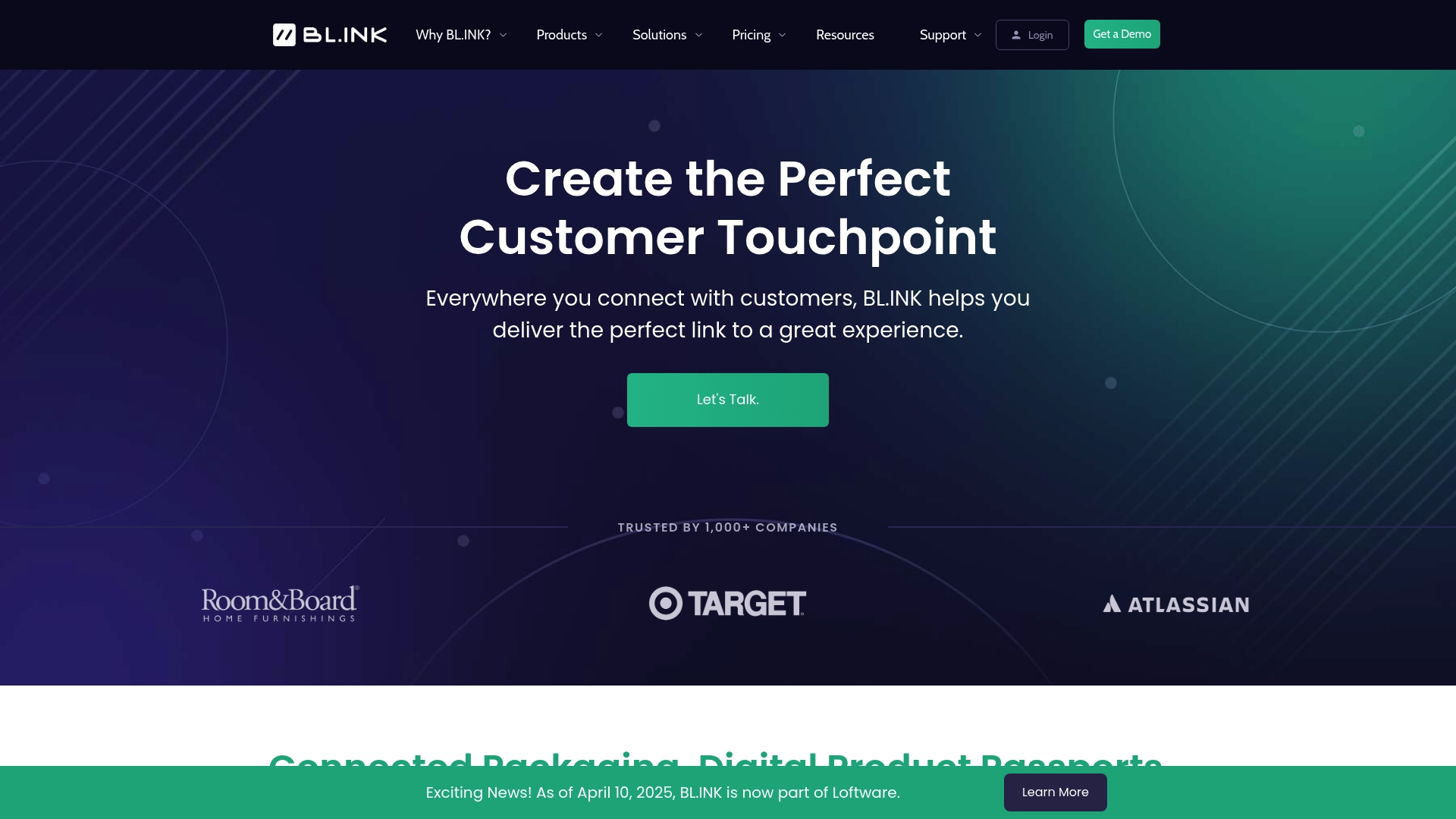
BL.INK reports it is trusted by over 1,000 customers, including Target and Atlassian. The platform combines short URLs, branded links and QR codes with rules-based routing and dynamic landing pages. That mix makes the product useful for both marketing campaigns and operational workflows. This positioning shows a focus on enterprise use rather than simple link shortening.
Core Features
BL.INK supports editable short URLs, branded links and QR codes that you can update without changing the printed asset. The product exposes an open API for custom integrations and provides structured data for analytics and supply chain use. According to the company, the platform complies with SOC2, GDPR and HIPAA, and supports GS1 Digital Link for product-level data. Power Pages let you serve personalised landing experiences without building a full web stack.
Key Differentiator
The standout capability is rules-based routing combined with structured data and GS1 Digital Link support. That combination lets you send users to different content based on device, time or metadata. For teams managing product authentication or complex digital campaigns this feature set ties link management to operational data in a way few competitors match.
Pros
-
Flexible for enterprise needs. The platform handles simple link shortening and complex routing for supply chain or healthcare workflows.
-
Strong security and compliance posture. The vendor advertises SOC2, GDPR and HIPAA compliance, which matters for regulated industries.
-
Open API and integrations. You can plug link data into existing systems and automate updates from your backend.
-
Dynamic content and Power Pages. You can change landing experiences after a campaign goes live, keeping printed materials valid.
-
Proven at scale. The company reports a broad customer base that includes large brands, which suggests the platform can handle high-volume use.
Cons
-
Pricing requires a quote. That limits price transparency for smaller teams that prefer fixed monthly tiers.
-
Feature complexity. The breadth of capabilities increases setup and operational overhead for non-technical teams.
-
Technical lift for advanced features. Using rules-based routing and structured data may need developer support to reach full value.
When It May Not Fit
If you run a small business or a one-person marketing team, BL.INK may feel overly complex and costly. Teams that only need basic link shortening and a cheap monthly plan will find other services easier to adopt. Also, organisations without developer access may struggle to implement integrations and advanced routing.
Notable Integrations
-
APIs for custom integrations that let you push and pull link and analytics data.
-
Support for enterprise systems such as SAP, Oracle and Microsoft Dynamics for deeper operational connectivity.
Who It’s For
Mid-sized to large organisations that need secure, scalable link and QR code management. The product fits teams that combine marketing, product and supply chain functions and require integration with enterprise systems. It also suits regulated sectors that value compliance reporting.
Real World Use Case
A consumer goods firm generates QR codes for product packaging and maps each code to GS1 Digital Link data. Marketing teams update promotions on the fly using editable links while supply chain teams feed product provenance into the same structured dataset. The result keeps printed assets valid and links tied to product records.
Pricing
Pricing requires a quote or begins with a monthly trial for BL.INK Core. That model means you must contact sales for committed tiers and enterprise features. Smaller teams should budget for a discovery call before seeing final costs.
Website: https://bl.ink
Delivr
At a Glance
According to the company, Delivr reports a 15-year track record and 99.9% uptime. That claim positions the product as a stable option for campaigns that depend on persistent QR links. The platform also emphasises privacy first practices and enterprise support for high-volume deployments.
Core Features
- Dynamic QR code generation with management and tracking for live URL updates and redirects.
- Custom QR code design and serialization to produce branded, uniquely numbered codes for mass production.
- Advanced analytics including location and device insights that help you measure where and how scans happen.
- Link management with short URLs, deep linking, and geolocation routing to tailor redirects by region.
- Mobile-optimised landing pages and profile pages for quick link in bio experiences.
Key Differentiator
The vendor advertises an ISO-compliant dynamic QR code engine coupled with analytics and privacy first data practices. That combination makes Delivr attractive where regulatory compliance and traceable physical to digital links matter. The DENSO partnership in the product data signals an emphasis on QR intelligence and supply chain use cases.
Pros
-
Strong reliability claims tied to long-term operation. The platform aims to keep codes resolvable over years, which suits printed campaigns.
-
Detailed scan analytics provide location and device context. These metrics help you compare offline channels and plan distribution.
-
Built for security and privacy with stated GDPR and CCPA compliance. Teams handling personal data will appreciate the focus on legal controls.
-
Flexible content endpoints from links to mobile pages. You can switch a campaign landing page without reprinting assets.
-
Enterprise support and customisation available. That helps brands that need serialization, bulk code generation, or SLA-backed service.
Cons
-
Pricing can be significant for high-volume plans, which may limit smaller budgets.
-
Enterprise features such as custom domains and advanced security sit behind higher tiers.
-
The feature set has a learning curve. Teams new to code serialization and routing will need time or training.
When It May Not Fit
Delivr may be overkill for one-off projects or very small organisations with limited technical resources. If you only need a handful of static codes and no analytics, a simpler service will cost less. The platform suits scale and compliance more than occasional use.
Who It’s For
Marketers, brand managers, and product authentication teams who need secure, scalable QR code and link management. It fits organisations that expect long-lived printed campaigns, require privacy controls, and want traceable physical to digital interactions.
Real World Use Case
A global apparel brand embeds dynamic QR codes in product packaging. Customers scan to verify authenticity, view product details, and receive personalised offers while the brand tracks scan geography and device type for regional marketing.
Pricing
Delivr offers a free trial and has paid plans that begin at $0/month for basic features. The vendor advertises customised enterprise solutions and pricing for high-volume or security focused requirements.
Website: https://delivr.com
Rebrandly
At a Glance
According to the vendor, Rebrandly reports being trusted by over 1.5 million brands and advertises SOC 2 Type 2, GDPR, and HIPAA compliance plus 99.99% uptime. That positioning makes it geared toward organisations that need secure, branded link management at scale. Expect a platform built for high volumes and enterprise controls rather than a minimal free shortening tool.
Core Features
- Branded short links using your own custom domains and branded back half URLs to keep links on brand.
- Link click tracking and analytics in real time with audience insights for campaign measurement.
- QR code generation with visual customisation and export options for offline marketing.
- Link expiration, password protection, and deep linking for app routing and targeted redirects.
- Traffic routing and geo targeted redirects to send visitors to country appropriate destinations.
Key Differentiator
Rebrandly stands out for supporting unlimited custom domains and for its emphasis on enterprise security and compliance. The platform pairs that with a powerful API for automation and large scale link management. For organisations that need strict controls, collaboration, and many branded domains, those features make Rebrandly a better fit than consumer focused shorteners.
Pros
- The vendor claims the large customer base above, which suggests broad market adoption and an enterprise focus.
- Custom domains are central, so marketing teams can keep every campaign link fully on brand.
- The API supports automation and bulk operations, useful for agencies and large marketing teams.
- Built in analytics and audience insights help you measure campaign ROI and compare channels.
- The platform offers collaboration with role based permissions and shared workspaces for team workflows.
Cons
- Several third party reviews report a complex interface that produces a learning curve for new users.
- Many advanced features appear behind higher tier plans, which raises the cost for smaller teams.
- Free tier features are limited, so valuable functionality usually requires a paid plan.
When It May Not Fit
If you need a very simple link shortener for occasional use, Rebrandly will feel heavyweight. Small teams on tight budgets will likely hit advanced feature restrictions and pay more to access deep linking or API quotas. If you require a minimal free tool for sporadic links, choose a simpler alternative.
Who It’s For
Rebrandly fits marketing teams, digital agencies, and enterprise organisations managing high volumes of branded links and needing security controls. It works well for teams that run global campaigns and must route traffic by region or device. The platform suits groups that want branded links as part of governance and reporting.
Real World Use Case
A multinational corporation manages thousands of branded links daily across global campaigns. The company uses role based permissions to control who can edit redirects and the API to automate link creation. Analytics feed into campaign reports so teams can measure ROI and adjust creatives quickly.
Pricing
Rebrandly offers a free tier and paid plans. Pricing starts with Essentials from $8/month, Professional from $22/month, and Growth from $69/month. Enterprise pricing is custom for large accounts and additional security requirements.
Website: https://rebrandly.com
Comparison of alternatives
Evaluating the standout QR code management platforms highlights unique features and trade-offs that cater to diverse user demands and operations.
Permanent functionality comparison
QRlytics leads with permanent QR codes that remain functional after a subscription lapses, assuring printed campaigns’ longevity. Most alternatives deactivate codes after a plan ends, which may disrupt ongoing marketing materials reliant on enduring connections.
Customisation and enterprise integration
Scanova offers advanced design tools and templates, catering to teams needing highly customisable QR codes for brand-focused campaigns. BL.INK supports structured data and GS1 Digital Link, tailored to organisations integrating link intelligence at scale. Rebrandly prioritises branded domain name support, offering unlimited custom domain configurations, enhancing overall presentation.
Best fit
- QRlytics suits organisations relying on long-term printed materials where QR links need to remain active post-subscription.
- Scanova meets the requirements of teams demanding extensive design flexibility for visually branded codes.
- BL.INK supports enterprises needing structured data and compliance with industry standards for product interactions.
Our pick
QRlytics shines in environments prioritising campaign durability via permanent QR codes, reducing operational reprint risks. While features of competitors like Scanova or BL.INK may suit highly specialised demands, organisations valuing long-term code stability will benefit most from QRlytics’ unique subscription-independent functionality.
Choosing the optimal QR code management solution involves examining durability, analytics, and pricing.
| Product | Key Differentiator | Best For | Pricing | Notable Limitation |
|---|---|---|---|---|
| Qrlytics | Permanent codes maintained post-subscription | Small businesses seeking durable analytics links | Free or $39/year | Free plan limited to three codes |
| Scanova | Combines deep design tools with enterprise analytics | Marketing teams requiring branded printable codes | Subscription | Advanced features require a paid plan |
| BL.INK | Rules-based routing paired with enterprise compliance | Larger organisations managing secure QR workflows | Custom quotes | Feature complexity increases learning curve |
| Delivr | Emphasis on compliance and advanced analytics | Privacy-conscious groups needing scalability | Free or custom | Pricing can be steep for high volumes |
| Rebrandly | Extensive custom domains and enterprise security focus | Agencies managing high-volume branded links | From $8/month | Advanced features locked to higher tiers |
Discover a Dependable Alternative to Bit.ly with Qrlytics
The challenges of expired or inactive links can undermine your marketing efforts and waste printed materials, especially when using bit.ly alternatives that deactivate URLs after subscription lapses. Qrlytics addresses this common pain point by guaranteeing that QR codes created during an active subscription remain active indefinitely, regardless of billing status. This means you can update your redirect URL dynamically without reprinting, while gaining access to real-time, GDPR-compliant scan analytics.
Explore the benefits of permanence, control, and detailed insights all on one platform designed to transform your QR-coded campaigns into a measurable marketing channel. Don’t let broken links disrupt your strategy. Visit Qrlytics today and experience reliable QR code management built for lasting impact.
Take action now to create codes that never break and keep your printed materials valid for years to come.
FAQ
How does Qrlytics handle permanent QR code functionality?
Qrlytics offers permanent QR codes that remain functional indefinitely, allowing users to avoid dead links on printed materials. The platform ensures that codes created during an active subscription stay live regardless of billing status, which is ideal for long-lived printed products. You can confidently use Qrlytics for campaigns that require enduring QR codes.
What is the difference between Scanova and Qrlytics for QR code management?
Scanova excels in its deep design options and extensive tracking capabilities, making it a great choice for organisations that prioritise custom designs for their QR codes. In contrast, Qrlytics is particularly beneficial for users who want to manage permanent QR codes without reprints or downtime, as it keeps codes active even after subscription changes. Consider Qrlytics if ongoing code functionality is your main need.
Can Delivr provide detailed analytics similar to Qrlytics?
Delivr offers advanced analytics, including location and device insights to help measure QR code performance effectively. While it provides robust analytics, Qrlytics focuses on permanent codes and real-time updates without the fear of links becoming inactive. If you prioritise sustained QR code usability along with straightforward tracking, Qrlytics would be the better choice for your needs.
What features make Qrlytics a good option for small businesses?
Qrlytics allows small businesses to generate three permanent, trackable codes for free, which helps in testing the service at no cost. This feature empowers small firms to maintain active campaigns without incurring reprint expenses, making Qrlytics a suitable fit for their QR code management.
How does Qrlytics ensure compliance with privacy regulations?
Qrlytics is designed with privacy-conscious features, including GDPR compliance, which reassures users that their visitor data is handled responsibly. This focus on privacy not only protects customers but also allows businesses to track analytics without breaching legal standards, making Qrlytics a trustworthy option for managing QR codes.